
Figure of the Year 2025
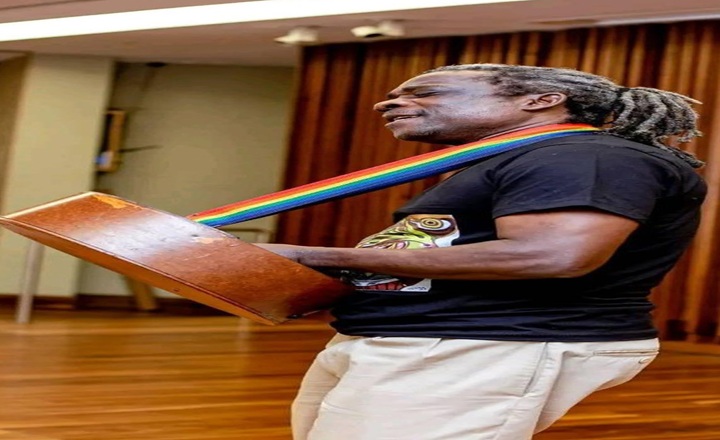
The story of Simão Adriano Nhancule is a living testament to the strength of Mozambican culture. Recently distinguished as the Best Teacher of 2025 — an accolade he had already received in 2011 — his journey begins far from the spotlight, in the village of Macaringuene, in the district of Zavala, Inhambane province. It was from there that he set off, one day, "barefoot," for Maputo, carrying in his baggage not only the hope for a better life, but also the gift inherited from his ancestors.
Today, a teacher, instrumentalist, dancer, and composer, Nhancule is a living archive of tradition. Having worked at the Xipamanine Cultural Center, the Alto Maé Cultural Center, the prestigious National Company of Song and Dance (CNCD), and currently teaching at the National School of Music, his life is dedicated to preservation and teaching. His art has transcended borders: in one of the last editions of the Expo in Japan, a piece of music he composed, originally for Mbira, was adapted and performed by a robot in the Mozambique pavilion, symbolizing a perfect dialogue between ancestral tradition and the innovation of the future.
Born into a family of artists, his first contact with music came through his father, a player in the timbila group “Tamagueiro”. “He didn’t have his own instrument,” recalls Nhancule, “so he improvised a Mbila with pieces of wood and keys supported by the stem of a banana tree. We called it macocoma. When he went out, we kids would try to imitate him.” That childhood game was the seed.
While still in Macaringuene, he became the leader of the Ngalanga group, participating in festivals and winning awards. His maternal family is also a point of reference: he is the nephew of the celebrated Mestre Venâncio, an unavoidable figure in Chopi music.
The migration to Maputo in the early 1990s was motivated by the search for opportunities. “Me and another boy left the village looking for better conditions,” he recounts. The beginning in the capital was difficult, dedicating himself to selling used clothes at the Xipamanine market. However, the call of culture was stronger. “One day, I heard a drumming sound. It was Ngalanga!” he recalls enthusiastically. He followed the sound and presented himself to the Executive Council group. Demonstrating his talent, he was immediately accepted.
The turning point came during a performance at the National Institute of Meteorology, where he caught the attention of the then director of the Alto Maé Cultural Center, Fernando Rafael. “He said: ‘I’m looking for a young marimba player’”. The next day, Nhancule was at the Cultural Center, joining its group. He then had to make a choice: “I gave up selling clothes and dedicated myself definitively to art.” He began to receive a salary, travel abroad, and build a career.
In 2000, he took another qualitative leap when he joined the National Company of Song and Dance (CNCD) as an employee. "It was there that I grew artistically," he says. His energy and knowledge of traditional rhythms revitalized the group. "When I arrived, when we stopped dancing, everything went silent. We transformed the performances into true concerts of traditional music," he proudly states.
In 2011, an unexpected transfer to the National School of Music was initially met with dismay. “I thought it was an April Fool’s joke. I felt removed from the highest point,” he confesses. However, this became the stage for his greatest mission: to train new generations.
“Being a teacher is a constant challenge,” she explains. “Each child has a difficulty. We plan once, but we have to adapt. The children learn and the teacher also grows.” Her experience with the Mbila facilitated the teaching of the marimba, while she dedicated herself to mastering and teaching the mbira nyunga nyunga, an instrument of Mozambican origin (from the Nyungue ethnic group of Tete) often mistakenly associated only with Zimbabwe.
For Nhancule, the achievement is complete. “I consider myself the spokesperson for my village,” he declares. “I am rescuing melodies that were only in people's memories. I use the local language, I speak of the daily life of my people. I look at the boy who used to fetch water from kilometers away, who was a fisherman, and I see him now sharing the stage with big names, traveling the world, teaching. I feel fulfilled.”
When questioned about the role of digitization in cultural preservation, Nhancule offers a balanced view. “It’s important, but it’s a double-edged sword,” he analyzes. “It facilitates recording and dissemination, but it can also breed laziness. Today, with a program, you can make music without playing an instrument. The risk is losing the essence, the technique.” His advice is clear: “The digital system is welcome, but we have to know how to use it, not to replace, but to improve and document.”
His journey has not been without painful moments. In 2019, he faced the loss of his wife, "a difficult time" that he overcame with resilience. However, joy and recognition have marked his recent path. The title of Best Teacher in 2025 crowns this phase.
And the experience at the Japan Expo remains a symbolic milestone. “The organization asked for one of my songs to be transformed from Mbira to Mbila and played by a robot. It was a success. I received a good amount of money and was speechless. After all, culture is remunerated,” he recounts, with a satisfied smile.
His final message is one of hope and perseverance for artists: “Don’t give up. When your time comes, you will be well paid. What is yours is being kept safe.”
Simão Adriano Nhancule is more than a teacher or a musician. He is a bridge between generations, between the village and the world, between the ancestral touch on the wood of the Mbila and the digital precision of a robot in Japan. In his story, Mozambican culture not only survives, but vibrates, teaches and enchants, proving that the deepest roots are those that best allow one to soar.
Outras noticias
Culture
Launched at BCI, a book that immortalizes memories and humor of Zambézia
2026-10-02

Society
International Coffee Day
2026-10-02
Society
Minister Mathlombe squanders his term on empty promises
2026-10-02
policy
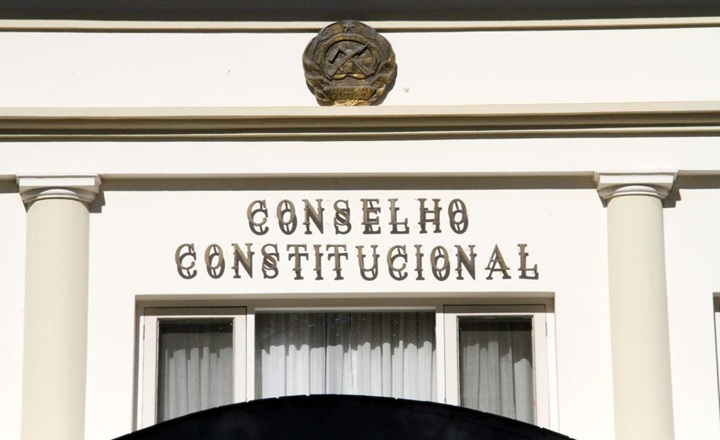
Constitutional Council Awards Purchase of Luxury Vehicles for 49.5 Million Meticais
2026-10-01
Culture
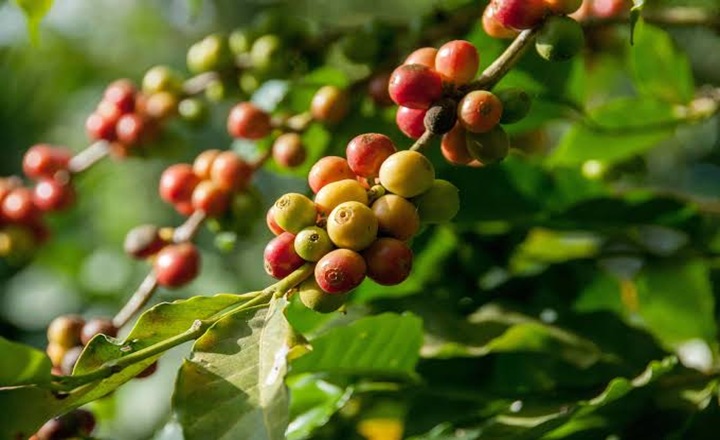
International Coffee Day: Aroma, Flavor, and History
2026-09-30
Copyright Jornal Preto e Branco All rights reserved . 2025