






CARTÃO AMARELO À MATOLA: ENTRE A FORÇA ECONÓMICA E O COLAPSO DAS VIAS DE ACESSO

There are realities that don't require sophisticated studies to be understood. Simply traveling around, simply trying to cross the municipality of Matola at different times, in different weather conditions, is enough to realize that there is a serious structural problem that compromises the mobility, the economy, and the dignity of its citizens. This yellow card is not an exercise in political rhetoric, but a firm warning, based on daily observation and critical analysis of a phenomenon that has become chronic: the municipality's inability to keep its main paved roads passable.
Matola occupies a unique place in the Mozambican context. It is the largest municipality in its category, one of the most industrialized in the country and, consequently, one of those with the greatest contributory capacity. Its administrative geography, marked by a division between densely populated urban areas and extensive rural zones, makes territorial management particularly complex. This size immediately raises serious questions about the adequacy of the current municipalization criteria and about the effective capacity of local authorities to respond to the demands of a territory with these characteristics.
Matola's road network is one of the fundamental pillars of its economic and social functioning. However, a careful analysis reveals a worrying reality: it is a limited network, concentrated on a few main roads and subject to constant pressure resulting from the intense traffic of people and goods. The extent of paved roads is clearly insufficient given the territorial size and economic dynamics of the municipality. Even more serious, the quality of these roads is far from meeting minimum standards of durability and safety.
A large portion of the paved roads show clear signs of deterioration: deep potholes, extensive cracks, dangerous unevenness, and practically impassable sections. This situation worsens significantly during the rainy season, when the torrential rains that affect the province clearly expose the structural weaknesses of the infrastructure. The absence of adequate drainage systems, the lack of functional ditches, and the disregard for local topographical characteristics cause water to accumulate and seep into the pavement structure, accelerating its destruction.
This reality is not just a result of lack of maintenance. In many cases, it stems from flaws in the very design of the roads. Road engineering requires rigorous prior studies that consider soil type, rainfall patterns, drainage patterns, and traffic volume. When these factors are ignored or underestimated, the result is fragile infrastructure, unable to withstand intensive use and adverse weather conditions.
One of the most emblematic examples of this situation is the stretch of road connecting the Coca-Cola area to Matola Gare, along Avenida Josina Machel. This corridor is vital for circulation between neighborhoods such as Infulene, Machava Sede, and Tsalala, and for access to one of the most important industrial zones in the municipality. Despite its strategic importance, the road has been in an advanced state of disrepair for several years. Traffic is hampered by large potholes, constant irregularities, and a lack of minimum safety conditions.
Transport operators, the main users of this route, have been particularly affected. Vehicle maintenance costs have increased significantly, travel times have become unpredictable, and logistical efficiency has been compromised. It is no coincidence that this route has been the scene of successive demonstrations and strikes. This is a problem that has ceased to be merely technical and has become social and economic.
Given this scenario, there is a blame game between the municipality and the National Roads Administration. While the municipality claims that it is a road under central jurisdiction, the responsible entity limits itself to sporadic and clearly insufficient interventions. These interventions, which consist essentially of superficially patching potholes, do not solve the underlying problem and end up representing a waste of resources.
However, there are roads whose responsibility unequivocally falls on the municipality. The Machava 15–Malhampswene road is a clear example. Its current state is deplorable, with sections that are practically impassable, a situation that worsens significantly during the rainy season. The same is true of the road that connects the Patrice Lumumba neighborhood to Nkobe, passing through Dâmaso Ferreira. In these cases, there is no room for transferring responsibility.
One particularly worrying aspect is the fact that many of these roads are relatively recent. They were built or rehabilitated just a few years ago, which makes their premature deterioration even more difficult to justify. This phenomenon raises legitimate doubts about the quality of the works, the rigor of the technical studies, and the effectiveness of the monitoring mechanisms.
The consequences of this situation are profound and far-reaching, and the degradation of access roads not only directly affects the mobility of citizens, but also increases transport costs, hinders the flow of products, and reduces the competitiveness of companies located in the municipality. For small producers, especially those located in peripheral areas, difficulties in accessing markets become a significant obstacle to the development of their activities.
This problem is part of a broader context of the fragility of the national road network. Since independence, Mozambique has failed to consistently develop its road infrastructure, and in many cases has only been able to precariously maintain the routes inherited from the colonial period or witness their destruction and disappearance. Inter-district connections remain deficient, hindering the movement of people and goods and limiting the potential for economic integration.
At the institutional level, this reality exposes the limitations of the municipalization model adopted in the country. Although local authorities were designed to promote decentralization and bring governance closer to citizens, their capacity to act is heavily constrained by a system of fiscal centralization. Municipalities depend, to a large extent, on transfers from the central government, which limits their financial autonomy and their investment capacity.
Even in the case of Matola, which has a significant tax base, the capacity to mobilize and manage its own resources is insufficient to respond to structural challenges such as the rehabilitation of the road network. This mismatch between responsibility and financial capacity creates an environment conducive to inefficiency and the progressive degradation of infrastructure.
This yellow card should therefore be understood as a warning and a call for reflection. It is not merely a matter of pointing out flaws, but of drawing attention to the need for structural reforms. It is essential to rethink the funding model for local authorities, strengthen the technical capacity of municipalities, and establish clear accountability mechanisms between the different levels of governance.
Matola, due to its strategic importance, should assume a leading role in implementing innovative solutions for urban management. However, the current reality reveals a municipality struggling to meet even the most basic challenges. This situation cannot be normalized.
The degradation of access roads is not just an engineering or management problem. It is a matter of development. Roads in poor condition limit opportunities, increase inequalities, and compromise the future. A municipality that cannot guarantee the navigability of its main roads is inevitably failing in its fundamental mission.
The yellow card is therefore fully justified. It is a warning sign that should be taken seriously by all parties involved. The continuation of this situation could, in the short term, transform this yellow card into a more serious warning.
Matola has potential, resources, and relevance. What it lacks is the capacity to transform these elements into concrete solutions. And until that happens, the potholes in the roads will continue to be the most visible reflection of a much deeper problem.
Outras noticias
Sociedade
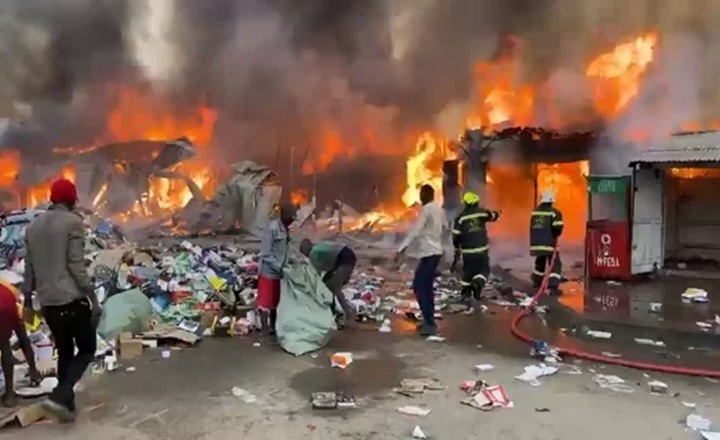
Incêndio consome parte do Mercado de Xiquelene em Maputo
2026-09-27

Sociedade
Praia da Macaneta
2026-09-27

Politica
Cabo Verde afasta políticos dos conselhos de administração da Rádio e Televisão
2026-09-26
Sociedade
Entre a violência pós-eleitoral e a impunidade persistente
2026-09-26
Economia
Moçambique é classificado como o segundo país mais pobre do mundo
2026-09-26
Copyright Jornal Preto e Branco Todos Direitos Resevados . 2025
Website Feito Por Déleo Cambula