
"Yellow Card to the Partisanship of the State: The Long Crisis of the Separation of Powers and the Deficit of Institutional Trust in Mozambique"
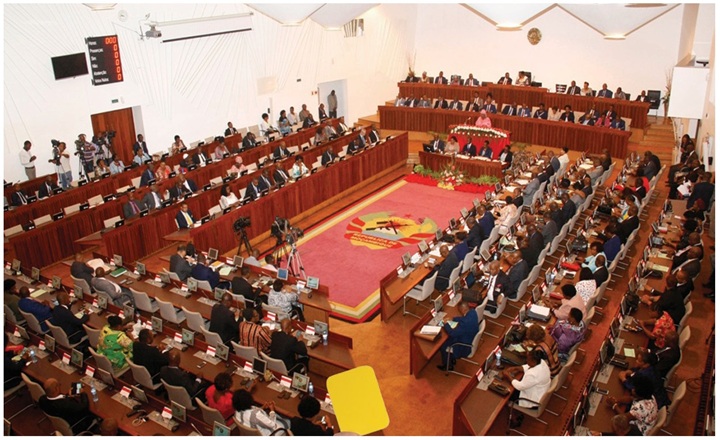
This Yellow Card aims to launch a dispassionate debate on one of the most structural issues of the contemporary Mozambican state, namely the persistent and historical lack of separation between the State and the ruling party - Frelimo, with particular emphasis on how fundamental organs of sovereignty, such as the Interior sector, the Judiciary and the Attorney General's Office, are frequently understood as operating in a space of political-partisan proximity in a clear umbilical collusion, which conditions the functional autonomy of the justice organs, fostering clientelism and patrimonialism, and, likewise, producing a chronic deficit of public trust that cannot be ignored in a State that claims to be democratic and governed by the rule of law.
The discussion should not be reduced to a conjunctural reading or isolated episodes, nor to a superficial analysis based solely on the observation of recent events, but rather it should be framed within a historical and structural perspective that allows us to understand how this reality was formed and why it persists, traversing different political moments without having been effectively overcome. The issue of the separation of powers in Mozambique is neither new nor circumstantial; it is deeply rooted in the very genesis of the post-independence state, which emerged under the leadership of a liberation party that, over time, consolidated its dominant position not only in the political field, but also in the administrative and institutional structure of the country.
Jean-François Bayart, in analyzing post-colonial African states, emphasizes that many of them have developed forms of governance in which the state is progressively appropriated by political networks that reproduce themselves in power, creating a continuity between party and state apparatus that hinders the construction of truly impersonal institutions. Patrick Chabal reinforces this interpretation by arguing that, in several African contexts, the state does not operate according to a strictly institutional logic, but rather through power relations that formally permeate its structures, making the distinction between the public and the partisan less clear than the theoretical models of liberal democracy presuppose. In the Mozambican case, authors such as Michel Cahen and Joseph Hanlon have repeatedly pointed out that the prolonged hegemony of a single political party has profoundly shaped the functioning of the state, creating a system in which institutional autonomy is frequently conditioned by dynamics of political loyalty.
It is in this context that the recurring presence of figures associated with sensitive sectors of justice and security in spaces of a partisan nature takes on a meaning that goes far beyond the individual sphere, becoming a political and institutional signal that reinforces the perception that the separation between state and party is not fully observed in practice. Even when such participation can be justified from the perspective of individual rights or political activism, the symbolic impact is profound, because justice, in addition to being independent, must also appear independent, otherwise it risks losing the trust of citizens. Robert Dahl, in discussing the foundations of democracy, emphasizes that democratic legitimacy depends not only on the existence of formal institutions, but on the effective equality of political and legal treatment, and that any consistent perception of institutional bias compromises the quality of the democratic regime.
The problem becomes even more sensitive when analyzed in light of the actions of institutions in politically critical contexts, particularly during electoral periods marked by strong contestation and social tension. Mozambique's recent history has been marked by episodes that fuel the perception of selectivity in the application of justice, particularly in situations where holding the State or actors close to political power accountable does not seem to proceed with the same speed or depth as in other cases. Regardless of differing accounts of specific events, what is consolidated in the collective imagination is the idea that justice does not act with equal rigor in all circumstances, creating a feeling of impunity that undermines institutional trust and weakens the social contract.
In this context, impunity should not be understood merely as the absence of formal convictions, but as the systemic inability to produce clear, convincing, and credible institutional responses in cases of high political sensitivity. This generates a perception of selective protection that favors certain segments at the expense of others. In consolidated democracies, the predictability and impartiality of justice are fundamental pillars of political stability; when these elements are weakened, an atmosphere of distrust takes hold, which tends to reproduce itself over time, affecting not only the political sphere but also social cohesion and economic development.
Samuel Huntington, reflecting on political order, warns that stability based on the concentration of power without strong and autonomous institutions is ultimately illusory, as it lacks lasting legitimacy, while Larry Diamond emphasizes that democracy requires effective accountability mechanisms that prevent the perpetuation of closed political systems. In the African context, and particularly in countries with a history of dominant parties, the literature has shown that the absence of real alternation and effective separation between party and state tends to produce hybrid systems, where democratic formality coexists with practices that limit the full realization of its principles.
Joseph Hanlon has argued that Mozambique exhibits characteristics of a political system where formal stability coexists with profound institutional tensions, while Carrie Manning highlights that the main challenge for Mozambican democracy lies in transforming formal institutions into effectively autonomous and credible structures in the eyes of citizens. This analysis allows us to understand that the problem is not only legal or institutional, but also political and cultural, related to how power is exercised and reproduced over time.
The persistence of this reality raises a central question: to what extent is there, in fact, room for effective independence of powers in a system where the dominant party has built, over decades, a network of influence that spans different spheres of the State? The answer to this question cannot be simplified, but requires an honest analysis of the structural conditions that limit this independence, including the concentration of power, the fragility of control mechanisms, and the political culture of party loyalty that, in many cases, overrides institutional logic.
The consequences of this configuration are evident not only on the political level, but also on the economic and social levels, since trust in institutions is a determining factor for investment, stability, and sustainable development. Systems where justice is biased tend to generate uncertainty, discourage private initiative, and fuel cycles of distrust that hinder the construction of a more just and balanced society. Jean-François Bayart and Patrick Chabal emphasize that the confusion between party and state prevents the emergence of impersonal and predictable institutions, essential for long-term development.
Thus, this Yellow Card aims not only to denounce a situation, but above all to provoke a profound reflection on the future of institutions in Mozambique, on the need to strengthen the separation between State and party, and on the importance of building a justice system that is not only independent, but also recognized as such by society. The legitimacy of the State is not built solely through legal norms or electoral processes, but through the continuous trust of citizens in the institutions that regulate collective life.
Ultimately, the challenge is to break with a historical logic of partisan control of the State that limits the full realization of the separation of powers, replacing it with a governance model based on institutional autonomy, effective accountability, and transparency. Without this transformation, the risk is not only the continuation of a trust deficit, but the deepening of a silent crisis that, over time, could compromise the very foundations of the democratic rule of law.
Outras noticias

Culture
Launched at BCI, a book that immortalizes memories and humor of Zambézia
2026-10-02

Society
International Coffee Day
2026-10-02

Society
Minister Mathlombe squanders his term on empty promises
2026-10-02
policy
Constitutional Council Awards Purchase of Luxury Vehicles for 49.5 Million Meticais
2026-10-01

Culture
International Coffee Day: Aroma, Flavor, and History
2026-09-30
Copyright Jornal Preto e Branco All rights reserved . 2025