
Yellow Card to the Mozambican Government for the Poor Management of the Fuel Crisis: From Fuel Shortages to a Crisis Exposing the Fragility of the State
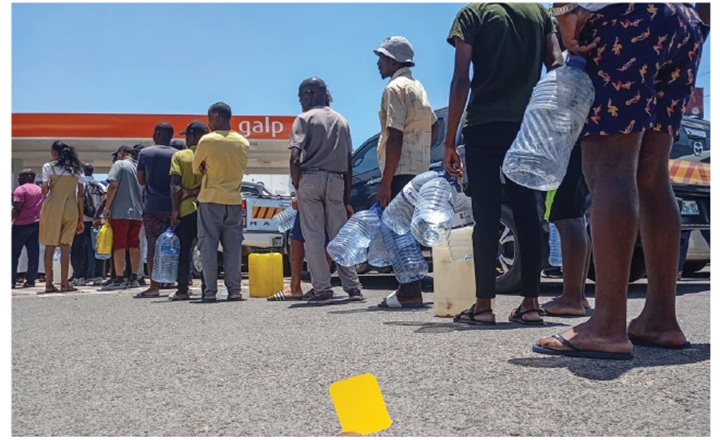
There are moments in a nation's life when crises cease to be mere temporary episodes and begin to reveal, with uncomfortable clarity, deep structural weaknesses in those who govern and how they govern. The current fuel crisis in Mozambique falls precisely into this type of critical moment, not only because of the visible scarcity at the pumps or the endless queues that snake through entire neighborhoods, but above all because of what it reveals about the State's capacity to anticipate adverse scenarios, manage strategic resources responsibly, and communicate clearly and honestly with its citizens.
The immediate impact of this situation is evident and affects different layers of society in a cross-cutting manner, with the lack of public transport being one of its harshest and most socially unjust aspects, since workers are forced to walk long distances to ensure their presence at their workplaces, students are forced to miss classes due to a lack of transportation, and patients face increased difficulties in accessing timely healthcare, while the informal economy, which depends heavily on mobility and the circulation of people and goods, suffers considerable losses that further aggravate the already fragile economic condition of many families.
The partial shutdown of economic activities, from small businesses to essential services, demonstrates that fuel is not just a logistical input, but a true engine of economic and social life, the absence of which triggers a domino effect that spreads rapidly throughout the country's productive structure, creating an environment of uncertainty, anxiety, and collective strain that becomes increasingly difficult to sustain.
Beyond the scarcity itself, the way the population reacts to this desperate situation adds an additional dimension of risk that cannot be ignored, since the long lines that form from the early hours of the day, often extending into the night, become spaces of permanent tension, where fatigue, frustration and uncertainty create conditions conducive to conflicts and episodes of disorder, while the frantic rush for fuel encourages dangerous practices such as domestic storage in inadequate containers, from improvised bottles to drums without any type of safety, which represents a real and immediate threat to the physical integrity of families and collective property, increasing the risk of fires and explosions in densely populated residential areas.
Given this scenario, a central question inevitably arises that cannot be circumvented with superficial explanations or generic justifications: where is the State and, more importantly, at what point and in what way did the State fail to fulfill its most basic responsibilities of ensuring the regular functioning of essential services and the stability of its citizens' daily lives?
The official discourse has sought to anchor the explanation of the crisis in external factors, with particular emphasis on international geopolitical instability and tensions affecting strategic energy supply routes, namely in the Gulf region and the Strait of Hormuz, through which a significant portion of the oil consumed globally passes. This, in theory, lends some plausibility to the narrative that disruptions in that region can generate chain effects on international markets and, consequently, on importing countries such as Mozambique.
However, reducing the current crisis to a mere reflection of external dynamics proves not only insufficient but also intellectually dishonest, as it deliberately ignores the crucial role of internal management, planning capacity, and the existence or absence of mitigation mechanisms that allow for the absorption of external shocks without them turning into large-scale internal crises. It is important to emphasize that other countries with similar or even more limited resources have managed to face adverse international contexts with greater resilience, resorting to adequate strategic reserves, supplier diversification, and more efficient logistics management.
Understanding the route of fuel arriving in Mozambique helps to better clarify the vulnerabilities of the system, since the country depends almost exclusively on the import of refined products that are transported by sea, stored in coastal terminals and subsequently distributed throughout the national territory through a logistics chain that requires rigorous coordination, well-structured contracts and careful management of stock levels, making it clear that any failure at any of these points can seriously compromise regular supply.
It is precisely in this chain that clear signs of dysfunction begin to emerge, from the absence of transparent information on available reserve levels to inconsistencies in replenishment forecasts and a lack of coordination between the entities responsible for import, storage and distribution, creating an environment of uncertainty that fuels panic and exacerbates rush-to-consume behavior, while official communication is often late, fragmented and, in some cases, contradictory, which contributes to the erosion of public trust.
Even more worrying is the persistent circulation of rumors according to which, in the midst of internal shortages, some 3 million liters of fuel were exported to South Africa, an allegation that, if confirmed, raises extremely serious questions about the Government's priorities and the criteria that guide such sensitive decisions at a time of national crisis, since the possible sale of strategic reserves abroad, while the population faces severe difficulties in accessing an essential resource, conveys an image of disconnect between political power and the real needs of the average citizen.
Even in the absence of official confirmation, the mere fact that such information circulates with such intensity and resonates with public opinion is, in itself, a worrying indicator of the level of distrust that has taken hold in the relationship between rulers and the ruled—a distrust that does not arise spontaneously, but is built up over time through practices of opacity, poorly explained decisions, and an institutional culture that is not very oriented towards accountability.
The current crisis also highlights significant weaknesses in the State's regulatory role, with consistent reports of unequal distribution of fuel among service stations, a lack of clear criteria in resource allocation, speculative practices, and even suspicions of diversion to parallel markets. This points to a systemic failure in oversight and a State presence that proves insufficient to guarantee fairness, transparency, and legality in a strategic sector.
A government that aims to be functional and responsible must be able to face crises with competence, predictability, and clarity of action, demonstrating effective leadership and the ability to mobilize resources in a coordinated manner. However, what we observe in this case is a fragmented, reactive, and unconvincing response that conveys a sense of improvisation and the absence of a clear strategy to deal with the situation.
The implications of this crisis are not limited to the economic or logistical sphere, extending to the political and institutional domain, insofar as the inability to guarantee the regular supply of an essential resource such as fuel weakens the perception of state authority and undermines trust in institutions, creating an environment conducive to increased social tension and the erosion of national cohesion.
In the medium and long term, the effects could be even more profound, affecting the country's image among investors, international partners, and multilateral organizations, who begin to question the predictability and management capacity of national authorities, while the population internalizes a feeling of insecurity that can have lasting repercussions on economic and social behavior.
Given this scenario, it is imperative that the Government abandon its defensive posture and adopt a more proactive approach, based on strategic planning, transparent information, and strengthened control and oversight mechanisms. This implies, among other measures, the establishment of robust strategic reserves, the diversification of supply sources, and the improvement of logistical efficiency throughout the entire distribution chain.
More than technical measures, the moment demands a change in political attitude, marked by the clear assumption of responsibilities and an effective commitment to the public interest, because governing is not limited to managing daily life in normal times, but above all to demonstrating leadership capacity in times of adversity.
The fuel crisis currently being experienced in Mozambique therefore constitutes a demanding test of the quality of governance and the solidity of institutions, a test that, so far, has revealed weaknesses that cannot be ignored or downplayed, lest a cycle of inefficiency and irresponsibility be perpetuated, ultimately harming the average citizen.
In a context where a large part of the population already faces structural difficulties in guaranteeing minimum living conditions, the mismanagement of a resource as critical as fuel takes on particularly serious dimensions, since each supply failure represents not only a logistical constraint, but also a breach of trust in the State's ability to fulfill its essential function of serving and protecting its citizens.
The yellow card being shown this week is not a symbolic gesture or a rhetorical exercise, but a serious warning that the margin of social tolerance is decreasing and that governmental responsibility can no longer be treated lightly, because in the end it is not reports or statistics that face the consequences of scarcity, but real people, with real lives, who depend on responsible decisions to maintain their dignity and their hope for a better future.
Outras noticias

Culture
Launched at BCI, a book that immortalizes memories and humor of Zambézia
2026-10-02
Society
International Coffee Day
2026-10-02

Society
Minister Mathlombe squanders his term on empty promises
2026-10-02
policy
Constitutional Council Awards Purchase of Luxury Vehicles for 49.5 Million Meticais
2026-10-01

Culture
International Coffee Day: Aroma, Flavor, and History
2026-09-30
Copyright Jornal Preto e Branco All rights reserved . 2025