
YELLOW CARD TO THE ADMINISTRATOR OF THE XAI-XAI DISTRICT OFFICE: STEALING DONATIONS SHOULD BE A CRIME AGAINST HUMANITY
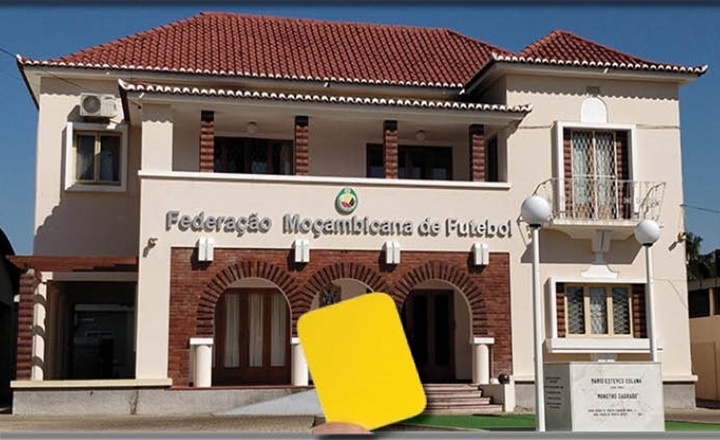
There are moments in a nation's life when silence ceases to be prudence and becomes complicity. Moments when remaining silent is equivalent to accepting that collective suffering is transformed into private opportunity. It is precisely at this point that Mozambican public consciousness finds itself today.
Floods have once again struck the country. Houses destroyed. Agricultural fields devastated. Children without food. Entire families reduced to dependence on national and international solidarity. In Gaza province, particularly in the Xai-Xai district, thousands of citizens saw what they had spent years building disappear in just a few days.
When nature punishes, the State is expected to protect. When the people fall, leaders are expected to extend a helping hand. But what happens when that same hand is suspected of taking away what should save lives?
The accusations against the district administrator, Argelência Francisco Chissano Unguana, regarding the alleged diversion of food and goods intended for flood victims, are not just another administrative episode. They are a painful symbol of something much deeper: the moral bankruptcy of a segment of the public leadership.
Even acknowledging the fundamental principle of the presumption of innocence, there is something that no judicial investigation can erase: the moral impact of suspicion when it involves food intended for those who are starving.
Stealing public resources is already serious. Misappropriating state funds is already reprehensible. But tampering with humanitarian aid intended for victims of calamities surpasses any acceptable ethical limit in a minimally humane society.
What message does the average citizen receive when they hear that food intended for displaced people may have been diverted by those who were supposed to coordinate the assistance? What trust remains in the population when state aid is seen as just another circuit for illicit enrichment?
Mozambique is currently experiencing a crisis that goes far beyond floods, poverty, or economic difficulties. It is experiencing a crisis of confidence. A crisis of leadership. A crisis of values.
For years, official discourse promised a fierce fight against corruption. It promised transparency. It promised the moralization of public administration. However, daily reality continues to present successive scandals that reinforce the perception of structural impunity.
And inevitably the unavoidable political question arises: what is the responsibility of the ruling party, FRELIMO, when repeated cases involving public officials emerge under its governance?
This is not about attacking institutions for mere political gain. It is about demanding accountability from those who have governed for decades and, therefore, have shaped the functioning of the State itself. A system does not degrade by chance; it degrades when wrong practices cease to be the exception and begin to coexist comfortably with power.
What is most unsettling is not just the alleged act itself. It is the social normalization that is beginning to take hold. The dangerous idea that scandals arise, provoke momentary outrage, and then disappear without real consequences. In fact, this idea supports the thesis that the people have short memories and that the sentence is not carried out, as the famous musician Azagaia once said.
Meanwhile, justice is slow, trials drag on, and accountability is diluted until it disappears completely. And the people learn, painfully, that there are two countries: one where minor offenses are quickly punished and another where serious suspicions rarely produce immediate political consequences.
It is in this context that the most dignified, responsible, and morally acceptable gesture would be clear: the administrator Argelência Francisco Chissano Unguana should offer her resignation.
Not as an admission of guilt, but as a demonstration of respect for the victims. As a sign that public office is not personal property, but a temporary trust granted by the people. Remaining in office under strong public scrutiny only deepens institutional erosion and sends the wrong message: that those in power protect their own regardless of the seriousness of the suspicions.
Governing requires more than administrative authority. It requires example. In a country where mothers walk kilometers in search of flour, where the elderly sleep in makeshift accommodation centers, and where children depend on donations to survive, any leader suspected of interfering with humanitarian aid automatically loses the moral authority necessary to lead. And here lies the deepest wound: the growing distance between rulers and the ruled. While citizens struggle daily for survival, part of the political elite seems to live in a parallel universe, protected by positions, protocols, and institutional silence. This disconnect fuels frustration, resentment, and distrust in democratic institutions.
A society doesn't collapse simply due to a lack of resources. It collapses when it loses hope for justice. How many more scandals will it take for political accountability to cease being the exception? How many more denunciations will have to emerge before public ethics stop being just talk and start being practiced?
The problem is no longer just individual. It's systemic. When leaders remain in office despite serious controversies, a dangerous precedent is created: that public morality is negotiable. That social sensitivity can be sacrificed in the name of political expediency. And it is precisely against this culture that this yellow card is raised.
Because the Mozambican people do not deserve to see their suffering transformed into an opportunity for enrichment. They do not deserve to witness the politicization of humanitarian aid. They do not deserve to have natural disasters followed by moral calamities.
History teaches us that regimes fall not only because of economic crises, but also because of the slow erosion of moral legitimacy. When citizens cease to believe in the honesty of their leaders, the social contract begins to unravel.
Today, Xai-Xai doesn't ask for speeches, but it asks for responsibility, it asks for accountability, and above all, it asks for truth, it asks for respect for those who have lost everything, and that solidarity should encourage them to start over and dream again.
This yellow card isn't just directed at a district administrator. It's directed at an entire governance model that continues to allow serious suspicions to coexist with a comfortable hold on power.
If institutions want to regain credibility, they must act firmly, transparently, and swiftly. They must investigate, clarify, and hold accountable, whoever is involved.
Because every stolen bag of rice represents a family going hungry, every lost box of food represents a child without food, and every act of corruption in a humanitarian context represents a betrayal of the very meaning of humanity.
Mozambique urgently needs to rediscover its moral compass, because as long as leaders confuse power with privilege, as long as impunity continues to be perceived as the rule, and as long as popular suffering is treated as administrative statistics, society will continue to bleed silently, daily, dangerously.
Outras noticias
Culture
Launched at BCI, a book that immortalizes memories and humor of Zambézia
2026-10-02

Society
International Coffee Day
2026-10-02

Society
Minister Mathlombe squanders his term on empty promises
2026-10-02
policy
Constitutional Council Awards Purchase of Luxury Vehicles for 49.5 Million Meticais
2026-10-01

Culture
International Coffee Day: Aroma, Flavor, and History
2026-09-30
Copyright Jornal Preto e Branco All rights reserved . 2025