
Yellow Card to SERNIC: Closing a Case Too Quickly Compromises Credibility

The National Criminal Investigation Service (SERNIC) has received a yellow card that stems not from any emotional impulse or a gratuitous desire to discredit institutions, but from the imperative need to preserve what remains of public trust in a state that aspires to be governed by the rule of law. The press conference convened to clarify the death of the Portuguese citizen and CEO of Banco BCI, Pedro Ferraz Correia dos Reis, which occurred in a bathroom at the Polana Hotel, was presented as an exercise in transparency, but ended up producing the opposite effect. Instead of dispelling doubts, it consolidated suspicions, and instead of strengthening SERNIC's image, it exposed old weaknesses; instead of reassuring society, it rekindled memories of a troubled past where death, finance, and power rarely walked hand in hand. The central problem is not the fact that SERNIC acted quickly, but the incongruity between that speed and the historical reality of the institution's own functioning, known for long, inconclusive, and often silently shelved investigations.
It must be stated clearly: speed, when isolated from rigor and transparency, is not a virtue, it is a risk. In a country where cases with material evidence, identified witnesses, and even visual clues drag on for years without clear accountability, the presentation of definitive conclusions in less than 48 hours in a case of enormous complexity cannot be celebrated as an institutional triumph. On the contrary, it raises an uncomfortable but inevitable question: why did this case merit unprecedented efficiency, when so many others, equally serious or even better documented, remain shrouded in silence? The selectivity of efficiency is, in itself, a political and institutional problem.
The official narrative presented demands a high degree of credulity from the public. It requires acceptance of a closed, linear, and seamless version, ignoring not only the context in which the death occurred, but also the victim's profile and the environment in which he carried out his duties. Pedro Ferraz Correia dos Reis was not an ordinary citizen, disconnected from decision-making centers. He was a top figure in the banking sector, in a country where banking has historically been linked to opaque financial schemes, hidden debts, illicit flows, and conflicting interests between economic and political power. To pretend that this context is irrelevant is an exercise in naiveté that Mozambique's recent history has already refuted too many times.
SERNIC's own communication proved weak. The press conference seemed more like the reading of a pre-prepared script than a careful exposition of an ongoing investigative process. There was no room to acknowledge doubts, nor to explain technical limitations, nor to admit that serious investigations require time. Everything was presented as resolved, closed, and indisputable. In mature democracies, especially when public figures and foreign citizens are involved, authorities tend to adopt a cautious stance, recognizing that judicial truth is not built in hours, but through meticulous processes, subject to scrutiny and independent validation. Here, haste seemed to replace method.
This stance becomes even more worrying when analyzed in light of the country's historical memory. Mozambique knows well the price paid by those who dare to interfere with powerful financial interests. The case of Siba Siba Macuácua is perhaps the most emblematic example. Called upon to clean up a bank, impose discipline, and stop schemes harmful to the public interest, he encountered fierce resistance. His death cannot be dissociated from the interests he threatened. Decades later, the country continues without a full sense of justice, and the idea that the true beneficiaries were never properly exposed remains alive. Siba Siba became a symbol of how the system reacts when someone tries to disrupt perverse balances, and, above all, when organized crime linked to money laundering feels threatened, it has been relentless in its efforts, and the victims are countless.
The assassination of Carlos Cardoso reinforces this interpretation. An investigative journalist dedicated to exposing financial crimes and corruption networks, he paid with his life for his audacity. Despite trials and convictions, the widespread belief is that the truth remained incomplete, that the real masterminds escaped, and that the system protected higher interests. These two cases are not isolated episodes nor mere historical recollections. They are structuring elements of the collective consciousness and explain why society reacts with skepticism whenever a death linked to the financial sector is treated with excessive simplicity.
It is in this context that the recent actions of SERNIC (National Criminal Investigation Service) must be evaluated. The distrust that now falls upon this body is not a product of imagination or ill will. It is a consequence of a path marked by opacity, selectivity, and excessive proximity to political power. The increasingly close relationship between SERNIC and the Attorney General's Office does not help to dispel these doubts. On the contrary, it tends to deepen them. The Attorney General's Office, far from being perceived as a fully independent body, has been seen by broad sectors of society as an arm of power, selective in its actions, diligent with the weak and cautious with the strong. When two institutions whose credibility is already fragile present themselves as mutually legitimizing, the result is not trust, but increased suspicion.
This connection cannot be ignored. In a functioning state governed by the rule of law, investigative and prosecution bodies must not only be independent, but also appear independent. Public perception is an essential part of institutional legitimacy. When this perception is lost, even technically sound investigations begin to be viewed with suspicion. In this specific case, the extreme speed with which everything was explained and concluded reinforces the idea that there was an urgency to control the narrative, rather than to uncover the truth.
There is also an international dimension that cannot be underestimated. The death of a Portuguese citizen, with top responsibilities in a relevant financial institution, in one of the country's most emblematic hotels, clearly transcends the domestic sphere. International partners, investors, and governments are closely observing not only the announced outcome but also the process leading to it. An investigation perceived as rushed, lacking transparency, and institutionally closed could seriously damage Mozambique's image at a time when external confidence is crucial for economic and financial stability.
This yellow card to SERNIC (National Criminal Investigation Service) is not a call for disorder nor an attempt to delegitimize the State. It is a warning. A notice that Mozambican society is more aware, more informed, and less willing to accept unsubstantiated official versions. It is a reminder that the country's history painfully shows that financial crimes, powerful interests, and tragic deaths have too often walked hand in hand. Ignoring this reality is repeating old mistakes.
Investigating cases of this nature requires time, independence, institutional courage, and technical sophistication. It also requires humility to recognize that the truth cannot be imposed by decree nor announced at a press conference. It is built with patience, rigor, and openness to scrutiny. As long as inconsistencies persist, as long as the past continues to echo without answers, and as long as haste continues to replace method, this case will not be closed in the collective conscience. The yellow card has been shown. It is up to SERNIC to decide whether to take it seriously or to proceed indifferent to the warning sign, further deepening the erosion of public trust.
Outras noticias

Culture
Launched at BCI, a book that immortalizes memories and humor of Zambézia
2026-10-02

Society
International Coffee Day
2026-10-02

Society
Minister Mathlombe squanders his term on empty promises
2026-10-02
policy
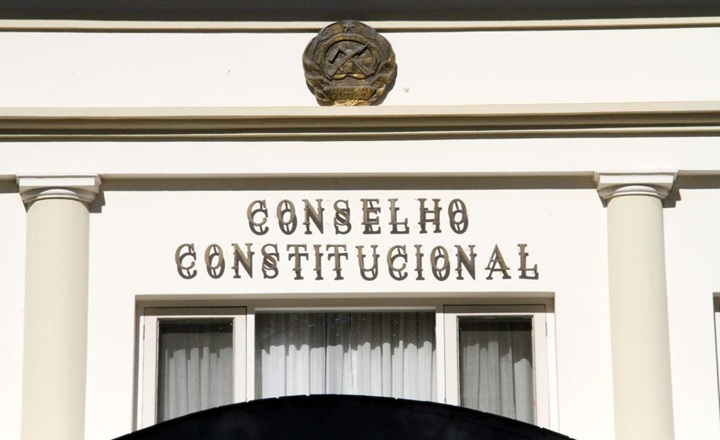
Constitutional Council Awards Purchase of Luxury Vehicles for 49.5 Million Meticais
2026-10-01

Culture
International Coffee Day: Aroma, Flavor, and History
2026-09-30
Copyright Jornal Preto e Branco All rights reserved . 2025