
YELLOW CARD FOR THE FRELIMO GOVERNMENT: WHAT DOES SECOND PLACE IN THE POVERTY RANKING TELL US? WHAT SEPARATES US FROM FIRST PLACE?
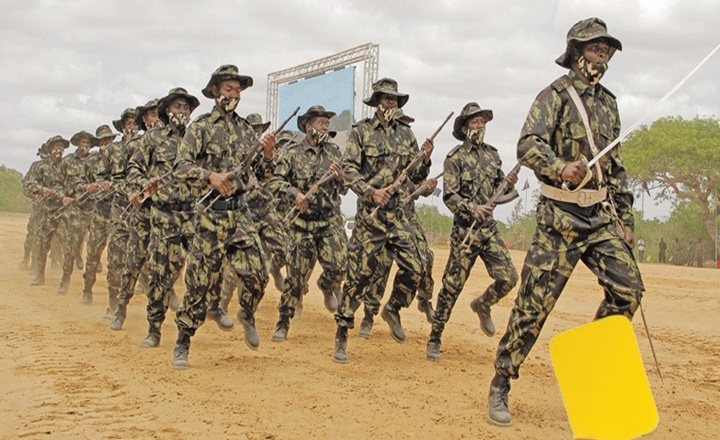
The fact that Mozambique ranks among the world's poorest countries, consistently occupying bottom positions in international rankings of human development and per capita income, cannot be treated as mere historical inevitability or an unavoidable consequence of external circumstances. This fact constitutes, above all, a harsh verdict on decades of failed governance, inadequate political choices, and a profound disconnect between the State and the real needs of the population. Being second among the world's poorest countries is not just a number: it is the concrete expression of millions of limited lives, postponed dreams, and a country that has failed to transform its potential into dignity for its people.
After independence in 1975, Mozambique inherited a weakened state, lacking sufficient technical personnel and with a structurally dependent economy. The choice of a centralized, socialist-inspired model sought, in theory, to promote equity and social justice. However, the combination of ideological rigidity, weak administrative capacity, and the outbreak of a devastating civil war plunged the country into a deep crisis. Between 1977 and 1992, Mozambique was the scene of one of the most destructive conflicts in the region, with a direct impact on agricultural production, infrastructure, and social cohesion.
During this period, poverty became widespread and extreme. Millions of Mozambicans were displaced, famine raged in several regions, and basic services practically collapsed. While the war explains much of this scenario, it cannot be ignored that the government of the time was incapable of creating mechanisms for economic and social resilience. Excessive centralization stifled local initiatives, and the State proved ineffective in responding to the most basic needs of the population. The result was a deeply impoverished country, dependent on foreign aid and without a solid foundation for development.
With the end of the war in 1992, a historic opportunity for reconstruction and transformation arose. Mozambique adopted economic reforms, opened itself to the market, and began attracting foreign investment. For years, remarkable economic growth rates were recorded, and the country was frequently cited as an example of post-conflict recovery. However, this growth proved superficial and exclusionary. The wealth generated was not distributed equitably, and the economic structure remained fragile, poorly diversified, and dependent on mega-projects with weak links to the local economy.
Despite macroeconomic growth, poverty stubbornly persisted. Millions of Mozambicans continued to live below the poverty line, without adequate access to education, health, or economic opportunities. The paradox of growth without development exposes deep flaws in governance. The state failed to transform growth into inclusion, nor to create conditions for the majority of the population to benefit from economic progress.
It is during this period that a particularly worrying phenomenon consolidates itself: the capture of the State by the ruling party. FRELIMO, which led the liberation struggle and assumed control of the country after independence, has progressively transformed itself into a structure that transcends the limits of the State itself. The distinction between party and public institutions has become blurred, creating an environment conducive to clientelism, nepotism, and the use of public resources for partisan purposes.
This overlap between party and state weakened institutions, compromised transparency, and limited accountability. Corruption ceased to be an isolated incident and became a structural element of the system. Resources that should have been channeled towards development were diverted, mismanaged, or captured by networks of vested interests. The hidden debt scandal is just one emblematic example of a much broader problem that has eroded internal and external trust in the country.
Corruption, in this context, is not merely an ethical issue; it is one of the main drivers of poverty. By diverting resources, distorting priorities, and undermining the efficiency of the state, it directly contributes to the deterioration of the population's living conditions. Schools lacking adequate facilities, hospitals without medicine, degraded roads, and ineffective public services are, to a large extent, consequences of governance marked by mismanagement and the misappropriation of resources.
Over the last decade, under Filipe Nyusi's leadership, these trends not only persisted but, in many respects, worsened. The country entered a cycle of successive crises, including the financial crisis stemming from the hidden debts, the armed insurgency in Cabo Delgado, and external shocks such as the pandemic. However, more worrying than the crises themselves was the way they were managed: with a lack of transparency, absence of accountability, and an inability to present structural solutions.
During this period, there was a strengthening of an economic elite closely linked to political power. This elite benefited from privileged access to public contracts, concessions, and business opportunities, accumulating wealth at an accelerated pace. In contrast, the majority of the population saw their living conditions deteriorate, facing increased cost of living, unemployment, and reduced opportunities.
Social inequality has become more evident and deeper. In cities, signs of concentrated wealth have emerged: luxury condominiums, high-end vehicles, opulent lifestyles, which contrast sharply with the reality of the majority. In the outlying neighborhoods and rural areas, poverty has intensified, reflecting a country divided between the few who have much and the many who have almost nothing.
Mozambican society today is experiencing a profound sense of disappointment. There is a widespread perception that the country has lost its way, that promises of development have been betrayed, and that the future is uncertain. Young graduates face a job market unable to absorb them, families struggle daily for survival, and there is a growing feeling of injustice in the face of a system that always seems to favor the same people.
Political leadership is often perceived as lacking strategic vision. There is a lack of a clear, coherent, and mobilizing project that would allow the country to emerge from stagnation and place it on a sustainable development path. The absence of profound structural reforms reveals an inability, or unwillingness, to confront vested interests that benefit from the status quo.
This scenario is even more serious when considering Mozambique's enormous potential. The country possesses vast natural resources, including gas, coal, and various minerals, as well as extensive agricultural areas with favorable production conditions. In theory, these resources should form the basis for robust and inclusive development. In practice, they have been exploited in a way that benefits a minority, with little transparency and limited contribution to the general well-being.
The result is a painful paradox: a country rich in resources, but poor in results. A country where natural abundance coexists with social scarcity. A country where being second among the poorest in the world is not an exception, but the logical consequence of decades of governance that failed to put the public interest above private interests.
This yellow card to the FRELIMO government is, therefore, a clear warning sign. It represents the recognition that the current governance model has exhausted its capacity to respond to the country's challenges. It is an urgent call for change, reform, and the reconstruction of the foundations of the State.
Mozambique needs strong, independent, and transparent institutions. It needs leadership committed to the common good and capable of implementing courageous reforms. It needs policies that promote inclusion, reduce inequalities, and create real opportunities for all. Above all, it needs to regain the trust of its citizens.
If nothing changes, the country will remain trapped in a cycle of poverty, inequality, and frustration. And being second among the world's poorest countries will cease to be a warning and become a permanent condition. This yellow card should be understood as the last warning before an even deeper social, economic, and moral collapse.
Outras noticias
Culture
Launched at BCI, a book that immortalizes memories and humor of Zambézia
2026-10-02
Society
International Coffee Day
2026-10-02
Society
Minister Mathlombe squanders his term on empty promises
2026-10-02
policy
Constitutional Council Awards Purchase of Luxury Vehicles for 49.5 Million Meticais
2026-10-01
Culture
International Coffee Day: Aroma, Flavor, and History
2026-09-30
Copyright Jornal Preto e Branco All rights reserved . 2025