
Yellow Card for Renamo
.jpg)
Renamo is experiencing a critical moment, the result of internal decisions that led to its almost complete defeat in the 2024 general elections. This crisis is not the work of chance, but the consequence of profound strategic errors committed within the party itself, especially during the infamous 2024 congress. It was there that it was controversially decided to reinstate Ossufo Momade as president and presidential candidate, completely ignoring Venâncio Mondlane, a figure who from the beginning showed himself capable of mobilizing the base and rekindling real hopes for change.
Excluding Mondlane was one of Renamo’s biggest mistakes in recent times. Not only had he worked tirelessly to ensure that the congress could take place, but he had also gathered significant support to run for party leadership. Ignoring him represented an explicit rejection of the aspirations of the base and the voice of the people, who had already demonstrated, in the local elections, a clear desire for renewal and authentic leadership. The signs were evident, but they were simply ignored, and the election results confirmed the high price of this choice: a historic and humiliating defeat.
More than an individual error by Momade, this situation reveals manipulation by the intellectual class within Renamo, which knew how to exploit the leader's weaknesses. This internal elite, instead of strengthening the party, opted for a kind of accommodation that ended up weakening the opposition even further. By receiving perks and concessions from Frelimo, Momade was gradually overshadowed, his leadership eroded, while the party lost strength, cohesion and the trust of voters.
The demonstrations of repudiation that followed, culminating in the closure of Renamo offices throughout the country, are an alarming symptom of the deep internal crisis. It is impossible not to question the position of many activists and cadres who are now protesting: where were they when the Political Commission decided to reinstate figures such as André Magibire (Mafuta) and his allies? Why did they not position themselves against this setback before it was too late? Whether there was connivance or silence, they also share responsibility for the collapse we are facing today.
These actors must be held clearly accountable, because Renamo cannot afford to repeat the same mistakes and expect different results. The complacency that allowed leaders who failed miserably in the past to continue in power is part of what condemns the party to regression. Renamo’s future depends on its ability to engage in deep self-criticism and open space for new and legitimate voices that can restore the party’s connection with the people and its historic mission.
We cannot fail to highlight the role of public figures who, over the last few years, have positioned themselves as spokespeople for Renamo, but who, in practice, have ended up undermining the party’s strength by denying the will of the people. Names such as António Muchanga, Ivone Soares, Elias Chalaua, José Manteigas, Alfredo Magumisse and Manuel de Araújo Carvalho personify this problem. They gave visibility to a project that tacitly denied the Mozambican people’s aspirations for change and contributed to weakening the opposition at a decisive moment.
By adopting this stance, these figures contributed decisively to Frelimo consolidating its dominance, taking advantage of Renamo's internal fragility and division to manipulate the electoral process. The opposition, fragmented and demoralized, found itself reduced to a shadow of its former self, incapable of offering a viable alternative to the government that has dominated the country for decades. With increasingly fragile bases and without a cohesive discourse, Renamo is heading towards political irrelevance that could be definitive if there are no profound changes.
Nostalgia for the legacy of Afonso Dhlakama, founder and symbol of Renamo’s resistance, cannot prevent the necessary transformation of the party. The Renamo of today is not the Renamo of the past, and insisting on old formulas or leaderships that no longer represent the expectations of the population is condemning the party to continue its decline. Renamo’s survival urgently requires an internal renewal that goes beyond appearances and reaches the essence of the organization.
This renewal requires a comprehensive review of the statutes and internal democratic processes that allow for the emergence of leaders capable of dialoguing with the people and the new times. It is imperative to reinstate figures like Venâncio Mondlane, who have the legitimacy and charisma to rebuild bridges between the party and society. Without a solid base and capable leadership, Renamo will continue to bleed, losing ground to political forces that, despite their flaws, have a greater capacity for mobilization.
This moment demands courage to face one's own mistakes, to recognize that complacency, clientelism and resistance to change were fatal. The internal crisis and electoral defeat should not be seen as an end, but as a warning of the need for restructuring. The party needs to reinvent itself, renew its commitment to internal democracy and to defending the real interests of the Mozambican people.
Renamo can still be a relevant political force, but this will depend on its ability to learn from recent mistakes and act with transparency and responsibility. The risk is that it will become increasingly politically isolated, weakened and will ultimately lose the space it has gained through much struggle and sacrifice over the years.
If there are no profound structural changes, all that remains is to watch Renamo gradually dismantle itself, with its members demotivated, its leaders discredited and its future increasingly uncertain. The people who trusted the opposition to bring about legitimate democratic change will be left without a real alternative, and Frelimo's cycle of dominance will continue, with little prospect of change on the horizon.
Therefore, this moment demands serious and urgent reflection. Renamo can no longer allow itself the arrogance of ignoring the internal and external voices that call for renewal. The electoral defeat was not an accident, it was the consequence of internal choices that went against the popular clamor. The party is in the resuscitation room and urgently needs a transfusion of new life to avoid succumbing.
Only with a genuine commitment to change, with renewed and transparent leadership, and with an open dialogue with its members and voters, will Renamo be able to regain its strength and once again represent the true opposition that Mozambique needs. Until then, all that remains is the bitter recognition that the mistakes of the recent past have cost us dearly, and that the future depends on a transformation that is yet to come, if there is the will and courage to do so.
---------------------
Robbers of homes and commercial establishments arrested
The Police of the Republic of Mozambique (PRM) arrested, in the city of Maputo, two individuals accused of stealing goods and robbing homes and commercial establishments.
According to the PRM, the individuals in question used burglary techniques that allowed them to enter properties without being noticed. The PRM revealed that the suspects had a pattern of action, choosing targets in less guarded areas and taking advantage of the lack of security at certain times. The thefts included not only money, but also electronic devices and other valuables, which increased the severity of the charges against them.
The local community expressed relief at the arrest of the suspects, as the break-ins had created a climate of insecurity. Residents reported that many were considering additional security measures, such as installing surveillance cameras and alarm systems, to protect their properties. The PRM also encouraged the public to provide information that could help prevent similar crimes.
The PRM has stepped up patrols in the affected areas and launched awareness campaigns on residential security. Authorities are working to ensure that individuals are held accountable for their actions and that justice is served. The arrest of the suspects is seen as a positive step in the fight against crime in the Mozambican capital.
The situation in Maputo highlights the importance of collaboration between the police and the community in the fight against crime. With the arrest of the two individuals, it is hoped that security in the city will improve, allowing residents and businesses to live and work without fear of break-ins and robberies. The PRM continues to monitor the situation and implement strategies to ensure public safety.
--------------------
Access Bank strengthens financing for women-run businesses
As a bank committed to women’s empowerment and financial inclusion, Access Bank reinforced its role as a strategic partner for women by participating in a roundtable with female entrepreneurs. The initiative was held in partnership with the Chamber of Commerce of Mozambique and had as its motto “Access to Financing”.
The meeting brought together female entrepreneurs and businesswomen to share and present financial solutions that facilitate business growth and that the Bank has at its disposal to boost businesses led by women.
Among the various products it offers, Access Bank has introduced the Financing Line for Women, a product that responds to the constant challenge of the lack of guarantees required by traditional financial institutions. Through this line, the Bank has presented alternative, flexible and inclusive solutions aimed at businesswomen working in the formal and informal sectors.
The event also featured a presentation of the Bank’s approach to agency banking, an innovative solution that aims to bring financial services to areas where traditional banking does not reach. The solution offers women entrepreneurs not only access, but also the possibility of becoming agents of the Bank. This model generates inclusion, creates extra income and promotes local entrepreneurship.
The round table also included participatory dynamics, real testimonies, sharing of experiences and a final networking space, where participants deepened contacts and reinforced synergies.
“We want to see more and more women leading, creating opportunities and transforming their communities. This is the impact we seek to generate. We believe that sustainable development is only possible with women’s empowerment, which is why we continue to invest in solutions designed for them,” said Chiwetalu Obikwelu, Acting CEO of Access Bank Mozambique.
According to the person in charge, “one of the Bank’s strategic pillars is to create inclusive, personalized and impactful solutions for all customers, and women play a central role in this vision”.
Access Bank thus reaffirms its commitment to developing transformative solutions to stimulate financial literacy and inclusion among Mozambicans, regardless of their geographical location.
Outras noticias
Culture
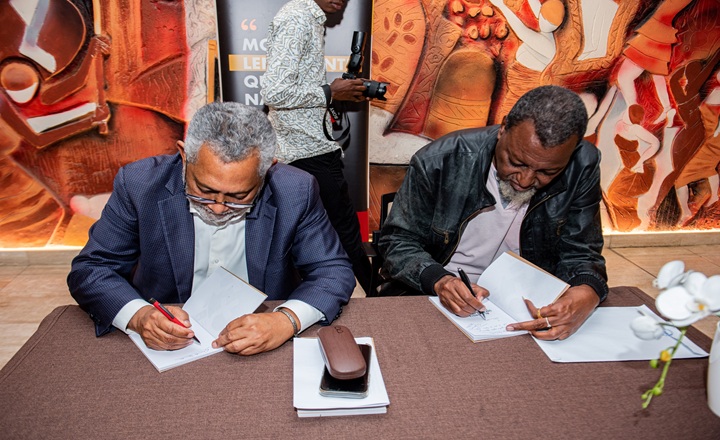
Launched at BCI, a book that immortalizes memories and humor of Zambézia
2026-10-02
Society
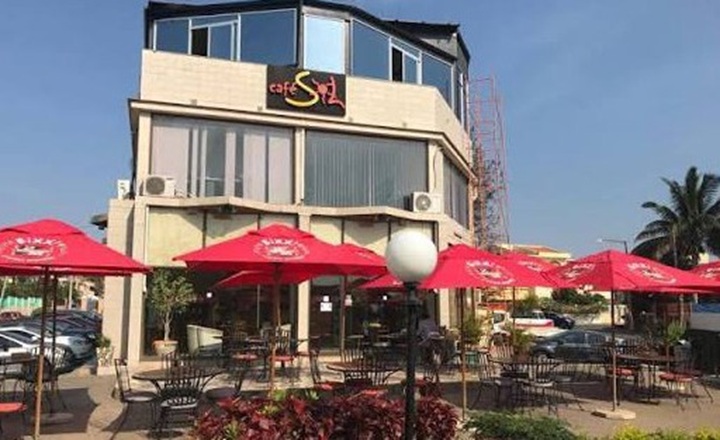
International Coffee Day
2026-10-02
Society
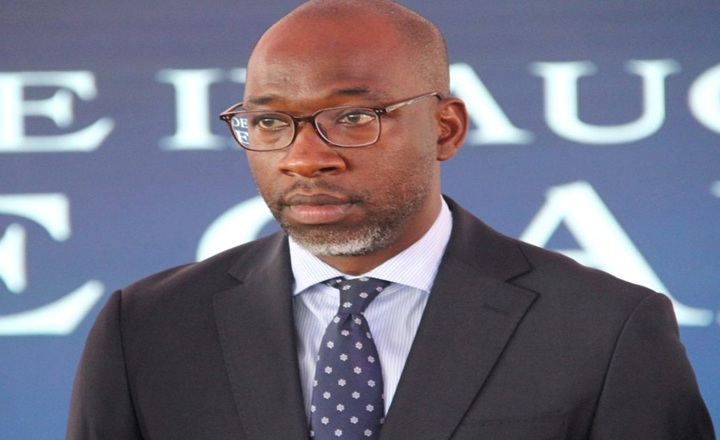
Minister Mathlombe squanders his term on empty promises
2026-10-02
policy
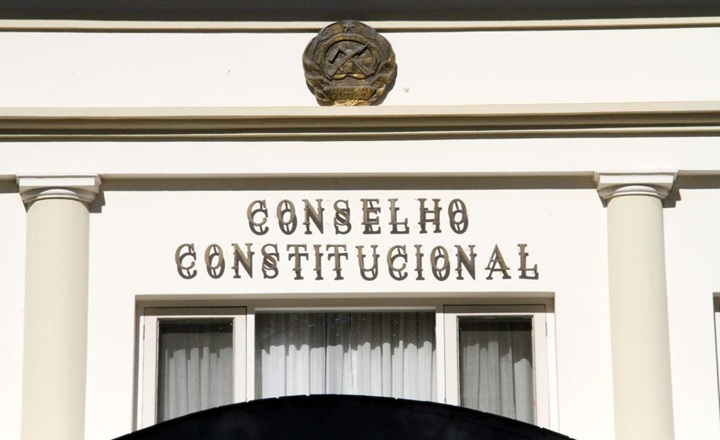
Constitutional Council Awards Purchase of Luxury Vehicles for 49.5 Million Meticais
2026-10-01

Culture
International Coffee Day: Aroma, Flavor, and History
2026-09-30
Copyright Jornal Preto e Branco All rights reserved . 2025