
YELLOW CARD FRELIMO: BETWEEN INTERNAL PURIFICATION AND THE CRISIS OF DEMOCRACY
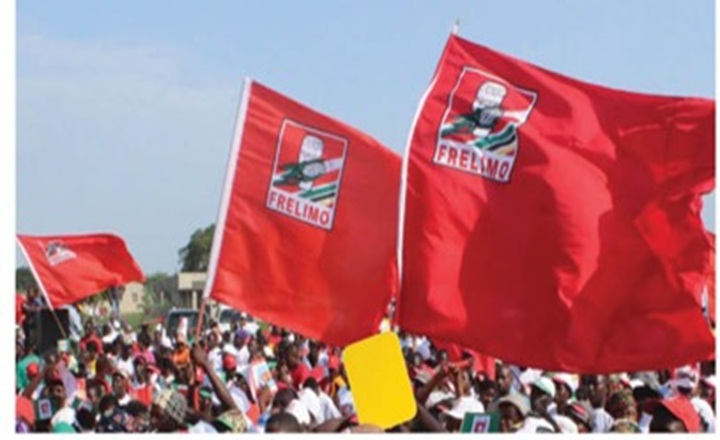
The 11th National Conference of FRELIMO Cadres concluded in Chimoio with a political exercise that, given the nature of the topics discussed and the intensity of the debates, can be considered yet another party meeting that is about a decade overdue. The comrades sat down again to look inward, discuss their ghosts, and try to understand the reasons for a political weariness that can no longer be ignored. And, this time, some uncomfortable words entered the room, with senior corrupt officials pointing to corruption, clientelism, arrogance, lack of accountability, generational renewal, and the need to regain popular trust in a purely rhetorical and cynical tone.
There is undoubtedly a positive aspect here that deserves recognition, because a political organization like Frelimo, when it publicly admits its own problems, demonstrates, at least, some capacity to look in the mirror and acknowledge that our problems have already transcended our ability to camouflage and ignore them. Admitting that there are practices of corruption and clientelism within its own ranks is better than continuing to pretend that everything is fine, and the intention to remove from the party structures those associated with illicit practices can be understood as an attempt at internal purification, a kind of house cleaning before the degradation becomes irreversible.
But this is precisely where the real problem begins: recognizing the disease does not necessarily mean having the courage to apply the treatment, and above all, recognizing the symptoms does not mean attacking the root causes that allow the disease to reproduce.
The concern shown by our comrades is far from genuine and, to some extent, represents a legitimate attempt to present to the country an image of a party concerned with the people, concerned with corruption, concerned with the moral degradation of some of its members, and determined to correct its own mistakes. However, there is a question that cannot be avoided: are we facing a genuinely national concern or an existential concern of a party that realizes its relationship with society is increasingly fragile and therefore needs to regain lost trust?
This difference is fundamental because when a political organization begins to feel that its image is deteriorating, that popular trust is diminishing, and that a part of society no longer passively accepts its narrative, the need for reflection ceases to be merely a moral or organizational issue and inevitably becomes a matter of political survival.
And perhaps that is precisely what lies behind the Chimoio meeting: the perception that FRELIMO can no longer continue to govern as if nothing had happened, ignoring the profound changes that have taken place in Mozambican society, the decrease in popular tolerance towards certain behaviors of the leaders, and the growth of a civic consciousness that questions, with greater intensity, the way in which political power is exercised.
FRELIMO recognizes that society has changed, that popular tolerance has decreased, and that corruption, clientelism, and the arrogance of leaders are no longer just issues discussed among intellectuals, journalists, or civil society organizations, but have become part of the daily experience of many Mozambicans. But one question remains unanswered: how does FRELIMO intend to purify its ranks without reforming the institutional environment that allows certain behaviors to thrive and reproduce? However, it is not enough to say that the corrupt must go; it is necessary to ask why they managed to get where they are, what mechanisms protected them, what structures allowed their rise, and why, in many cases, accountability seems to come late or simply not at all. It is not enough to remove individuals; it is necessary to dismantle the mechanisms that allow new individuals to reproduce the same behaviors, otherwise the so-called internal purification will become merely a change of names within a system that remains essentially intact.
And it is precisely here that the comrades' reflection seems to have fallen short, because FRELIMO discussed its internal problems, but Mozambique needed a much deeper reflection on the health of its institutions and, above all, on the health of its democracy.
There was a lack of frank discussion about the impact of political persecution against opposition leaders and members of political organizations that challenge the government, as well as a lack of discussion about the effect that intimidation, detentions, trials, threats, or other forms of political pressure can have on the freedom of democratic participation and on citizens' trust in state institutions.
A democracy is not measured solely by the periodic holding of elections; it is also measured by the capacity to allow those in power to be criticized without fear, by the possibility for a citizen to support the opposition without fear of reprisals, and by the freedom of a political leader to organize, speak, mobilize, and contest power within the established rules. When opposition leaders and their members begin to feel that political activity can bring personal, family, professional, or legal consequences, democracy begins to ail, because political participation ceases to be seen as a right and begins to be experienced by some as a risk.
And this should have been one of the major themes for reflection among comrades, especially because there is no healthy democracy when a portion of the citizens believe that participating politically against the government can become a kind of act of courage.
FRELIMO cannot demand the citizens' trust until it seriously addresses the issue of trust in institutions, because the problem is no longer just corruption within the party, but also the perception that the party and the state remain excessively close and that public institutions can, under certain circumstances, be used for political interests.
It is this perception of closeness between party and state that fuels one of the greatest weaknesses of our democracy, because when citizens believe that those who control political power also possess a disproportionate advantage over the mechanisms that should oversee that same power, trust in institutions begins to disappear and, with it, the very legitimacy of the system weakens.
And here we arrive at the true paradox: FRELIMO can purify its ranks, expel some members, replace leaders and renew structures, but if institutions remain vulnerable to partisan influence, corruption will continue to find fertile ground to survive.
We don't need a more disciplined FRELIMO to solve all of Mozambique's problems; we need stronger, more independent institutions, sufficiently protected against political interference so that they can fulfill their constitutional mission with autonomy and responsibility.
We need a truly independent judiciary, a Parliament capable of overseeing the Executive without constraints, and credible and sufficiently independent electoral bodies so that election results are accepted not because citizens are forced to accept them, but because they trust the mechanisms that produced them. We also need a professional public administration, where competence outweighs party affiliation, and effective mechanisms for controlling the exercise of presidential power.
In short, we need a separation of powers that exists not only in legal texts, but is felt in practice, because the more power is concentrated in a single center, the greater the need for control mechanisms capable of preventing abuses and correcting deviations.
This is what checks and balances mean: not preventing the government from governing, but preventing the power to govern from becoming unlimited power. And that is precisely why the discussion about corruption should have inevitably led to a discussion about the institutional model that allows its reproduction, because corruption does not only stem from individual greed; it often arises from a lack of oversight, impunity, concentration of power, the fragility of institutions, and the perception that certain people are protected by their proximity to power.
As long as these conditions persist, the so-called internal purification may turn into a mere cosmetic operation, capable of temporarily improving the party's image, but incapable of altering the structures that produce the same behaviors.
There is still a political issue that FRELIMO cannot ignore: legitimacy. The government led by Daniel Chapo governs in a deeply divided country, and the political crisis resulting from the last elections has not simply disappeared because there is a new President. The distrust of significant sectors of society remains, and the difficulties of governance are aggravated precisely by this crisis of confidence, which continues to condition the relationship between rulers and the ruled.
It is in this environment that the ghost of Venâncio Mondlane remains politically present, not necessarily because he is present in the formal institutions of the State, but because he represents, for a part of society, the expression of a dissent that FRELIMO has not been able to simply erase. Political dissent cannot be eliminated by decree, nor can social distrust be combated merely with speeches of stability; it is necessary to rebuild trust through independent institutions, impartial justice, transparency, respect for political adversaries, and the ability to recognize that the opposition is not an enemy of the State.
Outras noticias

Culture
Launched at BCI, a book that immortalizes memories and humor of Zambézia
2026-10-02

Society
International Coffee Day
2026-10-02

Society
Minister Mathlombe squanders his term on empty promises
2026-10-02
policy
Constitutional Council Awards Purchase of Luxury Vehicles for 49.5 Million Meticais
2026-10-01

Culture
International Coffee Day: Aroma, Flavor, and History
2026-09-30
Copyright Jornal Preto e Branco All rights reserved . 2025