
YELLOW CARD FOR OSSUFO MOMADE: BETWEEN GREED AND THE DECLINE OF RENAMO

Ossufo Momade's egocentric stance is an insult to the thousands of souls who perished in the tortuous process towards democracy in Mozambique (Alípio Freeman).
Mozambican politics is going through one of its most delicate moments since the introduction of multi-party politics in the 1990s. In a context where trust in institutions is progressively tested and democratic alternation remains an aspiration yet to be realized, the weakening of the opposition represents not only a party problem, but a systemic risk to the balance of the State. It is within this framework that a political warning is warranted for Ossufo Momade, the current president of RENAMO and successor to the charismatic Afonso Dhlakama.
This yellow card does not stem from personal animosity, but from an analysis of a political trajectory that, in the eyes of many observers and historical supporters, has contributed to the internal erosion of RENAMO and the weakening of the opposition in Mozambique. The central accusation is serious: under Momade's leadership, RENAMO is losing its social base, its mobilizing capacity, and, above all, its strategic relevance as the main counterpoint to FRELIMO's hegemony.
To understand the present, it is necessary to revisit the recent past. Afonso Dhlakama was not only the historical leader of RENAMO; he was the symbol of political resistance in a system dominated by FRELIMO since independence. With all his contradictions, Dhlakama built a solid base of support, particularly in the center and north of the country, transforming RENAMO into what many considered the true "Achilles' heel" of FRELIMO after the opening to multi-party politics.
FRELIMO, for its part, has always shown itself to be a party with robust internal organization and ironclad discipline. Even in moments of contestation or fragility, it has demonstrated a remarkable capacity for strategic regrouping. Historically, it has known how to play the political chess game with a long-term vision, neutralizing adversaries not only at the ballot box, but also in the institutional and social arena.
During Armando Guebuza's leadership, for example, there was a clear strategy of emptying RENAMO's base, especially in the north. Traditional leaders who once supported the opposition were progressively co-opted, integrated into the public administration, and reinvested with formal authority that had been taken away in the post-independence period. This reconfiguration of local power profoundly weakened RENAMO's mobilizing capacity.
In parallel, religious sectors, including Muslim communities that had harbored historical resentment against the Marxist FRELIMO of the post-independence period, were also targeted for strategic rapprochement. The ruling party demonstrated pragmatism: where there had previously been ideological tension, there was now integration and tactical reconciliation.
It is in this already fragile scenario that Ossufo Momade ascends to the leadership of RENAMO, at a time of mourning and profound emotional transition. Dhlakama's death left the party orphaned of a charismatic and unifying figure. Momade, supported by military sectors and influential generals, assumes control at a time when the priority should be rebuilding internal trust, consolidating unity, and renewing the political project.
However, criticism arose early on regarding his lack of charisma, mobilizing capacity, and strategic vision. For many, he was more of a bureaucratic than a political leader, more concerned with maintaining his position than with reinventing the opposition.
One of the most symbolic moments of his leadership was the disarmament and reintegration process of former RENAMO guerrillas. Although the peace process was desirable and necessary for national stability, the swift manner in which certain "sensitive dossiers" were closed raised doubts. The weapons that for decades had served as instruments of political pressure and bargaining chips were handed over in a context where FRELIMO was increasingly consolidating its institutional hegemony.
For many analysts, this gesture represented the beginning of the end for RENAMO's negotiating capacity. Without residual military strength, without robust popular mobilization, and without charismatic leadership, the party found itself reduced to a formal, but politically hollow, opposition.
In the subsequent elections, Momade presented himself as a candidate in an environment where he was already considered a loser from the start. The public perception was that he lacked energy, strategy, and a compelling narrative. The campaign neither galvanized the emerging urban electorate nor rekindled the traditional base.
Even more worrying is the idea, widely held among internal critics, that the status of a defeated candidate has become comfortable. The benefits associated with the leadership of the main opposition party—including institutional privileges, visibility, and protection—have supposedly created an environment of complacency.
Meanwhile, FRELIMO remained strategically comfortable. A weak, predictable, and unmobilizing adversary serves the stability of those who have governed for almost fifty years better than a vibrant and reformist opposition. The perception of excessive closeness between the RENAMO leadership and sectors of power fueled suspicions of collusion or, at the very least, complacency.
Over time, internal dissatisfaction became evident. RENAMO began to reveal fractures: on one side, critics of the leadership; on the other, a circle of almost monarchical loyalty to the president. In this context, the figure of Venâncio Mondlane emerged, seen by many as possessing a reformist energy capable of engaging with the young and urban electorate.
For a significant part of society, Mondlane symbolized the possibility of a democratic revolution under the RENAMO banner. However, instead of integrating this emerging force, the party elite chose to marginalize it. The result was the loss of a historic opportunity for renewal.
The subsequent elections confirmed the predicted disaster: catastrophic results, demobilization of the base, and growing distrust among staunch supporters. The widespread perception was that the party had squandered its last great opportunity to establish itself as a credible alternative to power.
One of the most recurring arguments among critics is the fact that Momade continues to enjoy the benefits associated with leading the main opposition party, even in a context where new political actors are claiming prominence. The absence of institutional reconfiguration proportional to the election results fuels suspicions about FRELIMO's comfort with his continued presence.
When a party that has always been seen as a structural threat to the established power begins to be perceived as domesticated, something is deeply wrong. Democracy depends on healthy tension between government and opposition. Without it, apathy and resignation set in.
More recently, statements from figures once loyal to Momade reveal an atmosphere of internal tension. In several provinces, the grassroots show signs of revolt and disorganization. The instability is not merely rhetorical; it is organic. The militants feel disoriented, without a clear project and without inspiring leadership.
The harshest accusation, that Momade's "mission" was to kill RENAMO from within, may sound excessive, but it reflects the level of accumulated frustration. When a leader is seen as closer to the historical adversary than to his own base, the crisis of confidence reaches its peak.
The yellow card being suggested here is not only directed at Ossufo Momade, but also at those who, out of ambition, convenience, or calculation, uphold a leadership model that seems to prioritize personal survival over institutional vitality.
Mozambique needs a strong, organized, and strategically competent opposition. FRELIMO, with all its historical solidity, will only be challenged by an equally disciplined and visionary alternative. If the opposition self-destructs, hegemony becomes almost inevitable.
When signs of unbridled ambition, excessive pragmatism, and detachment from the grassroots emerge in both the ruling party and the opposition, democracy becomes hostage to elites closed in on themselves. Pluralism loses substance, and the hope for alternation becomes empty rhetoric.
The yellow card is a warning, not a final sentence. It is a call for reflection and historical responsibility. Ossufo Momade can still choose between two paths: persisting in a leadership marked by internal dissent and the perception of complacency, or promoting a true party reform, opening space for renewal, regaining support, and reaffirming RENAMO's strategic independence.
Mozambican political history shows that no party is unshakeable, but also that none survives without an organic link to its people. If RENAMO succumbs to internal implosion, it will not only be a party defeat, but an impoverishment of the democratic system itself.
This yellow card, therefore, is a call for lucidity. Mozambican democracy cannot continue to be held hostage by personal calculations, silent accommodations, and leaderships that inspire more resignation than hope. The future of pluralism demands courage, vision, and genuine commitment to the country—values that urgently need to be rescued within the opposition.
Outras noticias

Culture
Launched at BCI, a book that immortalizes memories and humor of Zambézia
2026-10-02

Society
International Coffee Day
2026-10-02

Society
Minister Mathlombe squanders his term on empty promises
2026-10-02
policy
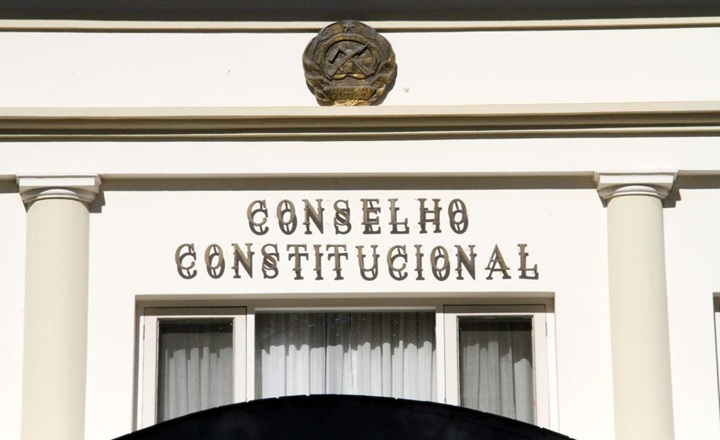
Constitutional Council Awards Purchase of Luxury Vehicles for 49.5 Million Meticais
2026-10-01

Culture
International Coffee Day: Aroma, Flavor, and History
2026-09-30
Copyright Jornal Preto e Branco All rights reserved . 2025