
“Resettlement cannot be treated as a necessary evil of development” – warns the UN
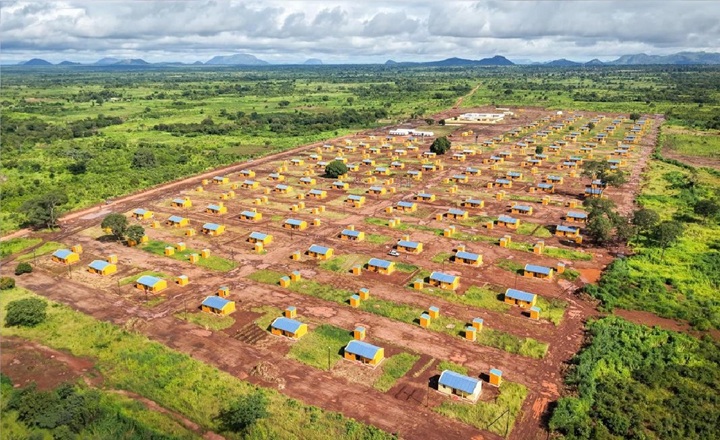
Maputo — The resettlement of communities as part of large investment projects in Mozambique should not be a mere logistical operation, but rather a complex process of territorial governance that requires the free, prior and informed consent of the affected populations. This warning was issued on Tuesday (April 28th) in Maputo, during a seminar on corporate responsibility and community protection, promoted by the Office of the United Nations High Commissioner for Human Rights (OHCHR) and the Human Rights Center of the Faculty of Law at Eduardo Mondlane University.
The event, held at the Radisson Blu Hotel, brought together lawyers, academics, anthropologists, sociologists, and environmental engineers with a clear objective: to confront practice with doctrine and discuss the effectiveness of protection and reparation mechanisms in resettlement processes in Mozambique.
Representing the United Nations High Commissioner for Human Rights, Dr. Ivete Mafundza Espada highlighted that the organization has been promoting various awareness-raising actions to strengthen the protection of human rights. According to her, the aim is to ensure that these rights are integrated across the board into public, private, and business policies and practices.
The official recalled that the OHCHR has been active in this area since the first national assessment on business and human rights, carried out in 2014 in partnership with the Mozambican League for Human Rights. This work continued with the recommendations of the 2021 Universal Periodic Review—the next cycle of which is approaching—and with the development of the National Action Plan on Business and Human Rights. “This plan was led by the Ministry of Justice, with support from the United Nations and the European Union,” she added.
The legal expert emphasized that international and regional instruments already exist that address the rights of communities and resettlement issues. Globally, the OHCHR has also created a helpdesk on business and human rights, which offers technical guidance to states, businesses, and civil society organizations. The objective is to support the adoption of a legally binding instrument on this matter within the framework of the United Nations—a process in which Mozambique has participated annually, involving the state, civil society, and corporate entities.
“As we gather today in Maputo, we are not merely discussing norms. We are addressing a challenge that defines the future of territorial governance in Mozambique,” stated Dr. Ivete Mafundza Espada. According to her, the way the country manages the resettlement of communities directly influences the dynamics of investment and development. “Resettlement has ceased to be a mere logistical operation of asset transfer and has become a complex process of territorial governance,” she insisted.
According to the UN guiding principles on resettlement, endorsed by Resolution 55/2011, this process unconditionally requires the free, prior and informed consent of the affected populations. "Resettlement should not be treated as a necessary evil of development, but rather as a measure of last resort," the UN representative emphasized.
The social activist acknowledged that Mozambique is experiencing a period of economic dynamism, marked by the expansion of the extractive sector and infrastructure. However, she warned that this growth brings an increased responsibility: ensuring that development does not occur at the cost of the displacement or legal invisibility of the most vulnerable groups.
The seminar was not limited to theory. Topics such as the practical application of due diligence, international issues relating to guiding principles, the role of stakeholders in safeguarding human rights, and, crucially, legal empowerment strategies—which enable communities to negotiate more equitably—were discussed.
“Our aim is for this seminar to contribute to the consolidation of guidelines that will allow for the improvement of our internal legislation, ensuring that, in each resettlement process, the restoration of dignity, livelihoods and sociocultural cohesion of communities is an absolute priority,” Espada concluded.
The official thanked all the panelists and participants, expressing her hope that the fruitful debates would equip Mozambique with effective tools to ensure economic development anchored in the UN Guiding Principles on Business and Human Rights, the principles of resettlement, the Sustainable Development Goals, and full respect for Mozambican law and human rights.
Outras noticias
Culture
Launched at BCI, a book that immortalizes memories and humor of Zambézia
2026-10-02

Society
International Coffee Day
2026-10-02

Society
Minister Mathlombe squanders his term on empty promises
2026-10-02
policy
Constitutional Council Awards Purchase of Luxury Vehicles for 49.5 Million Meticais
2026-10-01

Culture
International Coffee Day: Aroma, Flavor, and History
2026-09-30
Copyright Jornal Preto e Branco All rights reserved . 2025