
Privileges of Former Presidents Generate Controversy: ANAMOLA Requests Declaration of Unconstitutionality of Decree No. 9/2026
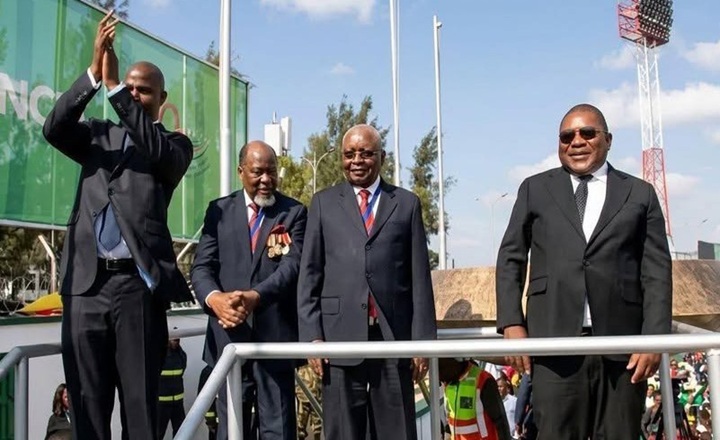
The debate surrounding the privileges granted to former Heads of State in Mozambique has taken on new dimensions after the President of ANAMOLA (National Alliance for a Free and Autonomous Mozambique), Venâncio Mondlane, submitted formal requests to the Attorney General and the Ombudsman seeking a declaration of unconstitutionality and illegality of Decree No. 9/2026, of March 27.
The initiative was announced by the politician himself during a press conference, where he argued that the aforementioned decree, approved by the Council of Ministers, exceeds legal limits by establishing rights, duties, and privileges for former Presidents of the Republic—a matter which, he argues, falls under the exclusive competence of the Assembly of the Republic.
According to Venâncio Mondlane, the Executive Branch has clearly violated the Constitution of the Republic by legislating on matters that are fundamental to the organization of the State. The politician invokes article 178, paragraph 1, of the Constitution, which grants Parliament the power to legislate on fundamental issues of domestic and foreign policy.
In this context, it argues that Decree No. 9/2026 does not merely regulate Law No. 32/2014 of December 30, but introduces new rights, constituting an "usurpation of legislative functions." This interpretation, it argues, constitutes sufficient grounds for the Constitutional Council to rule on the validity of the decree.
Another central point of contention concerns the alleged incompatibility of the decree with Law No. 5/2022, of February 14, which establishes the Single Salary Table (TSU) in the Public Administration. Mondlane argues that the granting of allowances, namely the holiday allowance, to former Heads of State contradicts the current regime in the public service, where such benefits are not contemplated. Furthermore, he considers the equalization of the remuneration status of former Presidents to that of the current President to be illegal, since the TSU establishes the latter as the sole reference for the salaries of holders of sovereign bodies.
"If this equalization is allowed, it opens the door for the existence of multiple reference salaries within the state apparatus, which contradicts the spirit and the letter of the law," he emphasizes.
Beyond the issue of unconstitutionality, the leader of ANAMOLA also submitted a formal request to the President of the Republic, Filipe Jacinto Nyusi, demanding the publication of the allowance schedule referred to in the decree.
According to Mondlane, the decree mentions allowances applicable to former Heads of State without, however, specifying the amounts or criteria for allocation, which raises suspicions about the existence of "opaque" or unregulated benefits. "We are dealing with allowances that are not listed in any public table, which compromises the principles of transparency and legality," he stated.
Decree No. 9/2026 establishes a wide range of benefits for former Presidents of the Republic after leaving office. Among the privileges provided are the allocation of eight vehicles, renewable every five years, periodic subsidies for housing maintenance, extraordinary salary and representation allowance, the right to 30 days of annual leave with first-class airfare and travel expenses, medical and pharmaceutical assistance extended to the family unit, as well as security provided by the State.
Currently, Mozambique has three former Heads of State covered by this regime: Joaquim Alberto Chissano, Armando Emílio Guebuza, and Filipe Jacinto Nyusi, the latter at the end of his term.
The challenge led by Venâncio Mondlane arises in a context of increasing public scrutiny of the management of state resources and raises relevant questions about the separation of powers, the legality of the Executive's actions, and the financial sustainability of the benefits granted to former holders of public office.
Should the Constitutional Council accept the request, the process could establish a significant precedent in delimiting the powers between the sovereign bodies, as well as in controlling the constitutionality of the Government's normative acts. Meanwhile, the official position of the Attorney General and the Ombudsman is awaited, whose decisions could determine the next steps in this process that is already shaping the national political agenda.
Outras noticias
Culture
Launched at BCI, a book that immortalizes memories and humor of Zambézia
2026-10-02

Society
International Coffee Day
2026-10-02
Society
Minister Mathlombe squanders his term on empty promises
2026-10-02
policy
Constitutional Council Awards Purchase of Luxury Vehicles for 49.5 Million Meticais
2026-10-01

Culture
International Coffee Day: Aroma, Flavor, and History
2026-09-30
Copyright Jornal Preto e Branco All rights reserved . 2025