
Pressure on fuel supplies leads Executive to revise its discourse and admit constraints
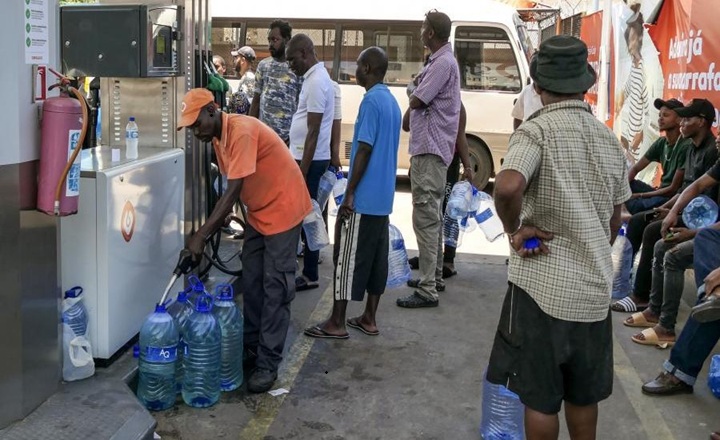
The Mozambican government has explicitly acknowledged, for the first time, the existence of "some pressure" on the supply of liquid fuels in various regions of the country, contradicting previous positions that denied difficulties in the sector. This admission comes in a context of growing instability in the international energy market, associated with the escalation of the conflict in the Middle East.
The statement was made by Salim Valá, spokesperson for the 10th Ordinary Session of the Council of Ministers, held this Tuesday, who stated that the Executive has been closely monitoring the situation at gas stations. According to the official, despite the difficulties reported by consumers, there is still stock available, although without a concrete forecast as to how long it will last.
“Indeed, we have been monitoring some pressure on the pumps. The information available indicates that there is still stock available. At this moment, I am not in a position to say how long the stock will last,” declared Valá, emphasizing that the situation is being monitored continuously, given its strategic importance to the national economy.
The admission of constraints comes after weeks of reports of sporadic fuel shortages in several cities, a phenomenon that coincides with the intensification of geopolitical tensions in the Middle East. The conflict, involving the United States, Israel, and Iran, has caused significant fluctuations in oil prices on the international market, with direct impacts on economies dependent on fuel imports, such as Mozambique.
Despite this scenario, the Government is, for now, maintaining fuel prices unchanged in the domestic market, unlike several countries in the Southern African Development Community (SADC), which have already made upward revisions. Even so, the spokesperson for the Council of Ministers implied the possibility of an imminent readjustment, indicating that the Executive will make a statement "at the appropriate time".
Government sources indicate that the fuels currently available in the country were acquired before the recent surge in international prices, which has allowed for the postponement of price updates for consumers. However, with the replenishment of stocks at higher prices, it is expected that the effects of the international situation will be reflected in the national market in the coming weeks, possibly starting in May.
As a mitigating measure, the Executive is considering activating the Stabilization Fund, a financial mechanism designed to cushion external shocks and prevent abrupt increases in fuel prices. This instrument was already used in 2022, following the global energy crisis triggered by the war between Russia and Ukraine.
Currently, the Stabilization Fund has approximately 390 million meticais (approximately six million US dollars), an amount that could be mobilized to protect both consumers and economic operators from the immediate impacts of international volatility.
Experts warn, however, that the sustainability of this measure depends on the duration and intensity of the global crisis, as well as the state's fiscal capacity. In a prolonged scenario of instability, Mozambique could face additional challenges, including inflationary pressures and impacts on the cost of living.
However, the Executive assures that it will continue to monitor the situation "very closely," reiterating its commitment to adopting measures that ensure a balance between economic stability and social protection.
Outras noticias
Culture
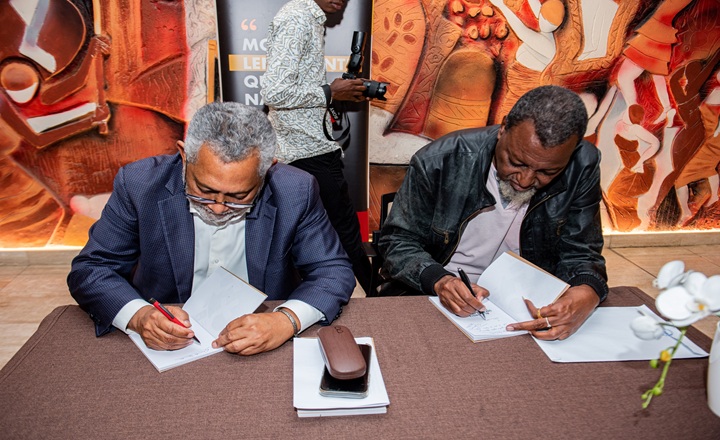
Launched at BCI, a book that immortalizes memories and humor of Zambézia
2026-10-02
Society
International Coffee Day
2026-10-02
Society
Minister Mathlombe squanders his term on empty promises
2026-10-02
policy
Constitutional Council Awards Purchase of Luxury Vehicles for 49.5 Million Meticais
2026-10-01
Culture
International Coffee Day: Aroma, Flavor, and History
2026-09-30
Copyright Jornal Preto e Branco All rights reserved . 2025