
Minister advocates for a new phase of investment and reform to address climate challenges
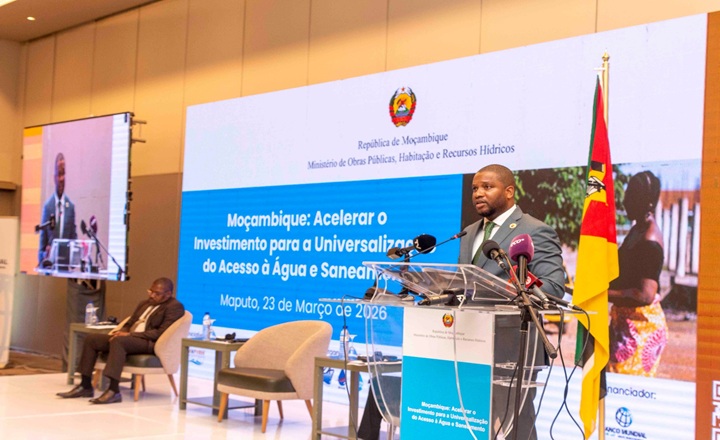
The Minister of Public Works, Housing and Water Resources, Fernando Rafael, advocated this Monday (March 23), in the city of Maputo, the prioritization of a strategic agenda for water, sanitation and water resources, based on institutional reform, increased investment and implementation capacity. The opening of the National Roundtable on the Water Sector takes place in a context of increasing climate pressure and the acceleration of national development goals.
Sanitation emerged as one of the central points of the debate. Despite the country's efforts to expand water and sanitation coverage by the end of the five-year period, panelists unanimously pointed to the persistent lag in this subsector, particularly in rural areas. According to the United Nations Children's Fund (UNICEF), more than seven million Mozambicans still practice open defecation—a reality that, according to the organization, requires a large-scale response with more funding, behavioral change, and sustainable solutions.
On the other hand, sector reform has proven to be at a crucial stage. While the African Union Development Agency (AUDA-NEPAD) presented the 2026-2036 Compact as an instrument to align priorities and catalyze investments, the Water Regulatory Authority (AURAS) warned that without strong and predictable regulation, there will be neither trust nor sustainability. Meanwhile, Águas de Moçambique (AdeM) placed operational efficiency at the center of the debate, noting that physical and commercial losses are around 45%, hindering service quality and reinvestment.
Regarding financing, the Water Supply and Sanitation Investment and Asset Fund (FIPAAS) advocated for an integrated financial architecture that combines public resources, concessional financing, climate funds, and private capital. According to the institution, the sector lacks large-scale investments to accelerate water, sanitation, and water security goals.
When the debate turned to water resources, the National Directorate of Water Resources Management (DNGRH) broadened the perspective beyond human consumption, positioning water as a strategic asset for agriculture, energy, industry, tourism, and the protection of populations. It was noted that Mozambique has 16 large dams with a combined capacity of approximately 59.2 billion cubic meters, but the need to expand storage, monitoring, forecasting, and basin management in the face of increasing climate pressure was highlighted.
During the event, Fernando Rafael also launched the microsite for the Water Sector Compact, presented as a platform for transparency, mobilization, and monitoring of the new agenda. On that occasion, the government official stressed that the country's challenge no longer lies solely in identifying needs, but above all in aligning political will, funding, and execution capacity to transform commitments into concrete results.
Outras noticias
Culture
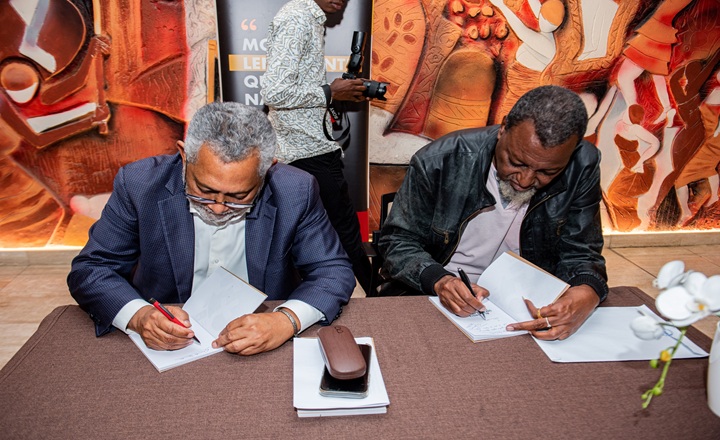
Launched at BCI, a book that immortalizes memories and humor of Zambézia
2026-10-02

Society
International Coffee Day
2026-10-02

Society
Minister Mathlombe squanders his term on empty promises
2026-10-02
policy
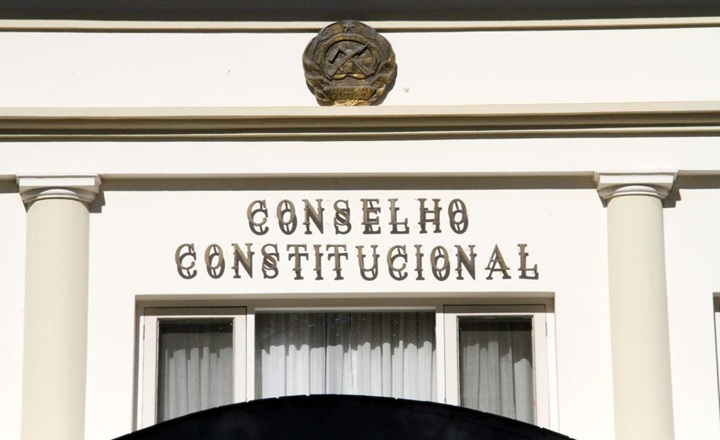
Constitutional Council Awards Purchase of Luxury Vehicles for 49.5 Million Meticais
2026-10-01

Culture
International Coffee Day: Aroma, Flavor, and History
2026-09-30
Copyright Jornal Preto e Branco All rights reserved . 2025