
Maputo on the brink of collapse: fuel crisis turns trains into human sardine cans
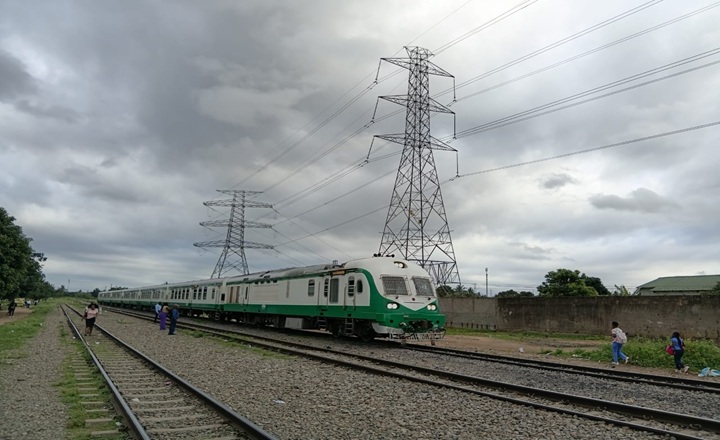
The global fuel crisis, which is intensifying in Mozambique, has gone beyond endless queues at gas stations. In Maputo, the problem has reached alarming proportions, transforming the daily lives of thousands of citizens into a veritable urban survival scenario.
In the capital, where ministries, banks, schools, hospitals, and daycare centers are concentrated, the shortage of gasoline and diesel has completely disrupted the routine of those who depend on transportation to live. For many residents of peripheral areas such as Marracuene, Matola Gare, Boane, and Matola City, owning a car is no longer an option. It has become an inaccessible luxury overnight.
With no alternatives, the population rushed to the trains of the Mozambique Railways (CFM), which, while seemingly an emergency solution, quickly turned into a chaotic and dangerous phenomenon.
The historical dependence on private automobiles has always been a silent problem in Maputo. With the rising cost of living, thousands of families were pushed into areas along the EN1, EN2, and EN4 highways, making a car a basic necessity until 2024. During that period, it was estimated that more than 564,000 vehicles circulated in the region. Today, that scenario has collapsed.
While geopolitical tensions in the Middle East involving powers such as the United States and Iran hinder the global flow of fuel, Mozambique suffers the indirect effects. Despite controlled prices, supplies have become scarce and irregular. The result? Kilometric queues, a booming black market, and a growing climate of social despair.
Without fuel, the city moved to the rails.
The CFM trains, which offer affordable services—sixty meticais in second class and fifty in the railcar—became the only possible refuge. However, demand has exploded far beyond capacity, and today the trains operate at extreme levels of overcrowding.
The railcar, conceived as a pilot project, became a symbol of the crisis: overcrowded carriages, crammed passengers, doors left open during the journey, and a constant risk of tragedy. The images are shocking: bodies pressed together, tired faces, and an entire city dependent on a system on the verge of collapse.
A source at CFM admits that the service was never conceived as a structural solution; the company, whose main focus is freight transport, treats passenger transport as a social responsibility. Now, faced with imminent collapse, there is talk of privatization, a measure that, even if it moves forward, will not resolve the crisis in the short term.
As if that weren't enough, the MetroBus, which could have alleviated the pressure, failed to deliver. Constant mechanical problems and operational failures drove users away, leaving the rail system alone to handle overwhelming demand.
And this is where the question that troubles Maputo arises:
What will happen the day the Automotora stops running?
Because that day may come, whether due to breakdown, lack of maintenance, or shutdown. And when that happens, the crisis will cease to be a nuisance and become a total collapse of urban mobility.
Maputo is in motion... but hanging by a thread.
Outras noticias

Culture
Launched at BCI, a book that immortalizes memories and humor of Zambézia
2026-10-02
Society
International Coffee Day
2026-10-02

Society
Minister Mathlombe squanders his term on empty promises
2026-10-02

policy
Constitutional Council Awards Purchase of Luxury Vehicles for 49.5 Million Meticais
2026-10-01

Culture
International Coffee Day: Aroma, Flavor, and History
2026-09-30
Copyright Jornal Preto e Branco All rights reserved . 2025