
Government accuses pastors of violating the law by refusing to hold elections in churches
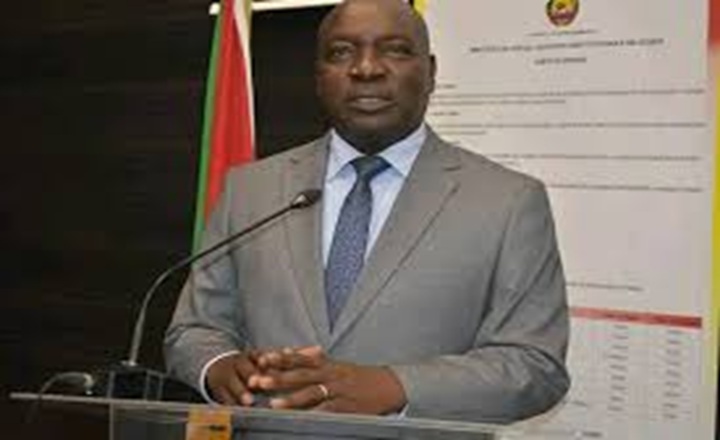
The Minister of Justice, Constitutional and Religious Affairs, Mateus Feniasse Saize, accused some pastors and religious leaders of disrespecting the law by not holding internal elections in the churches they lead, thus remaining in office beyond the term for which they were elected.
The statements were made this Thursday in the district of Rapale, Nampula province, during a public intervention on the proposed Law on Freedom of Religion and Worship, which is expected to be debated shortly in the Assembly of the Republic.
According to the governor, there are religious leaders who, after their term ends, refuse to call for new elections, remaining in charge of the churches indefinitely. In some cases, he added, they even claim to own the religious institutions they lead.
“There are pastors who are in charge of churches and, once their term ends, they refuse new elections and even go so far as to say that the church belongs to them,” stated Mateus Saize, criticizing what he considers to be a distortion of the role of religious institutions.
The minister stressed that Mozambican law requires churches to hold periodic elections to choose their leadership, in order to ensure transparent and participatory management aligned with the country's legal principles.
According to Saize, the Government has been notifying various churches to regularize their situation and hold internal elections. He warned that if these guidelines are not followed, the Ministry may adopt legal measures, including suspending the activities of non-compliant institutions.
The official also revealed that the Executive is preparing an awareness plan to encourage religious organizations to operate legally, at a time when many institutions continue to operate without the proper licensing.
However, one of the proposals included in the new Law on Freedom of Religion and Worship is to increase the minimum number of signatures required to open a church, from the current 500 to 5,000. This measure has generated debate and controversy among some religious leaders consulted by Parliament in 2025, who consider the new requirement too high.
Outras noticias

Culture
Launched at BCI, a book that immortalizes memories and humor of Zambézia
2026-10-02
Society
International Coffee Day
2026-10-02

Society
Minister Mathlombe squanders his term on empty promises
2026-10-02
policy
Constitutional Council Awards Purchase of Luxury Vehicles for 49.5 Million Meticais
2026-10-01

Culture
International Coffee Day: Aroma, Flavor, and History
2026-09-30
Copyright Jornal Preto e Branco All rights reserved . 2025