
Floods in Mozambique: when tragedy repeats itself and the world looks away
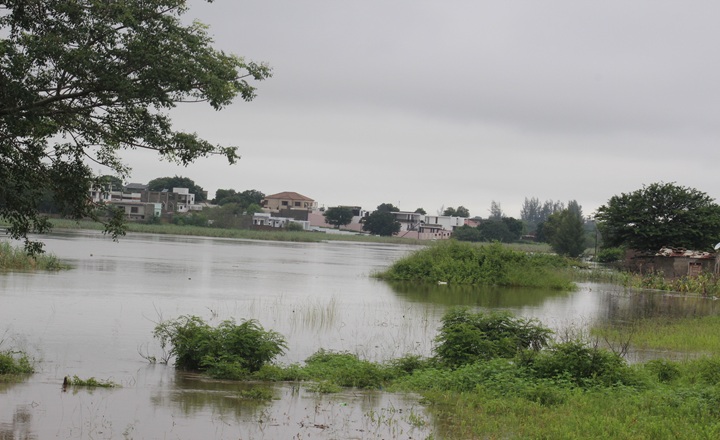
In Mozambique, floods have long ceased to be an exceptional event, becoming a structural, predictable phenomenon deeply rooted in the national reality. Year after year, rivers overflow, entire communities are submerged, basic infrastructure collapses, crops are lost, and thousands of families are forced into makeshift accommodation centers, where survival is intertwined with waiting. Despite the human, social, and economic gravity of this recurring drama, international attention remains limited, intermittent, and often superficial. The repetition of the tragedy seems to have produced a paradoxical effect: the more floods become part of Mozambican normality, the less space they occupy on the global media agenda.
It is in this context that the analysis of an online survey dedicated to news coverage of the floods in Mozambique becomes particularly relevant. The survey, composed of nine responses, does not aim to offer broad statistical representativeness, but rather to provide an empirical basis for an interpretative reading, combining quantitative and qualitative methodologies. The quantitative approach allows for the identification of clear percentage trends, while the qualitative analysis makes it possible to understand perceptions, symbolic framings, and critical judgments about the functioning of the international media and diplomatic system. It is, therefore, an exercise in analytical journalism, where numbers are not an end in themselves, but a starting point for understanding power relations, invisibilities, and informational hierarchies.
The data shows that 88.9% of respondents identify national media outlets as the main source of coverage of the floods, compared to only 11.1% who acknowledge some presence of the international press. No respondent points to regional African media as relevant. Quantitatively, this distribution reveals an almost absolute concentration of the narrative within the national sphere. Qualitatively, it shows that the disaster is treated as an internal problem, whose symbolic and informational management remains confined to Mozambican territory, with weak external projection. The suffering of the affected populations rarely crosses borders, as if pain had a nationality and human drama were selective.
This reality must be understood in light of the concrete conditions of journalism in Mozambique. National newsrooms operate with limited resources, face chronic financial difficulties, depend heavily on institutional advertising, and often work under direct or indirect political pressure. Even so, these are the media outlets that ensure continuous coverage of the floods, often in precarious conditions, with journalists traveling to flooded areas without adequate resources, facing physical risks and logistical limitations. The absence of international coverage, therefore, does not result from the non-existence of the event, but from the structural inability to transform the Mozambican tragedy into a global news priority.
When questioned about the reasons for the weak presence of the international press, 55.6% of respondents pointed to the low relevance attributed to the floods in Mozambique in the global media system. This data is particularly revealing. It reflects a clear perception of international information hierarchies, where peripheral countries, with reduced economic weight and limited diplomatic influence, rarely manage to transform recurring tragedies into events of global interest. In the international news market, not all catastrophes have the same value, and Mozambique frequently appears on the periphery of attention, condemned to a secondary place in the narrative of global suffering.
This symbolic irrelevance is exacerbated by internal factors that weaken the country's external image. Recurring corruption scandals, fragile public institutions, lack of transparency in the management of emergency funds, and disorganized state communication contribute to an erosion of international credibility. For many foreign newsrooms, investing resources in prolonged coverage of a country associated with poor governance and institutional instability does not seem to pay off editorially. The result is a complicit silence, where the absence of international scrutiny ends up reinforcing internal weaknesses.
The survey also points to concrete logistical obstacles. For 33.3% of respondents, access routes to flooded areas explain the weak international coverage, while 11.1% mention the existence of blocked means and channels. These responses reflect a reality known on the ground: destroyed roads, isolated regions, precarious communications, and frequently disorganized institutional coordination. In emergency situations, official information arrives late, is fragmented or contradictory, hindering independent journalistic work and deterring international teams that depend on reliable data and safe access to the field.
The diplomatic dimension emerges forcefully in the survey results. For 88.9% of respondents, the floods in Mozambique are not treated as a priority for international solidarity. This misfortune reveals a widespread feeling of external neglect. The country only mobilizes international attention during the most critical moments, when the images are too powerful to ignore, but quickly disappears from the global radar, even when the effects of the disaster persist for months. This dynamic is closely linked to the chronic dependence on foreign aid and the erosion of the Mozambican state's international image, frequently associated with mismanagement and broken promises.
The recurrence of floods raises a central question in media analysis. A third of those surveyed believe that, because it is a repetitive disaster, the phenomenon has lost the novelty factor that attracts the international press. Although the majority disagree with this interpretation, the division is revealing. On a human level, each flood represents a renewed tragedy; on a media level, predictability tends to reduce news impact. In Mozambique, this repetition is not only a result of nature, but a direct consequence of the disorderly occupation of the territory, the destruction of natural drainage zones, the absence of urban planning, and corruption in licensing processes.
Another relevant finding indicates that 55.6% of respondents consider coverage in flooded areas complex, expensive, and dangerous, factors that discourage the deployment of international teams. This result reflects the profound transformations in global journalism, marked by budget cuts, a reduction in field correspondents, and increasing dependence on news agencies. In contexts considered difficult and unprofitable, such as Mozambique, the cost of coverage tends to outweigh the ethical duty to inform, reinforcing inequalities in the visibility of human suffering.
Finally, 66.7% of respondents believe that the floods in Mozambique occur simultaneously with other global crises, such as wars, armed conflicts, and geopolitical disputes that dominate the international media agenda. This direct competition contributes to the marginalization of the issue and reinforces a hierarchy of human suffering, where some tragedies deserve continuous attention and others are quickly forgotten.
An integrated reading of quantitative and qualitative data leads to the conclusion that the media invisibility of the floods in Mozambique results from a combination of internal and external factors. The symbolic irrelevance attributed to the country, institutional fragility, corruption, ineffective state communication, logistical constraints, and competition with other global crises form a complex picture that perpetuates international silence. This article presents itself as an exercise in analytical and critical journalism, seeking to break with the normalization of the tragedy and reaffirm that, in Mozambique, the repetition of the disaster does not make it less urgent, but rather reveals much about the competence of those who must deal with it.
Outras noticias
Culture
Launched at BCI, a book that immortalizes memories and humor of Zambézia
2026-10-02
Society
International Coffee Day
2026-10-02
Society
Minister Mathlombe squanders his term on empty promises
2026-10-02
policy
Constitutional Council Awards Purchase of Luxury Vehicles for 49.5 Million Meticais
2026-10-01

Culture
International Coffee Day: Aroma, Flavor, and History
2026-09-30
Copyright Jornal Preto e Branco All rights reserved . 2025