
After the storm comes the disaster: when calm never arrives in a country orphaned of government and held hostage by the elements
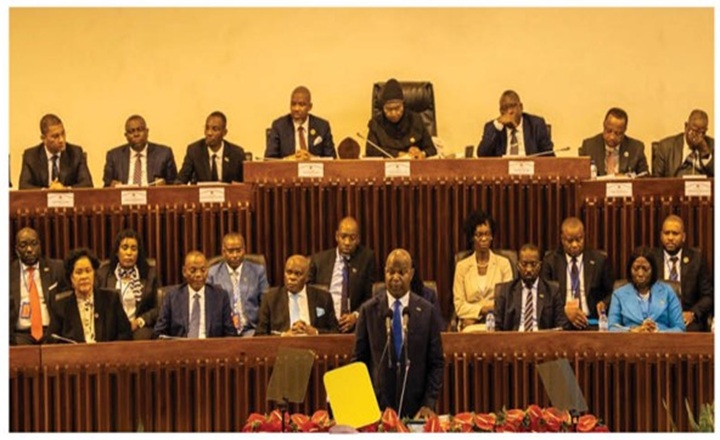
A YELLOW CARD FOR THE GOVERNMENT FOR ITS LACK OF PROSPECTS IN THE FACE OF A CYCLICAL PROBLEM THAT DESTROYS THE WEALTH AND DREAMS OF THOUSANDS OF MOZAMBICANS
In Mozambique, the popular expression that after the storm comes the calm has long ceased to reflect the reality experienced by thousands of citizens. What should be a natural cycle of recovery and hope has, in practice, become a repetitive pattern of suffering, loss, and abandonment. With each rainy season, the country faces the same scenarios of destruction, as if there were no institutional memory, as if there were no learning, as if each tragedy were an isolated event and not part of a deeply rooted structural problem.
The floods that recently affected the southern region of the country, particularly the city of Maputo and surrounding areas, have once again exposed weaknesses that can no longer be ignored or downplayed. It is not just about the intensity of the rainfall, nor about unpredictable natural phenomena. It is, above all, about the persistent inability of the State to anticipate, plan for, and respond effectively to events that have been predictable for decades.
Entire neighborhoods were submerged in a matter of hours. Families saw their homes flooded, losing possessions accumulated over years of hard work. Children were deprived of basic living conditions, schools suspended activities, and small businesses disappeared overnight. This scenario is not new. It repeats itself with worrying regularity, becoming part of a normality that cannot be accepted.
The central question is no longer whether it will rain a lot, but rather why, knowing this, the country remains so unprepared. In a context where Mozambique is widely recognized as one of the countries most vulnerable to climate change, one would expect consistent and visible investment in resilient infrastructure, efficient drainage systems, adequate land-use planning, and rapid response mechanisms. However, what is observed on the ground is the opposite.
Urban expansion has been occurring in a disorganized manner, particularly in the peripheral areas of Maputo. Neighborhoods spring up without planning, without basic infrastructure, and without rainwater drainage systems. Construction encroaches on naturally vulnerable areas, often without any effective oversight. The result is a permanent exposure to risk, which materializes whenever rainfall intensifies.
In neighborhoods like Hulene, Chamanculo, Maxaquene, and various areas of Matola, the arrival of rain is not just a climatic phenomenon; it's an immediate warning sign. The population knows that their homes could be flooded at any moment. Even so, they remain in these locations due to a lack of real alternatives. The State, which should guarantee dignified and sustainable resettlement solutions, proves incapable of offering responses that go beyond ad hoc and often belated measures.
The authorities' response during emergencies continues to be marked by delays, lack of coordination, and inadequacy. Humanitarian assistance, when it arrives, does not fully meet the needs. Many families go days without effective support, depending on community solidarity to survive. This reality highlights not only logistical failures but also an absence of strategic planning that should guide risk management in the country.
Meanwhile, legitimate doubts persist regarding the management of resources allocated to the prevention and mitigation of natural disasters. Over the years, various programs, funding, and international partnerships have been announced with the aim of strengthening the country's resilience. However, the concrete results of these initiatives are barely visible to most of the population. This discrepancy between the announced amounts and the real impact on the ground fuels a widespread perception of mismanagement and lack of transparency.
Recurring cases of suspected corruption involving figures linked to public administration further aggravate this scenario. The idea that resources intended to support vulnerable populations may be being diverted or misused is deeply disturbing. This is not just a legal issue, but an ethical one that undermines citizens' trust in state institutions.
Meanwhile, the country seems to be moving forward without a clear vision for sustainable urban development. Historic neighborhoods, which represent a significant part of Maputo's cultural and architectural identity, are facing a gradual process of degradation and disappearance. The lack of maintenance, coupled with water pressure and the absence of preservation policies, contributes to the loss of heritage that will be difficult to recover.
In areas further from the urban center, the situation takes on even more dramatic dimensions. Families live in extremely precarious conditions, often surrounded by water for long periods. Exposure to disease increases, hygiene conditions deteriorate, and food insecurity becomes a constant reality. Daily life becomes defined by uncertainty and the need for constant adaptation to a hostile environment.
The psychological impact of these situations cannot be ignored. The constant repetition of material losses and the absence of prospects for improvement generate a feeling of collective exhaustion. People lose not only possessions, but also the hope that the future can be different. This erosion of trust is one of the most serious effects of a government that fails to fulfill its basic functions.
Governing implies responsibility. It implies the ability to anticipate problems, mobilize resources, implement solutions, and be accountable to the population. When these functions are not consistently fulfilled, a void is created that is filled with frustration and distrust. The State ceases to be seen as a protector and comes to be perceived as absent or, in some cases, indifferent.
It is crucial to recognize that extreme weather events cannot be avoided. However, their impacts can and should be mitigated. Technical knowledge, international experience, and resources exist that can be mobilized to significantly reduce the vulnerability of populations. What is lacking is not necessarily capacity, but rather political will, coordination, and commitment to the public interest.
The persistence of this cycle of destruction and insufficient response calls into question the very model of governance. This is not an isolated failure, but a pattern that repeats itself over time. Each new rainy season represents a test that the State continues to fail to overcome satisfactorily.
This scenario demands a profound change in approach. Serious and continuous investment is needed in drainage infrastructure, early warning systems, rigorous urban planning, and resettlement programs that respect the dignity of the population. It is equally essential to strengthen transparency and accountability mechanisms, ensuring that public resources are used efficiently and for the benefit of citizens.
More than speeches and promises, the country needs concrete action. It needs leadership that recognizes the seriousness of the problem and is willing to confront it seriously. It needs institutions that function, policies that produce results, and a culture of accountability that does not tolerate deviations or negligence.
The issuing of a yellow card to the Government should not be understood as a merely symbolic gesture. It is a clear and well-founded warning. A sign that the current situation is unsustainable and that the continuation of this pattern will have increasingly serious consequences for the country and its citizens.
If calm doesn't follow the storm, then it's necessary to question the reasons for this absence. And, above all, it's necessary to act so that this calm ceases to be an empty promise and becomes a possible reality.
Mozambique cannot remain hostage to a cycle that combines natural vulnerability with institutional fragility. The country's future depends on its ability to break with this pattern and build a development model that places the effective protection of its citizens at its center.
Outras noticias
Culture
Launched at BCI, a book that immortalizes memories and humor of Zambézia
2026-10-02
Society
International Coffee Day
2026-10-02

Society
Minister Mathlombe squanders his term on empty promises
2026-10-02
policy
Constitutional Council Awards Purchase of Luxury Vehicles for 49.5 Million Meticais
2026-10-01

Culture
International Coffee Day: Aroma, Flavor, and History
2026-09-30
Copyright Jornal Preto e Branco All rights reserved . 2025