
YELLOW CARD: The Challenges of a Broad-Based Age Pyramid for Political Stability in Mozambique
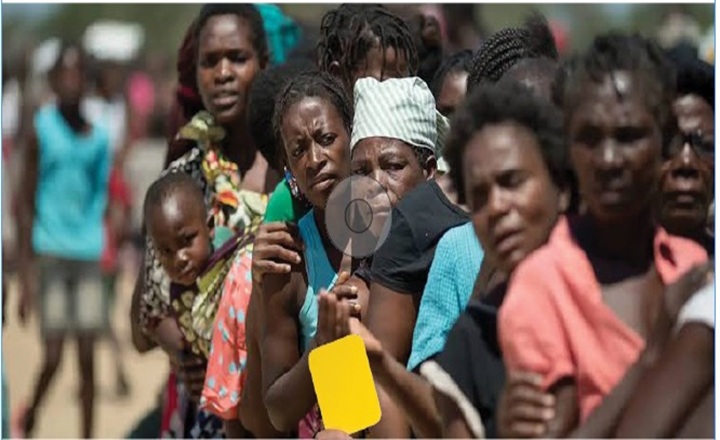
Ignoring demographic indicators can be as harmful as maintaining a corrupt government for years. Conscientious governments have demographers as allies. – A. Freeman
Societies change in step with their demographic transformations. Among the various indicators capable of anticipating opportunities and risks for a nation's future, few are as relevant as the age structure of the population. A broad-based age pyramid is characterized by the predominance of children and young people, resulting from high birth rates and rapid population growth. Under certain circumstances, this reality can represent an extraordinary competitive advantage. However, when population growth is not accompanied by economic growth, the expansion of opportunities, and improved living conditions, the same indicators that herald potential can also signal enormous social and political challenges.
Mozambique fits into this reality. The country has a predominantly young and continuously growing population. Every year, new citizens enter the education system and subsequently seek employment, income, and future prospects. However, the economy's capacity to respond remains limited. The economic growth recorded in certain periods has not been sufficient to absorb the growing demand for decent employment, quality public services, and opportunities for social advancement.
Demographic science teaches that a young population can become a powerful demographic dividend when there are consistent investments in education, health, productivity, and job creation. In such cases, the high number of people of working age drives growth, expands domestic markets, and strengthens the country's productive capacity. However, when such conditions are not met, the dividend becomes a challenge of enormous proportions.
The mismatch between population growth and economic growth tends to put pressure on virtually all areas of national life. Education faces difficulties in terms of coverage and quality. The health system is pressured by increasing demand. Cities expand rapidly and often chaotically. The labor market proves unable to absorb all those seeking an opportunity. As a result, unemployment, informality, and feelings of uncertainty about the future increase.
Demographics do not automatically determine political crises, but they can contribute to creating conditions that foster social tensions. Young populations have legitimate aspirations and growing expectations. They want jobs, recognition, participation, and prospects for advancement. When these expectations remain systematically unmet, social frustration tends to increase, and demands for change become more intense.
Generational changes also have important implications for how citizens perceive political legitimacy. Each generation interprets reality based on its own experiences. Young people often evaluate political systems based on their ability to produce concrete results, improve living conditions, and ensure opportunities for personal fulfillment. For this reason, the quality of governance, trust in institutions, and the perception of justice become central elements for political stability.
Contemporary history shows that governments in different parts of the world have faced enormous difficulties when they ignored structural changes in their societies. Demographic transformations alter collective priorities and redefine social expectations. Governing without considering these elements means reducing the capacity for anticipation and strategic planning.
Demographic indicators should be viewed as tools for forecasting and managing the future. A state that carefully monitors population trends can prepare appropriate policies for education, health, employment, housing, and territorial development. Conversely, when public decisions ignore scientific evidence, problems tend to accumulate until they reach levels that are difficult to resolve.
In predominantly young societies, political stability largely depends on the institutional capacity to respond to emerging needs. This requires planning, investment in human capital, expansion of economic opportunities, and strengthening trust between rulers and citizens. Stability does not result solely from maintaining order; it also depends on the collective perception that there are real prospects for progress and legitimate mechanisms to respond to the aspirations of society.
For this reason, evidence-based governance is a strategic requirement of our time. Demographers are not merely producers of statistics. They are privileged observers of the trends that shape the future of societies. Their studies help to identify emerging risks, opportunities, and needs. Conscientious governments recognize demography as an essential tool for planning and preventing crises.
Mozambique faces an enormous challenge and, simultaneously, a great opportunity. Its youth constitute an extraordinary human asset. With adequate investment, this population can drive innovation, expand productivity, and accelerate development. However, without policies capable of converting population growth into inclusive growth, social pressures are likely to increase.
The real warning sign issued by Mozambican demographics is an invitation to strategic reflection. Population figures are not mere statistics. They are living indicators of present demands and future challenges. Ignoring them can compromise the State's ability to plan, respond, and build lasting consensus. Recognizing them and transforming them into effective public policies represents a historic opportunity to promote stability, inclusion, and sustainable development.
Outras noticias

Culture
Launched at BCI, a book that immortalizes memories and humor of Zambézia
2026-10-02

Society
International Coffee Day
2026-10-02

Society
Minister Mathlombe squanders his term on empty promises
2026-10-02

policy
Constitutional Council Awards Purchase of Luxury Vehicles for 49.5 Million Meticais
2026-10-01

Culture
International Coffee Day: Aroma, Flavor, and History
2026-09-30
Copyright Jornal Preto e Branco All rights reserved . 2025