
International Coffee Day
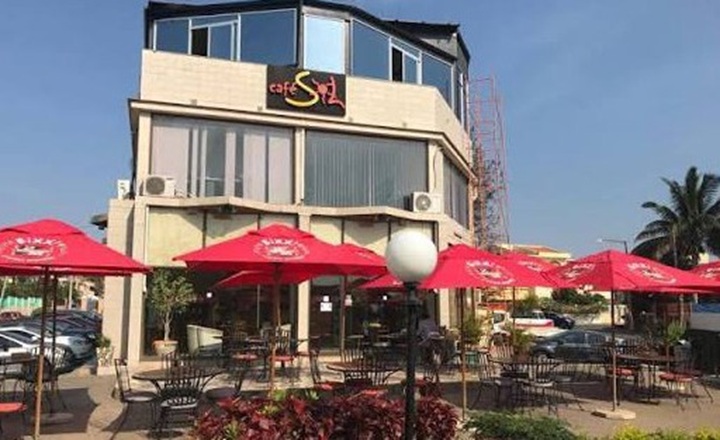
The History and Challenges of Sol Coffee in Mozambique
International Coffee Day was celebrated on October 1st, a date created by the International Coffee Organization (ICO) and recognized by the General Assembly of the United Nations (UN), with the aim of highlighting the economic, social and cultural importance of coffee farming worldwide.
In Mozambique, Café Sol has been a benchmark in coffee processing and marketing since August 2007. To mark this date, the newspaper Preto e Branco went to the streets to talk to the company's leaders, who shared their history, the challenges they have faced, and their prospects for the future.
According to the source who spoke to our reporter, the Café Sol initiative arose from the desire of some partners who began exploring the coffee business in Maputo. At the time, they explained, "there wasn't much coffee available; most of the coffee was imported."
Café Sol initially sought local suppliers, that is, at the national level. However, there was no local production at that time. For this reason, the first supplier was the Republic of Malawi, with coffee produced in Malawi and processed in Mozambique.
"The Malawian coffee bean was considered by the organization to be of high quality. We roasted, packaged, and distributed it to supermarkets. Later, we had the idea of having a coffee shop here," he recalled.
As the coffee was being processed and people started tasting it, the idea arose to open a pastry shop to have some pastries and biscuits to go with the coffee. Gradually, the space expanded into a kind of restaurant, introducing some dishes. So, we ended up having a restaurant as well.
"It's important to mention that our core business is really the Café itself. The restaurant came after the Café, but the true flagship here is Café Sol," he emphasized.
Café Sol, in itself, is the brand that represents the coffee. The same brand is used for the restaurant's name. "We are truly the Maputo Coffee Company," he stated.
Throughout this process, Café Sol faced several challenges. The first arose after the floods of 2000, when Julius Nyerere Avenue was blocked, making it difficult for customers to access the establishment.
"It was a huge challenge for Café Sol, for customers to get to our restaurant. We're talking about the period following the floods of 2000; the road was blocked, and it was very difficult to reach Café Sol. That was the first challenge," he said.
After the road was repaired, the coffee business began to recover. It was already in a situation that showed some capacity to start producing. Business went very well until 2021.
In 2019, we had established a branch in Dona Alice, called Café Lua, and another branch emerged between Kenneth Kaunda and Zimbabwe Avenues. However, soon after, we were hit by Covid-19. The restrictions affected the organization, forcing the closure of both branches. "We were confined," he lamented.
Regarding income, considering the cost of production and the entire process up to the final product, the source explained that, during the period before Covid-19, they were able to buy about 16 tons of green coffee per year. "After Covid, we dropped drastically. It was already difficult," they stated.
Note that we started selling coffee in baskets because we weren't having any sales anymore. Later, we started to recover and people started coming back. "The market itself also declined during that time of Covid. But within all of that, we had to reinvent ourselves," he said.
In terms of distribution, Café Sol doesn't have its own distributor. It depends on customers who already know them and come to place orders. "We would take the order and deliver it to an operator called Correios de Moçambique (Mozambique Post Office). They would distribute it throughout the country, depending on where the customer was located," he explained.
However, when the Post Office closed its doors, we lost this nationwide distribution facility. "It created another challenge for us: how to distribute the coffee itself?", he asked.
The source revealed that, after Covid, when they thought they were already recovering, they experienced another setback after the last elections. "After the presidential elections, it was before we had properly recovered. We became indebted again. In terms of operational costs, there are many things that were actually discontinued."
"We had a problem with the coffee, because we really couldn't make the recipes as planned. We lost a lot of recipes," he stated.
At the end of each year, specifically in December, several tourist establishments have been buying coffee from us, as they are the biggest consumers. "Many of the orders weren't placed because they didn't have guests out there. We had a big drop. It was a challenging situation," he added.
When we needed coffee, and couldn't afford to buy enough, we started buying it locally, which turned out to be cheaper. "We've now switched to buying national coffee, produced in Manica. We've been using the same coffee we're using now, called Café Sol, for two years now," he revealed.
Regarding technical support and product distribution to the growing market, the source clarified that, in terms of logistics, distribution is not their core area. "Why? Because we consider ourselves to be only restaurateurs and producers of the coffees," they explained.
"We normally try as much as possible to coordinate with the clients themselves to organize transportation and how to get the coffee to them. But for clients, the supermarkets around the city of Maputo, we do our own delivery. Outside the capital of Maputo, we ask clients to arrange the transportation, and they come to pick up the coffee directly and do their own distribution," he explained.
When asked about the benefits of consuming coffee, the source emphasized that it is a truly natural and pure coffee. "The benefits really depend on who truly loves and appreciates coffee," they said.
"We were at FACIM and we always welcome customer feedback when we give them coffee to taste. It's through them that we really hear about the state of our coffee. We, as roasters, take the grade and roast according to the origin of the grade to really maintain our standard of coffee flavor. The moment we switch from the grade to the national grade, very few people who consume our coffee can really notice that the coffee, the grade, is no longer the same," he explained.
"Each type of coffee is roasted according to its origin, place of production, and source," he added.
October 1st was International Coffee Day. As a coffee producer, what message would you like to share on this occasion?
"In particular, we encourage the national coffee industry... we really have a great possibility of producing coffee on a large scale. We have all the conditions. If we look at the companies or cooperatives that entered the market 5 years ago, apart from the largest one, which is Gorongosa, which is a different situation from other national producers, the quantity of coffee produced is still not very large, but a good part of it is through our association AMOCAFE," he stated.
"There are already several producers, and we are also members of AMOCAFE, the Mozambican Coffee Association," he concluded.
The source expressed gratitude for the opportunity: "If we want to be a coffee brand that is truly known nationally and internationally, simply promoting our coffee is never enough. I am truly grateful for this opportunity."
The Preto e Branco newspaper thanks Café Sol for their availability and wishes them much success in their mission to bring Mozambican coffee to every corner of the country.
Outras noticias
Culture
Launched at BCI, a book that immortalizes memories and humor of Zambézia
2026-10-02
Society
International Coffee Day
2026-10-02
Society
Minister Mathlombe squanders his term on empty promises
2026-10-02
policy
Constitutional Council Awards Purchase of Luxury Vehicles for 49.5 Million Meticais
2026-10-01
Culture
International Coffee Day: Aroma, Flavor, and History
2026-09-30
Copyright Jornal Preto e Branco All rights reserved . 2025