
Constitutional Council Awards Purchase of Luxury Vehicles for 49.5 Million Meticais
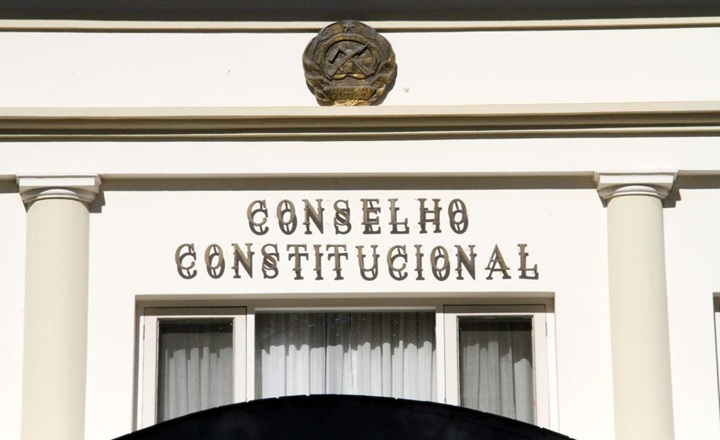
A sovereign institution under fire for lavish spending amid poverty
Mozambique's Constitutional Council is at the center of a national controversy following the disclosure of a contract worth 49,494,907.48 meticais (approximately $775,000) for the purchase of luxury vehicles. The information, published on September 26th by the newspaper Notícias, reignites the debate about the extravagance of public servants in the face of the poverty afflicting the majority of the Mozambican population.
According to the award announcement, the sovereign body concluded, on September 24th, four contracts for the supply of vehicles, including Mercedes-Benz and Hyundai Palisade models.
A single Mercedes-Benz vehicle cost 27,838,907.48 meticais, representing more than 56% of the total value. Furthermore, some of the vehicles were awarded to Brumarine Rent A Car — a car rental company, not a car dealership.
The announcement of the award provoked a wave of indignation on social media and in Mozambican political circles. Critics point out that, in a country where education, health, and basic supplies remain severely deficient, the behavior of the Constitutional Council—the ultimate guardian of the Constitution and electoral law—exposes the chasm between the ruling elite and the reality of the majority of Mozambicans.
Dinis Tivane, spokesperson for the extra-parliamentary party Anamola, publicly questioned the legality of the purchase on his Facebook page. According to him, public procurement legislation prohibits the specification of particular brands or models: "The law does not require the purchase of a specific brand or model, such as Mercedes X, Y or Z. Why did the Ministry of Economy and Finance allow this transaction to be completed through the Functional Unit for Procurement Supervision or the State Financial Administration System?"
RENAMO, the main opposition party, also issued an official statement. While acknowledging that state institutions need resources to function, it questions the priority, proportionality, and timing of the acquisition. The party demands that the Constitutional Council clarify: What is the size of the current fleet? How many vehicles are still operational? What is the real need for the new purchase? And what will be the fate of the replaced vehicles?
It is important to note that, as observed by Integrity Magazine, the announcement of the award, by itself, does not allow one to conclude that irregularities exist. Any questioning of the necessity of the purchase, technical specifications, reference prices, evaluation criteria, or contract execution requires consultation of the complete procurement process.
However, this did not appease public outrage. The core of the criticism lies not in procedural compliance, but in a deeper issue: what does it mean when the guardian of a country's Constitution spends almost 50 million meticais on luxury vehicles?
Mozambique continues to face serious financial pressures, with currency devaluation, high inflation, and a lack of funds for basic public services. Critics see this purchase as yet another example of the inversion of priorities in the management of public resources—while there is a shortage of medicines in hospitals, books in schools, and roads in rural areas, the Constitutional Council chose Mercedes.
This is not the first controversy involving the use of public funds for luxury vehicles in Mozambique. Previously, the Mozambican press revealed cases of massive purchases of Mercedes vehicles by high-ranking government officials. At the time, officials from the Ministry of Economy and Finance justified this by arguing that "the law requires national leaders to have vehicles befitting their status." However, subsequent investigations revealed that the legislation does not specify brand, engine size, or luxury level, merely establishing that "leaders are entitled to the use of official vehicles."
In that episode, press calculations showed that the public funds used to purchase luxury vehicles would have been enough to build at least 15 hospitals or launch dozens of health projects that remain stalled.
At the time of publication, the Constitutional Council had not provided any public response regarding the criteria that justified the purchase, the basis for the need, or the reason why it opted for non-concessionary companies to supply the vehicles.
For a body whose responsibilities include judging the legality of elections and defending the constitutional order, its own vote-buying behavior is now subject to constitutional scrutiny by public opinion. And the verdict is yet to be delivered.
Outras noticias
Culture
Launched at BCI, a book that immortalizes memories and humor of Zambézia
2026-10-02

Society
International Coffee Day
2026-10-02

Society
Minister Mathlombe squanders his term on empty promises
2026-10-02
policy
Constitutional Council Awards Purchase of Luxury Vehicles for 49.5 Million Meticais
2026-10-01

Culture
International Coffee Day: Aroma, Flavor, and History
2026-09-30
Copyright Jornal Preto e Branco All rights reserved . 2025