
Supreme Court prohibits broadcast of Venâncio Mondlane's trial

Without television, without radio, without images and without sound. The trial of former presidential candidate Venâncio Mondlane will be held behind closed doors, without cameras or microphones. The decision was announced this Monday, September 21, 2026, by the Supreme Court, which justifies the measure with the need to protect witnesses, guarantee the fairness of the process and avoid premature judgments in the public arena.
The Supreme Court Judge and spokesperson, Pedro Sinai Nhatitima, confirmed at a press conference that Venâncio Mondlane's request for live audiovisual transmission was denied. The Criminal Section of the Supreme Court also decided to prohibit the recording of sound and images during all sessions of the trial.
Only written coverage will be permitted for the media. Journalists may attend the trial and take notes with pen and paper. Mobile phones and other work equipment are prohibited in the courtroom. The Court has guaranteed, however, that the public will have access to the courtroom where the trial will take place.
The Supreme Court lists several grounds for denying the live broadcast. The first is the protection of witnesses. "Since they are being televised and heard on the radio, there is a risk of them being threatened, and we must protect our witnesses," argued Pedro Sinai Nhatitima.
The second aspect is the contamination of testimonial evidence. "While a particular witness is being heard, there are other witnesses who will be heard during the course of the proceedings, and these witnesses, having the possibility of following the trial live, will know in advance what witness A is saying, and this can influence the testimony that he will give at another time," explained the spokesperson.
The Supreme Court also cites the risk of the trial being used for political purposes. "We don't want this trial to be a means of propaganda for ends other than the pursuit of justice," stated Nhatitima, adding that there is a danger of the Court being pressured, "which could compromise its composure."
The safety of those involved in the proceedings is another reason given. “One of the crimes the defendant is accused of is the alleged practice of acts of terrorism, and we will have experts from our investigation here, which could cause some inconvenience for those who worked on the case. Therefore, we want to safeguard their physical integrity.”
The judges of the Criminal Section also warn of the risk of violating the principle of presumption of innocence. “As the trial unfolds, live, there will be possible or anticipated convictions or acquittals, something we do not want. We want this principle of presumption of innocence to be present until there is a final conviction. Therefore, it is not only about ensuring the fairness of the process, but also about guaranteeing the interests of the defendant himself.”
The Supreme Court recognizes the principle of publicity enshrined in the Constitution and the right to information, "a fundamental and essential right to ensure our democratic rule of law," but argues that "the principle of publicity of information is not absolute."
“Its application must take into account other aspects, and from there a decision must be made as to what should prevail: I am referring to the issue of morality, the issue of security, and the issue of the fairness of the process itself. It is important that the publicity of the trial does not compromise the fairness of the process itself. In the specific case of this trial, some dangers have been identified that could compromise the principle of presumption of innocence and the fairness of the process, considering the nature of the crimes with which the defendant is charged,” Nhatitima argued.
Venâncio Mondlane is accused of five crimes: public advocacy of crime; incitement to collective disobedience; public instigation to crime; instigation to terrorism; and incitement to terrorism. The indictment from the Public Prosecutor's Office is based on videos filmed live by Venâncio Mondlane, in which he called for protests contesting the election results, alleging fraud benefiting Daniel Chapo, the current Head of State, and the Frelimo party, in power since the country's independence in 1975.
The trial is scheduled for November 17, 2026, at the Supreme Court building in Maputo. It will be presided over by Judge Luís Monadlane, former President of the Supreme Court, assisted by Judges António Namburete (Rapporteur), Maria Isabel Rupia, João Beirão, and Carlos Mondlane.
Outras noticias
Culture
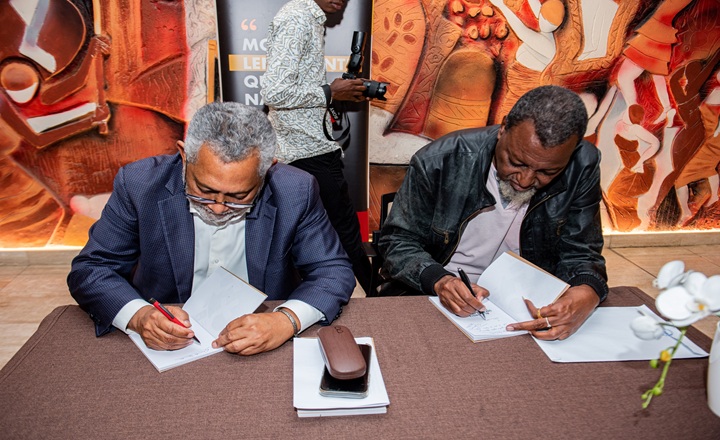
Launched at BCI, a book that immortalizes memories and humor of Zambézia
2026-10-02
Society
International Coffee Day
2026-10-02
Society
Minister Mathlombe squanders his term on empty promises
2026-10-02
policy
Constitutional Council Awards Purchase of Luxury Vehicles for 49.5 Million Meticais
2026-10-01

Culture
International Coffee Day: Aroma, Flavor, and History
2026-09-30
Copyright Jornal Preto e Branco All rights reserved . 2025