
Yellow card to the urban population for the inhumane way in which it manages its solid waste
.jpg)
Contemporary development demands that we look at the issue of environmental preservation more responsibly. The consumerism typical of liberal societies must find internal restraints, and each society must be responsible for creating and materializing them. At the same rate that the number of wealthy people increases, the number of miserable and impoverished people who have to resort to extreme means to survive also increases. It is with this in mind that we have decided to admonish urban centers and their people with this yellow flag for the way they dispose of their solid waste, particularly the leftovers of food produced daily. For many, this is nothing more than trash or disposable waste with no use whatsoever. For others, however, it is an opportunity for survival. What for some is disgust, for others is hope. What some throw away in disgust, others collect with gratitude.
In Mozambican cities such as Maputo, Beira and Nampula, thousands of people live on the streets. Although there are no consistent and up-to-date national statistics, local studies and reports estimate that between 10,000 and 20,000 people live on the streets, and a significant number survive by scavenging for food and recyclable materials in rubbish bins. Many of them are children, young people and the elderly who face a poverty that urban modernity insists on ignoring.
People risk their lives every day when they come into contact with these containers, where food waste is mixed with cleaning products, pesticides, rat and cockroach poisons. In the name of “hygiene”, poison is sprayed, ignoring the fact that this “trash” is the last hope of food for many. The international organization WasteAid estimates that thousands of people in developing countries die every year due to accidentally eating contaminated food from landfills, or from infections and diseases caused by poor waste management.
In Brazil, for example, a UN study on populations living on the streets revealed that on average 7 homeless people die every day, many in unclear circumstances, but commonly related to hunger, infectious diseases and poisoning. In Kenya, the same report indicates that the lack of waste segregation in urban areas contributes to many children who survive in garbage dumps ending up poisoned or contaminated.
Other countries have moved forward with more humane practices. In Germany, mandatory separation of household waste (organic, recyclable, hazardous, etc.) not only protects the environment, but also allows waste pickers to work safely, as they are integrated into the system with employment rights. In San Francisco, USA, there is an urban composting program where food waste is collected separately and reused, and users of these containers have safe work areas. In Japan, there are strict waste segmentation policies and public empathy campaigns for informal waste workers.
In Mozambique, however, waste management is still indifferent to human life. Garbage dumps continue to be places of extreme risk, and deaths of homeless people are often caused by infections, ingestion of toxic substances or injuries amidst garbage. To make matters worse, these problems are treated as an inevitable fate of poverty without proper support, often resulting in deaths that could be avoided, which ultimately demonstrates a lack of sensitivity, empathy and a lack of strategy to minimize the pain of people who are already victims of social inequalities.
It is in this context of dehumanization that a new generation of young, creative and nonconformist activists emerges, using their artistic, technological and social talents to draw the attention of city dwellers. Young people who create art with trash, social media campaigns, videos, exhibitions, and who take the message beyond the obvious: trash is also a mirror of our humanity. These young people are seeds of hope. They show that it is possible to raise awareness in urban communities to adopt more empathetic attitudes towards the less fortunate, and that transformation begins with small gestures and changes in behavior.
This creative activism can and should serve as a prelude to something bigger. It can inspire public policies aimed at communicating behavior change. It can fuel community movements that advocate for models of support for children and vulnerable adults who make a living from garbage collection. It can also pressure authorities to act with greater responsibility and planning.
Schools must become incubators for environmental managers with a social conscience. School curricula must seriously and with commitment incorporate environmental issues as a deeply human and social dimension. We need to educate students who not only know how to separate waste, but who understand the human stories behind each discarded piece of waste, who understand that sustainability will only be real if it includes the poorest in its design.
Citizenship education must be extended to higher education, where environmental engineering, sociology, communication, psychology and other areas must interact with each other to produce interdisciplinary and innovative solutions. We must break with the paradigm of an elitist ecology and promote an ecology of solidarity.
Municipalities, in turn, need to take responsibility for managing waste as if they were taking care of lives, because that is what it is all about and that is what is expected of their leaders. It is not enough to simply place containers. It is necessary to plan the location, segment the waste, train urban cleaning workers, protect users and offer safe alternatives for those who, unfortunately, depend on waste to survive.
Solid waste management in Mozambique urgently needs a humane approach. Social realities need to be integrated into environmental discourse. Waste needs to be viewed as part of a complex chain of socio-economic relationships. It is not just about preserving the environment. It is about preserving lives.
This yellow card is a warning. A call. A cry. We can and must do better. For life, for dignity, for empathy. Because development, when inattentive to poverty, tends to produce more misery. And our mission, as a society, is to protect the most vulnerable or, at the very least, not to make their existence even more miserable.
It is time to bring this knowledge to the center of public action and citizen awareness. It is time to act with empathy, planning and vision. Socio-ecological balance depends on it.
Outras noticias
Culture
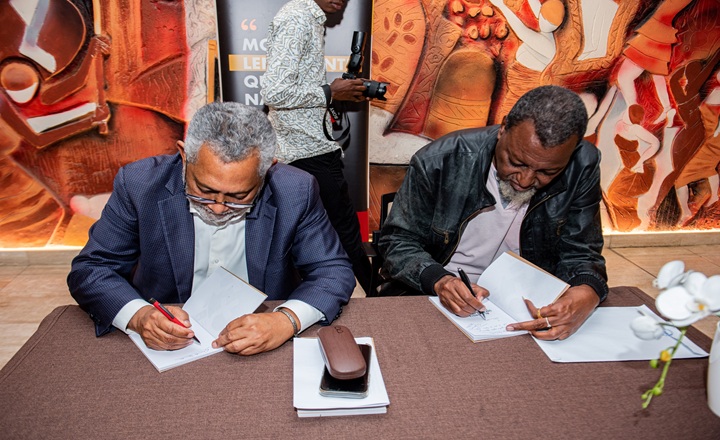
Launched at BCI, a book that immortalizes memories and humor of Zambézia
2026-10-02
Society
International Coffee Day
2026-10-02

Society
Minister Mathlombe squanders his term on empty promises
2026-10-02
policy
Constitutional Council Awards Purchase of Luxury Vehicles for 49.5 Million Meticais
2026-10-01
Culture
International Coffee Day: Aroma, Flavor, and History
2026-09-30
Copyright Jornal Preto e Branco All rights reserved . 2025