
Yellow Card to the Ministry of the Interior and the Attorney General's Office

There are moments in a nation's history when the silence of institutions weighs more heavily than the bullets that claim lives. Mozambique is currently experiencing one of those dark moments. The streets, neighborhoods, and even state institutions echo the echo of a growing barbarity: political opponents murdered without explanation, decapitated bodies found in the forests, young people missing, and now, a police commander brutally murdered. Faced with this scenario, the Ministry of the Interior and the Attorney General's Office cannot continue to act as mere spectators. The yellow card issued today is a cry for conscience, a call for responsibility and truth.
The country finds itself mired in a cycle of fear and distrust. Authorities seem to have lost control over what is happening within and outside their own ranks. The death of a police commander this Thursday is not just another crime; it is a sign of institutional collapse, moral bankruptcy, and a state beginning to devour its own children. When violence turns against law enforcement officers themselves, something profoundly wrong is happening at the heart of public safety.
The murdered commander, whose name is circulating amidst murmurs and indignation, represents much more than a victim. She symbolizes the erosion of authority, the exposure of the vulnerability of a force that once inspired respect and fear, but which today finds itself shrouded in suspicion, betrayal, and complicit silence. The cruelty with which she was killed and the mysterious circumstances surrounding the case raise questions that demand urgent answers. Who is killing the police officers? Who benefits from the deaths of high-ranking officers? And why are the Ministry of the Interior and the Attorney General's Office maintaining a silence that borders on complicity?
In recent months, the country has seen a worrying increase in targeted killings, disappearances, and executions with macabre overtones. Decapitated bodies appear in suburban woods, young people vanish without a trace, and community leaders are killed for reasons the authorities can never clarify. Each crime is more brutal than the last, and each official statement is emptier than the last. The state talks but doesn't explain; promises but doesn't deliver; investigates but never concludes. It's a theater of shadows, where tragedy repeats itself and justice is always the glaring absence.
The video that recently circulated on social media, in which a citizen warned of events of this nature involving the murdered commander herself, adds an even darker layer to this story. This isn't just a coincidence or popular speculation. It's an indication of a silent war within the police ranks—a power struggle, a burning of files, perhaps even an internal purge. And if this is true, then Mozambique faces one of its most dangerous moments since the end of the civil war: a state fragmenting from within, with its defense and security forces divided by hidden interests and dubious loyalties.
The yellow card raised today is, therefore, more than a symbolic gesture. It is a civic demand. It is a reminder that institutions cannot continue to act as if there were no blood in the streets, as if families were not burying their loved ones without knowing why, as if life in Mozambique had not become a game of Russian roulette. The Ministry of the Interior owes the country explanations. The Attorney General's Office owes justice to the victims. And both owe transparency to the people who support them.
When justice and security institutions lose the capacity or willingness to solve crimes, the doors to impunity open. And where there is impunity, there is chaos. Recent human history is replete with examples of countries that collapsed not due to a lack of resources, but due to a lack of justice. Institutional silence is the prelude to social collapse. And that is what this yellow card seeks to prevent: the ultimate collapse of trust between the state and its citizens.
The danger of these massacres goes far beyond the death toll. It erodes the foundations of social coexistence. It creates a climate of collective fear, where no one knows who will be next. It weakens faith in authorities and fuels conspiracy theories that, even when exaggerated, flourish in the fertile ground of a lack of information. The Mozambican state is losing the narrative battle, and when the state loses control of the narrative, it also loses control of the nation.
The police commander's death exposed the rot that had long been masked by press releases and rehearsed speeches. She showed that the enemy, at this moment, may be within their own household. The struggle unfolding in the shadows of the Mozambican Republic Police Force seems more like a dispute between factions than a war on crime. And while the powerful clash in the shadows, ordinary citizens continue to pay the price in blood and fear.
The Attorney General's Office, in turn, bears an inalienable responsibility. Its silence in the face of these events is deafening. When the highest criminal justice body remains silent in the face of successive and barbaric deaths, it sends a message of complicity or impotence, both equally dangerous. It is the duty of the Attorney General's Office to protect the principle of legality, to ensure that no crime, no matter how political or sensitive, goes unanswered. But what we have seen is a Prosecutor's Office that acts zealously only when the interests of political power are affected. For the anonymous dead, for the grieving families, for the communities living in terror, there remains only the bitter consolation of a justice that never arrives.
It's no exaggeration to say that Mozambique is walking through a social minefield. The killings of political opponents, the assassinations of law enforcement officials, and the resurgence of extreme violence threaten the very fabric of national stability. When fear becomes routine, the state ceases to be the guarantor of security and becomes seen as part of the problem. And that's when the abysses of distrust, popular self-defense, and disorder emerge. No society can survive for long when the people lose faith in institutions.
Therefore, this yellow card is also a warning. It's the last call before the inevitable red card. It's a demand that the Ministry of the Interior and the Attorney General's Office break their silence and courageously confront what's happening. The country needs to know the truth, no matter who it hurts. It needs to know if there is, in fact, an internal war within the security forces. It needs to know who is killing whom, and why. It needs to see the guilty identified, tried, and convicted, so that the cycle of impunity can finally be broken.
The greatest danger is the normalization of violence. When a people become accustomed to seeing decapitated bodies, hearing about disappearances, and burying police commanders without anyone being held accountable, evil ceases to shock. And when evil ceases to shock, barbarity becomes part of the landscape. This is what the Mozambican state must avoid at all costs: the trivialization of death as a natural consequence of political and institutional life.
Civil society, journalists, academics, and citizens of conscience cannot stand by silently. Defending life and human dignity is a collective duty. The voices raised to question power are not enemies of peace; they are its last shield. To remain silent is to allow darkness to advance. To speak out is an act of resistance. And this yellow card is, above all, an act of moral resistance, against fear, against indifference, and against the institutional death of truth.
Mozambique urgently needs an ethical shock, a moral refounding of its institutions. The Ministry of the Interior must look inward and ask itself what kind of police force it wants to represent: one that protects or one that erases? The Attorney General's Office must choose whether it wants to be memory or oblivion, justice or adornment, hope or a graveyard of truth. Because the time for ambiguity is over. Every day of silence is a day of complicity. Every unexplained death is an open wound in the national conscience.
Today, the yellow card is raised in the name of all Mozambicans who still believe that justice is not a luxury, but a right. In the name of those who mourn their missing. In the name of those who are afraid to go out into the streets. In the name of the police officers themselves who wear their uniforms with honor and watch, helplessly, as their reputation is degraded. This yellow card is the cry of a people who do not want to live under the rule of fear, but under the light of truth.
The country urgently needs answers. It needs the Ministry of the Interior to speak clearly. It needs the Prosecutor's Office to act firmly. It needs the State to finally accept that the violence consuming it comes from within and without, and that its greatest enemy lies not in the forests, but in the impunity that feeds on the silence of institutions. Because when silence becomes complicit, barbarity gains a voice, and the future loses hope.
Outras noticias

Culture
Launched at BCI, a book that immortalizes memories and humor of Zambézia
2026-10-02

Society
International Coffee Day
2026-10-02

Society
Minister Mathlombe squanders his term on empty promises
2026-10-02
policy
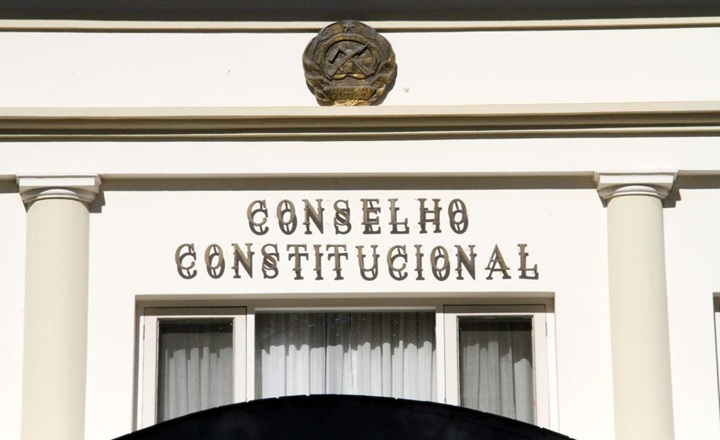
Constitutional Council Awards Purchase of Luxury Vehicles for 49.5 Million Meticais
2026-10-01

Culture
International Coffee Day: Aroma, Flavor, and History
2026-09-30
Copyright Jornal Preto e Branco All rights reserved . 2025