
YELLOW CARD TO THE MINISTRY OF EDUCATION AND HUMAN DEVELOPMENT OF MOZAMBIQUE

This yellow card goes to the education system of the last 15 years in particular, and to the government, which has in various ways discouraged education and allowed instability in the system
The country watches, stunned and weary, the progressive collapse of one of its most sacred pillars: Education. What should be the foundation for the future has become an old building, full of cracks, leaks, crumbling walls, and doors that no longer close. And the most serious thing is that in the 21st century, we still stand by impassively as a society watches students studying under trees, sitting on the ground, exposed to the elements. Meanwhile, this collapse is not a surprise, not an accident, not a result of fate, but rather a direct consequence of the unprofessional, negligent, uncommitted, and predatory management that the Ministry of Education has demonstrated over the last fifteen years. The system has entered a deep crisis, but there is no institutional courage to acknowledge the obvious: Mozambican education is sick, and the illness is serious.
Let's start with the basics. The curricula seem designed not to train capable citizens, but to fill paperwork and fulfill the external agendas of donors. The system's structure is overburdened, deficient in almost everything essential: there is a lack of classrooms, desks, basic materials, and above all, an environment that allows for dignified teaching. Schools have become makeshift fields where students compete for physical space and teachers fight over the crumbs of motivation that remain. It's institutionalized chaos. A typical class can have up to 80 students, all crammed into tiny walls or under a leafy tree, and this often happens in large urban centers, near the circles of power.
The case of teachers is particularly revealing. This class, which should be treated with the dignity of those who hold the country's future in their hands, is today the most intriguing and tragic face of this decaying system. Motivation is so low that they can no longer hide their exhaustion, burnout, and frustration. Many have accumulated months without proper overtime pay. The much-publicized TSU (Social Security Tax), which rekindled legitimate hopes for salary improvements, was implemented abruptly and ambiguously, and when it finally began to provide some relief, it was suspended as quickly as it had been announced. The teaching profession was left in the lurch, once again deceived by promises that never materialize.
The material crisis finds fertile ground in the ideological crisis. There seems to be a hidden plan to discredit the sector, or at least to prevent it from stabilizing, and to discourage poor families from sending their children to school. Indeed, this is the reality in rural areas, where most families don't bother to send their children to school or keep them there because, in practice, there is no interest in their learning on the part of those who teach them. The number of spelling and grammatical errors in textbooks can no longer be explained by carelessness: it is a symptom of ethical collapse. How can a textbook reach a child's hands with glaring errors? How can the Ministry allow textbooks to reach schools without the slightest revision? What message is being transmitted to new generations?
It is impossible to hide the effects of this "education suicide," that is, the suicide of education. Students reach higher levels without mastering the minimum required quality. Many cannot write coherent sentences. Their handwriting is worrying, their thought structure is fragile, and their grammatical understanding is rudimentary. Young people graduate, passing from class to class, but without evolving in knowledge. They graduate, but not educated. And a country that transforms diplomas into certificates of academic survival is creating a future of limitations.
The most scandalous episode, however, is the mega-fraud of the National Exams, where versions of the exams circulated before they were even administered. This shameful act is not only a crime against the integrity of the education system; it is an insult to the efforts of thousands of honest students. It reveals that the exam itself, which should be the ultimate symbol of transparency and fairness, has been captured by incompetence, corruption, or a combination of both. When even the exams themselves are not immune to degradation, it is confirmed: the system has entered a state of decay.
Even worse is observing that this degradation contrasts sharply with the early years of independence. Despite a shortage of teachers and infrastructure, those years were marked by a genuine commitment to building a liberating education that broke with colonial logic. Pedagogical quality was not questioned. The educational output, although produced in a difficult context, was respectable, solid, and prepared students to think critically. Today, despite more resources, more institutions, and more public discourse about "improvements," quality has disappeared. The regression is evident, painful, and institutionally ignored.
The lack of political will to establish a transformative education system is glaring. While the public system languishes, a parallel private education system silently grows, built as a refuge for the children of the middle and upper classes. It is an educational enclave, almost an elite union, guaranteed by tuition fees inaccessible to most Mozambicans. Meanwhile, scholarships distributed within the ruling class multiply, sending their children to universities abroad. The children of the poor, however, study in overcrowded classrooms, with broken desks, without water, without sanitation, and sometimes without a teacher. It is an inhumane, undignified scenario, and the Ministry seems not to see it or not want to see it.
Only an ethically exhausted government could allow such negligence. A government that understands the value of education would never accept decaying schools, humiliated teachers, empty curricula, and rigged exams. Education is not just any sector; it is the backbone of development. And when that backbone breaks, the entire country is thrown off balance.
The time has come to say, clearly and firmly: the Ministry of Education needs to take responsibility. It needs to listen to the real country, not the varnished reports circulating in offices. It is necessary to restore the dignity of public schools, invest in rigorous teacher training, rebuild the ethical authority of textbooks, and above all, give back to Mozambican children the basic right to quality education.
This yellow card is a stern warning. It's not just criticism; it's a plea. It's a cry of urgency. If nothing is done with courage and honesty, the next card won't be yellow, it will be public acknowledgment that they have let Education fall into an abyss with no return. And that, simply, the country cannot accept.
Outras noticias
Culture
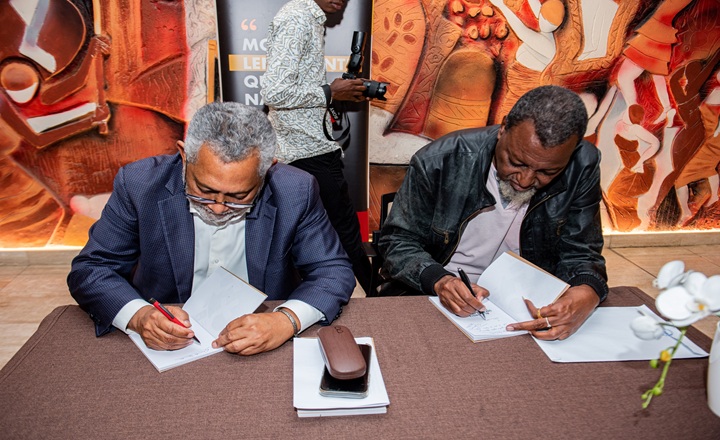
Launched at BCI, a book that immortalizes memories and humor of Zambézia
2026-10-02

Society
International Coffee Day
2026-10-02

Society
Minister Mathlombe squanders his term on empty promises
2026-10-02
policy
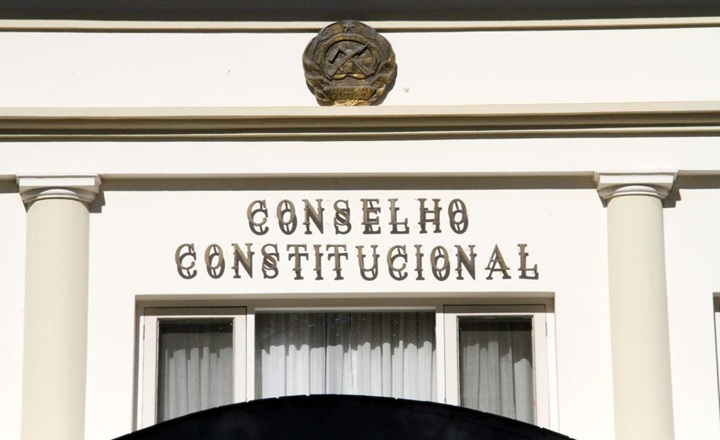
Constitutional Council Awards Purchase of Luxury Vehicles for 49.5 Million Meticais
2026-10-01

Culture
International Coffee Day: Aroma, Flavor, and History
2026-09-30
Copyright Jornal Preto e Branco All rights reserved . 2025