
Yellow Card to the Constitutional Council: When the Guardians of the Constitution join the Vultures' Banquet
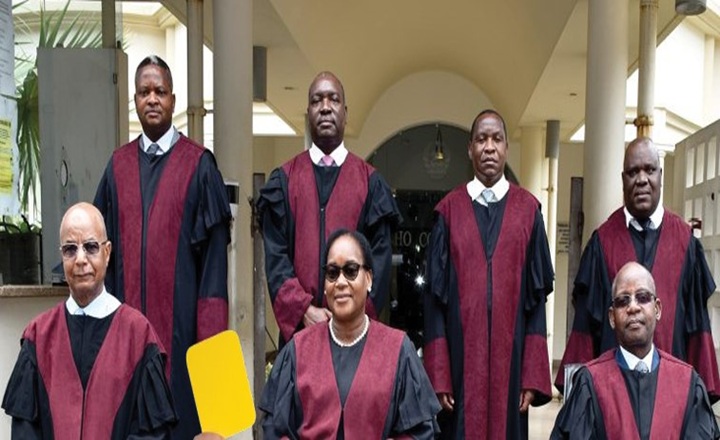
Mozambique's Constitutional Council (CC) should be, by nature and mandate, the highest authority of constitutional justice, the calm and firm arbiter that, in moments of political and social tension, upholds the Constitution as a shield against abuse, arbitrariness, and attempts at state capture. However, what we have witnessed over the years is a perverse metamorphosis: the guardians of the Constitution have become silent guests at the banquet of the vultures devouring what little remains of Mozambique's democratic dignity.
This Yellow Card is not just an exercise in denunciation; it is a wake-up call to the nation. Instead of establishing itself as a bulwark of the law, the CC has chosen the path of complicity, acting more as a defense attorney for the regime than as an impartial judge of the Republic.
The root of this constitutional crisis lies in the cumulation of functions of the President of the Republic, who simultaneously serves as President of a political party, the ruling party. This conflation of roles undermines the essence of the democratic rule of law because it places partisan interests above national interests.
When the Head of State presides over party meetings, defines electoral strategies, guides activists, and coordinates political campaigns, he no longer acts as the President of all Mozambicans, but as the supreme commander of a faction. The concept of nationhood is emptied and becomes synonymous with party militancy. Citizens cease to be citizens and are classified into two groups: those who belong to the party and are therefore considered "legitimate sons of the nation," and those who are outside, condemned to be foreigners in their own country.
Now, the Constitution of the Republic, by establishing the principle of equality of all citizens before the law and defining the President as a symbol of national unity, requires that the office be exercised in a nonpartisan manner. But when this overlapping of roles becomes normalized, the constitutional spirit is destroyed.
Rather than intervening, rather than demarcating the boundaries between the State and the party, the Central Committee legitimizes this merger. Complicit silence in the face of the accumulation of functions is not institutional neutrality: it is a stance in favor of the partisanship of the State.
In the last general elections, marked by documented fraud, police violence, murders of activists, and blatant manipulation of results, the CC was called upon to make a decision. It was time to show the nation and the world that there was still room for impartial justice in Mozambique. But what did the CC do? It rubber-stamped the results, ignored the evidence, and presented the country with a ruling that sounded more like a press release from the ruling party than a supreme court ruling.
This wasn't just a legal decision; it was a political act. It ratified national tension, deepened the crisis of trust between citizens and institutions, and solidified the perception that in Mozambique there is no separation between justice and political power.
Democracy, in any country, is a fragile process that needs to be protected by institutions. When these institutions fail, what remains is only form without content, ritual without substance. Mozambique has experienced exactly this: regular elections, speeches of legitimacy, official proclamations of victory and peace, while in practice, exclusion, fraud, and violence destroy the democratic foundations.
By rejecting civil society's complaint against the President's dual role, the CC unmistakably demonstrated its choice: to side with power and oppose the people. It also demonstrated that democracy in Mozambique still has a long way to go before it truly becomes an instrument of inclusion, equality, and participation.
Today, citizens realize that appealing to the Civil Code is like knocking on the door of a judge who has already written the ruling before even hearing the case. This lack of faith is deadly to any rule of law, because it destroys the last hope that the law can prevail over force.
When the president of the Civil Code, accompanied by the other judges, decides to don the robe not as a symbol of independence but as a party uniform, she becomes what the collective memory already inscribes: the devil's advocate. The advocate of a regime that practices the gradual assassination of democracy, that replaces the rule of the people with the rule of a party.
The CC's complicity is not limited to elections. It is structural. It is present in the way it interprets the Constitution, always favoring the established power; it is present in its silence in the face of human rights violations; it is present in its refusal to acknowledge that democracy cannot be reduced to a ritual of manipulated ballot boxes.
The price of this complicity is high. It is paid in social tension, in repressed protests, in the deaths of citizens who dare to speak out, in the forced exile of activists and journalists, in widespread distrust of institutions. And it is paid, above all, in the fragmentation of the nation. Because when the State becomes conflated with a political party, those outside that party no longer feel part of the nation.
The title of this Yellow Card is not gratuitous. It speaks of a vulture's feast, because what we are witnessing in Mozambique is the slow and steady devouring of the fragile body of democracy. The vultures are those who feed on the corpse of justice, those who transform popular hopes into dry bones, those who feast on power without regard for the suffering of the people.
The CC, instead of warding off the vultures, sits at the table with them. It shares the meal, shares the spoils, and celebrates victories that are not victories of the people, but collective defeats of the nation.
And meanwhile, the streets of Maputo, Beira, Nampula and so many other cities echo the silent revolt of millions who know that there is no justice, that there is no democracy, that there is no State to protect them.
But if democracy is today the victim of gradual assassination, it is also true that the story does not end here. As long as the Central Committee kneels before political power, social groups, organized civil society, young people, and local communities will continue to fight. Because freedom was never given; it was always won.
With each unjust decision, each partisan ruling, the Central Committee increases its debt to history. And this debt will be paid. Collective memory is relentless, and those who today shelter under the shadow of power will tomorrow have their names engraved as accomplices in the collapse of democracy.
This Yellow Card to the Constitutional Council is not merely symbolic. It is a political, ethical, and historical warning. It is a reminder that the judges who should protect the Constitution are, in fact, serving as executioners of democracy. It is a denunciation that the president of the Constitutional Council wears the robe not to defend the people, but to legitimize the regime.
As long as this continues, Mozambique will continue to live in a system in which democracy is an empty word, justice a staged spectacle, and freedom a deferred dream.
But it's also the certainty that this state of affairs won't last forever. The Mozambican people have shown, at different points in their history, that they are capable of resistance, struggle, and conquest. The fight for freedom will be constant, and the day will come when the vultures will be driven from the feast.
Until then, this Yellow Card will be recorded, not as an isolated gesture, but as part of the living memory of a people who refuse to be silenced.
Outras noticias

Culture
Launched at BCI, a book that immortalizes memories and humor of Zambézia
2026-10-02

Society
International Coffee Day
2026-10-02

Society
Minister Mathlombe squanders his term on empty promises
2026-10-02
policy
Constitutional Council Awards Purchase of Luxury Vehicles for 49.5 Million Meticais
2026-10-01

Culture
International Coffee Day: Aroma, Flavor, and History
2026-09-30
Copyright Jornal Preto e Branco All rights reserved . 2025