
Yellow Card to Mozambican Diplomacy: The Abandonment of Immigrants in South Africa
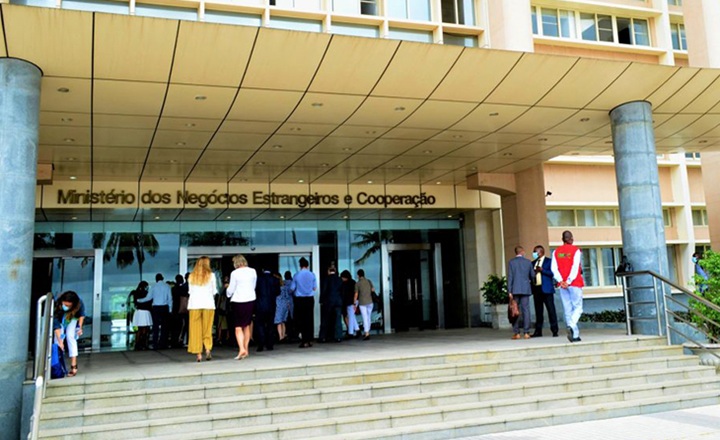
A heavy yellow card, laden with indignation, must be leveled today at Mozambican diplomacy, especially the Ministry of Foreign Affairs and Cooperation and the Mozambican consular services in the Republic of South Africa. These organizations, which in theory should be guardians of the dignity and rights of citizens living outside the country, appear to have abdicated their mandate, reducing themselves to mere stamping and authentication offices, concerned only with endless bureaucracy or business dealings that have little or nothing to do with the daily suffering of Mozambicans in the diaspora.
In practice, what we see is an absent state, incapable of acting when its citizens are humiliated, assaulted, or deported in degrading conditions. Worse, this institutional vacuum creates space for South African authorities and parts of that country's society to treat Mozambicans as unwanted, almost subhuman, simply because their stay does not meet all the requirements of legal migration. The complicit silence of national diplomacy thus becomes fuel for hostility toward foreigners to grow and become normalized.
The infamous Operation Dudula is the most vivid proof of this collective failure. Born as a community surveillance movement that took on xenophobic overtones, Dudula has become an instrument of brutal persecution against African migrants, especially those of Mozambican and Zimbabwean origin. On the streets of South African cities, manhunts are carried out under the indifferent gaze of the Mozambican state. Homes are invaded, workers are beaten, women and children are expelled from entire neighborhoods, and all of this happens without Maputo's diplomatic corps mobilizing to guarantee minimal protection for its citizens.
It is unacceptable that, in the 21st century, a country like Mozambique, so proud of its history of liberation and the solidarity it once received, should demonstrate such neglect toward its own people. This is no longer just a matter of isolated failures, but of a true structural crisis in foreign policy, which has proven incapable of responding to migratory challenges. It is increasingly clear that, diplomatically, our state is a total failure. There is no reliable mapping of the number of Mozambicans living in South Africa, there are no truly functioning social assistance programs, and there are no effective mechanisms for pressure or ongoing dialogue with Pretoria to protect the human rights of our compatriots.
The situation has worsened further with the implementation of directives for the extradition and summary deportation of illegal immigrants by South African authorities. Every week, hundreds of Mozambicans are herded into vans and trucks, transported like cattle, and dumped in Ressano Garcia, often penniless, undocumented, and lacking any dignity. For neighboring authorities, they cease to be people; they are treated as disposable numbers, whose only mistake was trying to survive across borders, in a country that promised them better living conditions. The most serious issue is that, on the Mozambican side, nothing is done. Neither the Immigration Services, nor the Border Police, nor any government agency deigns to take responsibility for the humane reception of these people. In Ressano, men, women, and children are abandoned to their fate, exposed to networks of crime, trafficking, and new forms of exploitation.
The Mozambican state's absence is glaring and shameful. Where is the diplomacy that should negotiate minimum conditions of dignity for deportees? Where are the reintegration programs for those forced to return? Where are the mechanisms for monitoring human rights at the borders? Unfortunately, the responses are always the same: silence, indifference, and disregard.
The yellow card also extends to the government's approach to the issue of immigration. Instead of integrated policies that consider emigration as a social, economic, and human phenomenon, the issue continues to be treated as a minor problem, solved only with paperwork, visas, and stamps. This is a profound error. Mozambican emigration to South Africa is neither episodic nor recent; it is part of our history, our economy, and the survival of thousands of families. Many of these citizens contribute remittances that support entire villages, pay for schools and hospitals, and feed children who would never see the state caring for them. Yet, when faced with difficulties, these same citizens are left to fend for themselves.
This yellow card should, therefore, be interpreted as a stern warning to the Ministry of Foreign Affairs and consular services: their indifferent stance is not only an administrative failure, but a betrayal of the social pact that should unite state and citizen. A government that fails to defend its people loses moral and political legitimacy.
At the same time, this letter is a wake-up call for civil society, academics, and all who still believe in a dignified and humane Mozambique: we cannot continue to passively accept that our brothers and sisters are treated as leftovers from humanity. It is urgent to demand active diplomacy, one that engages in equal dialogue with South Africa, pushes for mutual respect, and organizes serious assistance and reintegration programs.
If Operation Dudula and the mass deportations demonstrate South African hostility, Mozambican inertia reveals a perhaps even greater problem: our state's inability to recognize the value of its own people. A state that doesn't know the number of its emigrants, that doesn't have reliable statistics, that doesn't create public policies for the diaspora, is a state without vision. And a state without vision has no future.
For all these reasons, this yellow card is issued in a tone of condemnation. This is no mere symbolic gesture, but a profound wake-up call: Mozambique cannot continue to fail its expatriate citizens. Diplomacy must be more than protocol and expedient business; it must be an instrument of protection, dignity, and hope. This is what the people demand, and this is what the Ministry of Foreign Affairs must urgently understand if it hopes to regain lost trust.
Yellow Card: to the Ministry of Foreign Affairs of Mozambique and all related services, for failing to defend Mozambican immigrants in South Africa, for neglecting liveshuman beings and for transforming diplomacy into a mere empty ritual.
Outras noticias

Culture
Launched at BCI, a book that immortalizes memories and humor of Zambézia
2026-10-02

Society
International Coffee Day
2026-10-02

Society
Minister Mathlombe squanders his term on empty promises
2026-10-02
policy
Constitutional Council Awards Purchase of Luxury Vehicles for 49.5 Million Meticais
2026-10-01

Culture
International Coffee Day: Aroma, Flavor, and History
2026-09-30
Copyright Jornal Preto e Branco All rights reserved . 2025