
Yellow Card of the Week: The Attorney General's Office
.jpg)
The Judiciary is not yet ready to let go of the Executive's breast
This week's yellow card goes, with all due relevance and a sense of urgency, to the Attorney General's Office (PGR) of Mozambique and the entire judicial system, which, despite being a constellation of the best in the field, leaves much to be desired in terms of its role as guardian of justice and legality. It is unjustifiable that, 50 years after independence, the justice system continues to be tied to a certain party force, even if one imagines a state of law and its institutions. It is generally understood that this institution should be the bastion of legality, impartiality and the defense of the principles of the rule of law, but on the contrary, it has completely shied away from its main function, with a special focus on managing delicate social conflicts such as cyclical post-election conflicts. The events that marked the period following the elections clearly exposed the institutionalized bias of the PGR, or if you will, its complicit silence in some cases of serious crimes committed by the Defense and Security Forces (FDS) as well as the bodies that manage the elections, which are often protected because they also act in a partisan logic. Meanwhile, the yellow card goes to the PGR because there is a perception in society that it acts selectively, targeting opponents to a certain extent and sparing allies of power even if they present themselves in the opposition or with agendas that are comfortable for the regime.
This is not about advocating impunity. On the contrary, it is our duty to reinforce the need for firm, impartial and equitable justice. The problem, however, is that the Prosecutor's Office has not been able to prove to Mozambican society that it is in fact neutral. On the contrary, its current stance is one of manifest partiality, fueling the perception that it is a captured institution, whose functioning is subordinate to the interests of the Executive and the party in power.
In the weeks following the elections, the country witnessed popular demonstrations led by citizens angry at what they considered a fraudulent process. The demonstrations, which were mostly peaceful, were violently repressed by the SDF. Images and reports released by civil society organizations, independent media outlets and social media clearly show the disproportionate use of force, including live ammunition, arbitrary arrests, beatings and even killings of defenseless protesters.
Additionally, a massacre occurred in the Maximum Security Prison, where dozens of detainees lost their lives in unclear circumstances, while in state custody. In any state committed to the rule of law, such events would be immediately subject to exhaustive investigation, with criminal proceedings being opened, those involved suspended and society being held accountable. But in Mozambique, the PGR chose to remain silent and forget, acting as if nothing had happened.
Meanwhile, the same Prosecutor's Office has been quick to implicate opposition figures, particularly Congressman Venâncio Mondlane, in a maneuver that seems more guided by partisan agendas than by legal grounds. The contrast between the inertia in the face of crimes committed by state agents and the speed with which it seeks to hold opponents accountable raises serious doubts about the credibility and autonomy of this institution.
We are faced with a situation in which the Public Prosecutor's Office is positioning itself as an active part of political repression. When the judicial system becomes a tool for silencing dissent, justice ceases to fulfil its primary function and becomes a weapon of domination, oppression and perpetuation of political hegemony. Neutrality is a constitutional obligation, not a concession made when convenient. Its absence undermines the foundations of the rule of law, fuels social resentment and institutionalises injustice as the norm.
The judicial system, in general, has not escaped scrutiny either. Its performance in the post-electoral context has been disappointing, to say the least. It has apparently concentrated its efforts on prosecuting those linked to the opposition, while ignoring the origin of the problems: the various pieces of evidence of electoral fraud, administrative wrongdoing, and collusion between the electoral administration bodies and the party in power. Even with evidence of videos, audios, manipulated minutes and other easily verifiable elements, there has been no implication. No investigation has been opened to hold the true promoters of the political crisis accountable.
The Judiciary in Mozambique, despite its rhetorical appeal to the separation of powers, seems to prefer to dance to the beat of the Executive. Its speeches at the opening of the judicial year, with words such as "independence", "strengthening the rule of law" and "commitment to justice", end up being mere symbolic rituals. What is missing are concrete actions, attitudes of rupture, institutional manifestations of real autonomy. We have never seen the Judiciary, through the Superior Council of the Judiciary or the Attorney General's Office, effectively pressure the Executive, denounce interference, refuse guidance or protect threatened magistrates.
By maintaining this subservient stance, the judicial system becomes a sounding board for the wishes of the party in power. Worst of all, it legitimizes unconstitutional acts, tolerates human rights violations and, ultimately, compromises the existence of a plural and just republic. The people begin to see justice as a theater, where the innocent are sacrificed and the guilty are decorated. The feeling of injustice grows, and institutional despair spreads and when the people lose faith in justice, they are left with only the streets, revolt and violence as forms of expression.
Without a strong and supervised Executive, the country will continue to be held hostage by corruption and poverty. Without an independent judiciary, democracy will always be a sham. The separation of powers is the backbone of any democratic regime. And when it is systematically violated, the State becomes a mechanism of domination rather than protection of citizens.
Therefore, by issuing this yellow card to the Attorney General's Office, we are also extending this warning to the entire judicial system. It is time to break with the logic of institutional servitude, to reaffirm functional autonomy and to restore to the people the hope that it is still possible to live in a country where everyone is equal before the law.
We need to reprogram our justice system, otherwise we risk losing what remains of our respect for the institution or the will to consolidate the project of building the nation and its main goal, which is national unity.
History will judge today's silences and omissions. But there is still time for change.
Outras noticias

Culture
Launched at BCI, a book that immortalizes memories and humor of Zambézia
2026-10-02

Society
International Coffee Day
2026-10-02

Society
Minister Mathlombe squanders his term on empty promises
2026-10-02
policy
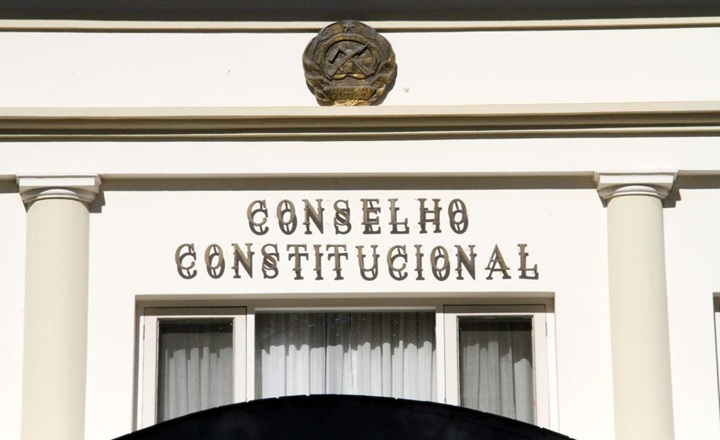
Constitutional Council Awards Purchase of Luxury Vehicles for 49.5 Million Meticais
2026-10-01

Culture
International Coffee Day: Aroma, Flavor, and History
2026-09-30
Copyright Jornal Preto e Branco All rights reserved . 2025