
Yellow card for the Mozambican government: who really controls the finances of this country?
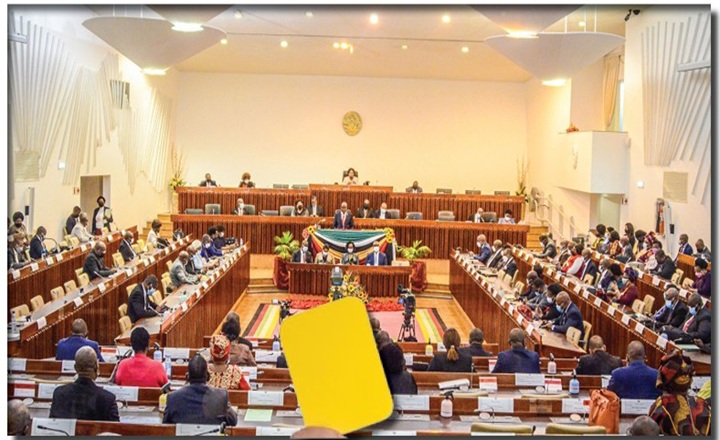
Mozambique is at a turning point: with gas reserves estimated at hundreds of trillions of cubic feet in the Rovuma Valley, a window of opportunity opens for natural wealth to be transformed into sustainable investment. But between promise and practice lies a fragile public financial system, permeable to discretionary uses and power grabs. The US$33.6 million scandal...theesThe funds withdrawn (or allegedly withdrawn) from the sovereign wealth fund denounced by the Administrative Court reveal deep fissures in the institutional design. At the same time, allegations of multimillion-dollar "compensations" to companies linked to the government and the inert response from oversight bodies show a control dynamic that goes beyond "lack of alignment": it points to the oligarchization of public resources and the subordination of institutions to the executive branch or to elites operating in the shadows.
Between 2022 and 2024, the Mozambican state collected approximately US$165 million.thees(approximately 10.8 billion meticais) in taxes on gas and oil production. Of this, US$ 33.6 milliontheesApproximately 2.2 billion meticais were immediately channeled into the State Budget, according to government information. The law creating the sovereign wealth fund (FSM), approved in December 2023 and operational in 2024, stipulates that 40% of the sector's revenue will be allocated to the fund and 60% to the State Budget.
The Administrative Court, in auditing the 2024 accounts, detected irregularities that reveal a discrepancy between what was declared and what was actually "declared." According to the Court's report, of the US$33.6 million...thepayments made by Mozambique Rovuma Venture (MRV), a joint venture between ExxonMobil, ENI and CNPC — only US$24.6 millionthees were confirmed as integrated into Orwstate funding. The approximately US$9 millionthethe restThey could not be certified due to "absence of collection slips, essential documents for the breakdown of revenue and confirmation of its entry into the Treasury's Single Account (CUT)". The Court demands that the government reorganize the general state account, provide clarifications, and redo the balance sheets with accuracy, simplicity, and transparency.
The official justification, via the government, is that these US$33.6 millionthees refer to previous recipestheFSM law. The SecrettheState Treasury and Ordnancewment, AmiLcar Tivane states that, before the law establishing the FSM came into effect, production tax revenues were applied to the State Budget according to the legislation then in force—therefore, there was no diversion or irregular use. Now, according to him, with the operationalization of the FSM (dependent on the signing of a management agreement between the Treasury and the Bank of Mozambique), resources will be allocated between the State Budget and the fund following the 60/40 rule. As of October 23, 2025, the balance of the FSM's transit account was US$204.5 million.thees(approximately 13.4 billion meticais), resulting from accumulated gas revenues.
But the central contradiction remains: the government acknowledges that the US$33.6 millionthees foram“used in orwstate expansion"before operationalizationherethe plenary session of the World Social Forum. This prtheThe tactic of retroactively justifying spending uses the argument of legal transition as a shield for discretionary agency. The consequence: what should constitute future savings to stabilize the economy becomes an instrument of untimely budgetary flexibility, and subject to capture. In this context, "saying that nothing was misappropriated" ends up functioning as a device functional to maintaining executive control.
Furthermore, it is not enough to question the large gas revenues. Current budget management already exhibits patterns of specific favoritism that suggest capture. For example, there is a report that “500-odd million meticais” were paid as compensation to a gas station linked to the children of a former president and the president of the Constitutional Council, while about 20 other similar companies were excluded. Although there are no official sources that publicly confirm all the details, this narrative, repeated in the discourse of civil society, activism, and alternative media, reveals how institutional opacity allows for asymmetrical private compensation operations with public resources.
When one observes that the Administrative Court identified irregularities in the 2024 accounts, misaligned accounts, violations of the law, absence of essential documents, and discrepancies between institutions such as INAMI, INP, and the Tax Authority, the issue is not merely technical: it is political. The Administrative Court pointed to a lack of coordination between the regulatory bodies of the natural resources sector and weaknesses in information control, with companies potentially operating outside fiscal scrutiny and discrepancies in the data disclosed by different institutions.
If oversight bodies identify flaws but fail to impose clear sanctions or prevent questionable spending, this suggests that real control of finances does not lie in the hands of the Assembly of the Republic, auditors, or civil society, but rather in parallel decision-making circuits where the executive branch or interests linked to it manipulate flows on the fringes of formal legality.
This pattern of dysfunctional governance has historically echoed in Mozambique. The case of the "Hidden Debts" is perhaps the most dramatic example: it involves loans secretly contracted between 2013 and 2014, mainly through state-owned companies created to conceal guarantees, culminating in the misappropriation of hundreds of millions of dollars. The magnitude of this scandal, which still generates litigation, international lawsuits, and diplomatic embarrassments, made it clear that the Mozambican state can sustain multimillion-dollar financial obligations with little scrutiny. The economic and reputational impact was devastating: the country had difficulty obtaining external financing, suffered a loss of confidence, and saw its sovereign risk skyrocket.
In this context, any high-magnitude operation, such as the US$33.6 million...theor the alleged compensationçõThe practice of directing public funds to companies linked to elites is now interpreted by citizens not only as "discreet management," but as a continuation of the practice of "finance from within power." In countries with vulnerable institutions, the exercise of public power often occurs through networks that nest among political, judicial, business, and technocratic elites, using legal rhetoric to legitimize operations that undermine the public interest.
Therefore, the "yellow card" emerging from this debate does not refer only to the specific episode: it is a warning that the governance of public finances is uneven, allowing strategic decisions to be made by actors with privileged access. The use of public resources, whether through gas revenues or sectoral compensations, is politicized in a way that favors private interests, while the control mechanisms do not have sufficient strength to enforce themselves.
The $33.6 million episodethees, and the reactionhereopusubsequent publicandmore than a crisis of legitimacy:anda window that sellstheGiven the functioning of a system where large financial flows can be reallocated with minimal supervision, provided there are retroactive justifications, when these justifications are based on legal timelines (e.g., "before the FSM law") or on "transitional accounts," a loophole for institutional capture is opened.
Mozambique doesn't need more rhetoric, but rather strict rules and strong institutional mechanisms that enforce transparency and accountability. If power still resides in the executive branch, let it at least function as a real observatory. If elites capture the State, let them be constrained by law, not just rhetoric. The "yellow card" cannot be erased with justifications: it needs to accelerate the institutional brakes to rebalance power and make financial control truly public, not a privilege of the few. The time to strengthen, not just reform, is now, before gas reserves are dissipated in the void of impunity.
Outras noticias
Culture
Launched at BCI, a book that immortalizes memories and humor of Zambézia
2026-10-02

Society
International Coffee Day
2026-10-02
Society
Minister Mathlombe squanders his term on empty promises
2026-10-02
policy
Constitutional Council Awards Purchase of Luxury Vehicles for 49.5 Million Meticais
2026-10-01

Culture
International Coffee Day: Aroma, Flavor, and History
2026-09-30
Copyright Jornal Preto e Branco All rights reserved . 2025