
Yellow card for inhumane cooperation between Mozambique and South Africa
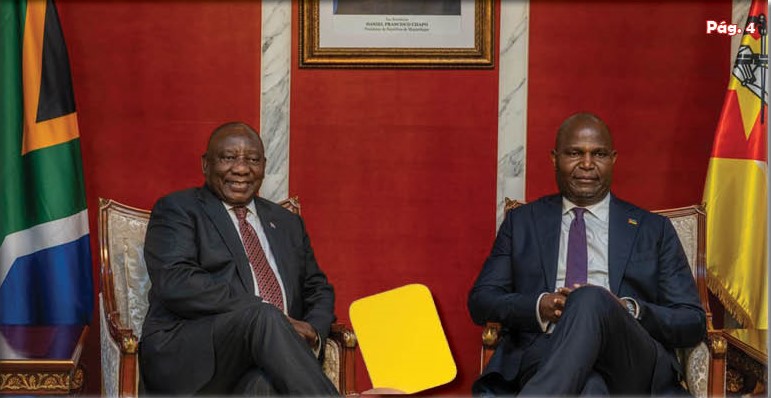
Bilateral cooperation between Mozambique and South Africa has always been presented as a symbol of regional integration, historical sharing, and economic complementarity. However, behind the official discourse lies a harsh, unequal, and profoundly inhumane reality that demands a firm and unequivocal warning. The numbers don't lie: in the last twenty years alone, Sasol exported approximately 2.6 billion gigajoules of gas from Pande and Temane to South Africa, while only 352 million gigajoules remained in Mozambique. In 2024, more than $922 million worth of fuels and derivatives were exported to the South African market, supplying industries, homes, and transportation systems in that country. Paradoxically, the Mozambican people continue to carry gas cylinders back and forth, paying dearly for a resource that originates in their own soil, while on the other side of the border the same gas flows through household pipes, driven by a cooperation model that prioritizes corporate profits and governmental interests, but ignores human dignity.
While gas flows unimpeded across borders, the average Mozambican faces the opposite scenario: barriers, deliberate delays, humiliation, and violence. Deportations are a glaring example. In the first half of 2025 alone, South Africa deported 5,070 Mozambicans, an 18% increase compared to the previous year. Thousands of people treated as unwanted cargo, crammed together, returned without dignity, often after years of hard work contributing to the country's economy. And there is no shortage of reports of violence, abuse, and degrading conditions during these processes. Even more serious are the episodes of xenophobia, repeated in an endless cycle. In several waves of violence, dozens of Mozambicans lost their lives, businesses were looted, houses burned, and families destroyed. These attacks, with long historical roots, reflect deep internal inequalities that end up transforming the foreigner, especially the African immigrant, into the perfect scapegoat. At the same time, governments meet with red carpets, polished speeches, and declarations of friendship, but there has never been a serious summit dedicated exclusively to the protection of Mozambican citizens in South Africa. There is no joint plan to defend the physical, social, and psychological integrity of those seeking better conditions in that neighboring country. There is no real structure to guarantee security, accessible legalization, labor protection, legal support, or community integration. Nothing. Political and economic cooperation remains robust, while humanitarian cooperation remains practically nonexistent.
And why do so many Mozambicans continue to leave? Because in their own country opportunities are scarce, salaries insufficient, and development uneven. Thousands seek in South Africa a way to support their families, pay for schooling, and buy food. They do everything: they work in mines, on farms, in construction, in private security, in jobs that many South African citizens despise. They help build buildings, factories, and roads. They contribute to the South African economy as much as any local worker, but they are treated as disposable foreigners. This brutal contradiction undermines any narrative of regional integration or historical solidarity. And when they return, many come back traumatized, stripped of possessions, without savings, with stories of abuse, aggression, or irreparable losses. There are families who have lost loved ones without ever receiving explanations; there are looted goods; there are invaded houses; there are lives shattered by xenophobic attacks in the face of the complicity of local authorities. All this under the deafening silence of those who should be the guardians of the dignity of the Mozambican people: the State itself.
At the borders, the scenario is equally humiliating. Mozambicans are forced to get up early, spend endless hours in endless queues, sleep outdoors, face deliberate delays and arbitrary interventions. The crossing, which should be an administrative formality, has become a ritual of physical and psychological exhaustion. A true show of force, in which the migrant is reminded that he is not welcome, even though his work feeds entire companies and cities on the other side of the border. And while this happens, trucks loaded with ore cross Mozambique every day, polluting roads and killing people in accidents that rarely receive investigation or accountability. Chromium is transported freely; but the citizen suffers obstacles and humiliations. And there is no shortage of cases of explicit racism practiced by South African tourists, especially Boers, who frequent Mozambican beaches, treating the local population with contempt and superiority, often under the impassive gaze of authorities more concerned with tourism profits than with the dignity of their own people.
Taking an honest look at the situation, it's impossible not to question the current cooperation model. What is the value of economic integration when human life is worth less than an energy contract? What kind of partnership is this where goods circulate more freely than human beings? Who benefits from this arrangement? Certainly not the Mozambican people. Economic dependence is reinforced, social injustice deepens, and political discourse hides this contradiction behind smiles and diplomatic niceties. Energy agreements are signed, debts and profits are shared, while entire families are destroyed by xenophobia, insecurity, lack of opportunities, and institutional negligence. And when someone tries to question this model, the argument arises that "the economy needs it," as if the economy were a sacred being above human life. As if capital were more valuable than a person.
The truth is harsh: this cooperation has become a mechanism of modern exploitation, masquerading as regional integration. A system that exports cheap gas and imports violence, deportations, humiliation, and contempt. And this, in a century that aspires to be one of human rights, dignity, and sustainable development, is profoundly shameful. Therefore, this yellow card is not symbolic, but a serious warning, an alert against the normalization of injustice, inequality, and indifference between brotherly peoples separated by a tenuous border, where solidarity has always been the backdrop. A warning to the governments of both countries, to the companies that profit, to the institutions that remain silent, to the guardians of history who hide. Because the people cannot continue to be the weakest link in a chain that moves billions. Cooperation only makes sense when it puts people at the center. When it protects, integrates, dignifies, and guarantees opportunities. Everything else is exploitation disguised as diplomacy. And those who know the history of our peoples know that we were made to resist, not to accept humiliation as our destiny. It's time to rethink everything. It's time to demand cooperation that finally respects those who have given the most: the average Mozambican.
Outras noticias
Culture
Launched at BCI, a book that immortalizes memories and humor of Zambézia
2026-10-02
Society
International Coffee Day
2026-10-02

Society
Minister Mathlombe squanders his term on empty promises
2026-10-02
policy
Constitutional Council Awards Purchase of Luxury Vehicles for 49.5 Million Meticais
2026-10-01

Culture
International Coffee Day: Aroma, Flavor, and History
2026-09-30
Copyright Jornal Preto e Branco All rights reserved . 2025