
Yellow Card for Daniel Chapo: When Diplomacy Reveals the Complicity of Illegitimate Leaders and Cements the Decline of Democracy
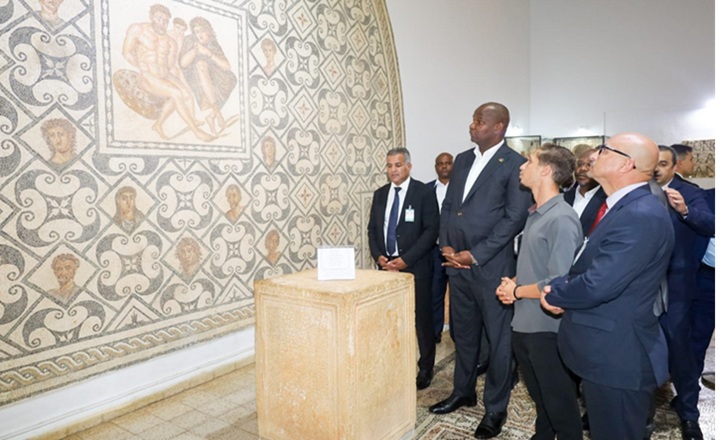
The President of the Republic of Mozambique, Daniel Chapo, has just received a yellow card, and this is not a symbolic or trivial gesture. It is a moral and political warning, an appeal to the conscience of a man who, invested with the highest office of the State, has the obligation to represent the principles that dignify the nation. The reason is simple and, at the same time, revealing of the ethical abyss into which African democracies have plunged: the promptness with which the Mozambican Head of State congratulated the President of Tanzania, Samia Suluhu Hassan, on her re-election, a process marked by repression, the absence of real competition, and state brutality that DW itself described as an "alarming setback for Tanzanian democracy."
The elections in Tanzania were anything but free and fair. On the eve of the vote, opposition candidates were arrested, peaceful demonstrations were violently dispersed, independent journalists were persecuted, and election observers were prevented from monitoring the process. The country watched helplessly as a choreography of authoritarianism carefully disguised as democratic normality unfolded. Even under international scrutiny, the Tanzanian government orchestrated an election lacking transparency, in an environment where fear became state policy.
DW, in its coverage, highlighted that “the opposition was silenced before it could be heard” and that “the results, which attribute approximately 98% of the vote to President Samia, contrast with a scenario of repression and death.” Reports of hundreds of civilian victims, killed or disappeared in post-election clashes, paint a picture of a nation mourning its own democracy. Even SADC, an organization that so often remains complacent in the face of dubious elections, refused, this time, to consider the Tanzanian process legitimate, underlining in a preliminary report that “voters were unable to freely express their will.”
It is precisely in this context of democratic collapse that Daniel Chapo, on behalf of Mozambique, hastens to congratulate the Tanzanian President. This seemingly diplomatic gesture is politically disastrous and morally unacceptable. It represents the validation of a farce, the normalization of violence, and tacit approval of a regime that represses, persecutes, and kills to maintain power. It is not a neutral act: it is a political declaration that compromises the name and reputation of Mozambique, associating us with the narrative of complicity between African leaders who prefer silence to integrity, and protocol to truth.
Diplomacy cannot be an exercise in blindness. By congratulating Samia Suluhu Hassan, Daniel Chapo not only ignores the suffering of the Tanzanian people, but also contributes to perpetuating the cycle of moral mediocrity that characterizes much of contemporary African leadership. This is the deep-seated evil that prevents the flourishing of democracy in Africa: solidarity among political elites who protect each other, even when the price is the destruction of republican ideals.
The yellow card given to President Chapo is, therefore, more than a political warning; it is an ethical imperative. Mozambique, which is still trying to rebuild its democratic credibility, cannot afford the luxury of applauding fraud. Our recent history, marked by contested elections, a weakened state, and a people distrustful of institutions, should teach us that legitimacy is too precious an asset to be wasted on perfunctory gestures of flattery.
The most serious issue is that Chapo's attitude is not isolated: it reflects a mentality that still dominates the continent. Africa has become, in many respects, a graveyard of democratic promises. Independence brought the flag and the anthem, but not the emancipation of consciousness, and mental colonization remains alive, as Frantz Fanon already warned, and it is this that manifests itself when an African president prefers to congratulate tyranny rather than question abuse. Fanon, in *The Wretched of the Earth*, warned that the greatest post-colonial danger was not the external enemy, but the internal reproduction of structures of domination. The liberated African often became the administrator of the same oppression that once enslaved him.
Chapo's gesture of congratulating an illegitimate leader reinforces the pact of the submissive, the tacit agreement between those who govern by force. This dependence is now more psychological than political, more moral than material. It is the fear of breaking with custom, of challenging power, of questioning what seems established. And it is precisely this fear that transforms leaders into accomplices, and accomplices into jailers of their own people.
Mozambique, like Tanzania, faces its own crisis of legitimacy. Mozambican youth no longer believe in politics, do not trust institutions, and see religion, migration, or the informal economy as the only possible solutions. When the head of state aligns himself with leaders who represent regression, he sends a devastating message: that democracy is merely a game of appearances, and that votes serve more to legitimize power than to choose the future.
It is important to understand that this yellow card is not driven by partisan antagonism or emotion. It is a call for lucidity. Daniel Chapo must understand that representing a country is more than running a government: it is carrying a symbol, an ideal, a historical responsibility. When one congratulates an election stained with blood, what one is saying to the world is that African democracy can be negotiated, and that ethics can be sacrificed in the name of diplomatic expediency.
Chapo's presence among the few presidents who attended the secret inauguration of Samia Suluhu Hassan is a political and moral miscalculation. In a continent where the boundaries between politics and authoritarianism are blurred, every gesture counts, and this gesture places Mozambique on the wrong side of history. The country that once inspired the liberation struggle cannot now be complicit in repression.
Some try to justify Chapo's gesture as an act of courtesy, part of the diplomatic game. But there are limits to courtesy. No protocol justifies silence in the face of injustice. No diplomacy deserves to be maintained at the expense of truth. The role of a statesman is, above all, to preserve the honor of his nation. And honor is not preserved through complicity, but through courage.
The SADC, which has often been accused of being a mere spectator to electoral fraud in the region, surprised the continent by issuing a critical opinion on the Tanzanian election. It acknowledged, for the first time in a long time, that citizens were unable to express themselves freely. When even the SADC raises its voice, it is a sign that the degradation has reached intolerable levels. Chapo's gesture, therefore, is doubly contradictory: it ignores the official position of the regional organization to which Mozambique belongs and compromises the country's diplomatic coherence.
There are times when neutrality is immoral. Silence, in these cases, is a form of collaboration. And Mozambique cannot be complicit in the erosion of democracy on the continent. A leader truly committed to peace and development does not applaud tyranny—he denounces it. Because tyranny, even when it presents itself with a smiling face and speeches about progress, remains an enemy of human dignity.
The yellow card shown to President Chapo is, therefore, an act of patriotism. It is a cry from the collective conscience of a people who do not want to see their name associated with diplomatic shame. It is a warning for the head of state to understand that the greatness of a nation is not measured by the alliances it builds, but by the principles it defends.
Mozambique needs a President who honors those who fought for freedom, not those who kneel before power. A President who understands that the true role of contemporary African leadership is to break the cycle of complacency and usher in an era of accountability.
While Daniel Chapo is busy congratulating dubious regimes, his own people face extreme poverty, growing inequality, and an electoral system that inspires distrust. The country needs coherence, not symbolic gestures that insult collective intelligence. It needs a President who speaks the truth, not what is convenient.
This yellow card is not the end; it is the beginning of a moral imperative. Because African democracy will only flourish when its leaders stop confusing diplomacy with servility and begin to understand that power only has value when it is exercised with ethics, courage, and respect for the truth.
Mozambique deserves more than the diplomacy of blindness. It deserves leadership. And leadership, in times of darkness, begins with the courage to say "no" to lies, even when they come disguised as victory.
Outras noticias
Culture
Launched at BCI, a book that immortalizes memories and humor of Zambézia
2026-10-02

Society
International Coffee Day
2026-10-02
Society
Minister Mathlombe squanders his term on empty promises
2026-10-02
policy
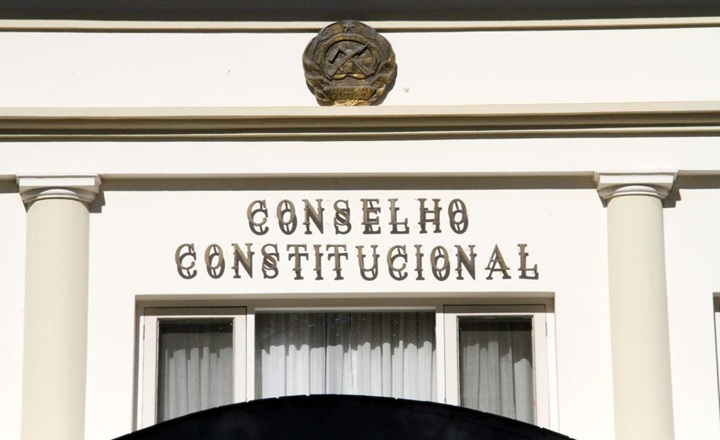
Constitutional Council Awards Purchase of Luxury Vehicles for 49.5 Million Meticais
2026-10-01

Culture
International Coffee Day: Aroma, Flavor, and History
2026-09-30
Copyright Jornal Preto e Branco All rights reserved . 2025