
YELLOW CARD FOR DANIEL CHAPO
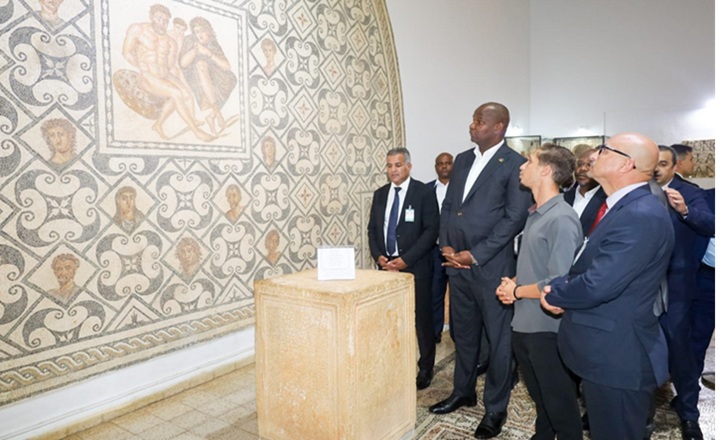
It is worrying how President Daniel Chapo has been engaging with a dangerous and ideologically impoverished rhetoric, accusing what he calls "far-right movements" of attempting to subvert the established order and overthrow the region's so-called liberation parties. This rhetoric, against the backdrop of the recent post-electoral crisis, demonstrates that the Frelimo government was caught off guard. This rhetoric has been repeated with almost ritualistic insistence, as if it could conceal the vacuum in its program, its lack of legitimacy, and its perplexity regarding the real problems afflicting Mozambicans. This week, the nation's highest judge, who seems to have lost his way before he fully found his feet, is being shown the yellow card.
Why, after all, does Chapo seek subterfuges to address his party's legitimacy crisis? Why, instead of presenting concrete proposals to address the social and economic crisis tearing the country apart, does the Head of State choose to stir up ideological specters that mean little or nothing to the overwhelming majority of the young, impoverished population, who live without prospects in this country's cities and suburbs?
The answer, though sad, is simple: Chapo is out of touch with Mozambican reality. His illegitimate rise to the presidency, marked by a flawed electoral process and the shameful connivance of the institutions that should have established uncertainty and ensured the transparency of the vote, did not give him the popular mandate necessary to lead with conviction. Instead, it gave him a fragile presidency, born of manipulation and partisan control, not a free vote.
Herein lies the dilemma: how to assert oneself as President when one knows that the majority of Mozambicans never freely and consciously chose him? The strategy has been clear—resorting to the old tactic of victimization, invoking "enemies of the homeland," "foreign destabilizers," and now, more recently, "far-right movements." A rhetorical device that, rather than pacifying, only reveals fear and a bleak future for this beautiful country. A visceral fear of being confronted with the truth: the truth that liberation parties, like Frelimo, no longer merge with the people. They have distanced themselves from the noble ideals of the liberation struggle, lost the thread, and exchanged the people for the elite, and principles for benefits.
Corruption, institutionalized and normalized over decades, is the greatest betrayal these parties have committed against their own legacy. The political elites formed in the shadow of post-independence hegemony have transformed the state into an instrument of plunder, while the majority of the population remains mired in poverty, precariousness, and hopelessness. This is the backdrop to the growing discontent rippling through Mozambique's cities, towns, and districts. And this is what Chapo's speeches fail to conceal.
When, triumphantly, Chapo declared that he was "the wood the carpenter would work," he symbolically revealed that his mission was not to serve the people, but to adapt to the designs of a party obsessed with its political survival, even if that meant perpetuating the suffering of millions. He positioned himself not as a statesman, but as a political carpenter's apprentice, prepared to serve the structure, not the nation. And this would be his greatest weakness: Chapo has no agenda for the country. He has an agenda for the party.
With every rally, every statement, every interview, the void of ideas on education, healthcare, housing, youth employment, industrialization, or ecological transition becomes more evident. The country seems on autopilot, where the helmsman only worries about what threatens the survival of his partisan ship. What's at stake, however, goes far beyond that.
We are experiencing a profound generational shift. Mozambique has a predominantly young, urban, connected, and restless population. A youth no longer moved by the chants of liberation, especially when they see the "liberators" mired in scandals of corruption, money laundering, influence peddling, and misappropriation of public resources. Mozambican youth see Chapo not as a leader, but rather as a manager of decadence, a functionary of continuity, a herald of an exhausted model.
If the parties Chapo fears and accuses of being "far-right" resonate with part of the electorate, it is precisely because the liberation parties failed. They failed to renew themselves, they failed to respect the principles of transparency, alternation, and popular participation. And, above all, they failed to create a vision of a country where everyone feels included. The blame for popular discontent doesn't lie with supposed extremists. It lies in the offices where decisions are made without the people's input. It lies in the contracts signed in the name of sovereignty that, in practice, hand over the nation's wealth to a handful of privileged individuals.
The regime's greatest enemy is not "right-wing movements," but rather the short memory of the people, who are beginning to awaken, question themselves, and demand accountability. And when these people are mostly young, with access to information, emerging civic consciousness, and looking to examples of change elsewhere, it becomes clear that no amount of fear-mongering can halt this momentum.
Mozambique's age pyramid is, ironically, the greatest threat to Frelimo and Chapo. Because these youth want a future, not a past. They want justice, not propaganda. They want dignity, not handouts. When they see former freedom fighters transform into symbols of opulence and cynicism, they realize there's no longer room for historical romanticism. The past has become a burden, and the present is urgent.
This week's yellow card is, therefore, a cry: tone it down, President. Weigh your words. Recognize that the country's difficulties are largely the result of flawed policies, misplaced priorities, and a clientelistic government closed to scrutiny. Blaming third parties, real or imagined, is an act of political cowardice. Hiding a lack of vision under the veil of external threat is a sign of weakness.
The Mozambican people have already realized that Chapo is an insecure politician, an accidental leader, an avatar of a structure that fears change. Expecting him to be autonomous is perhaps asking too much. Autonomy requires courage, rupture, and strategic intelligence. Chapo has demonstrated none of these. For now, all he can do is try to survive politically, waving ideological scarecrows and repeating clichés.
But every rally devoid of proposals, every unfounded accusation, every attempt to divert the debate to the realm of emotion and nostalgia only accelerates the deterioration. Political time is unforgiving. And the Mozambican people are beginning to prepare their verdict. And it will be severe.
Outras noticias
Culture
Launched at BCI, a book that immortalizes memories and humor of Zambézia
2026-10-02

Society
International Coffee Day
2026-10-02
Society
Minister Mathlombe squanders his term on empty promises
2026-10-02
policy
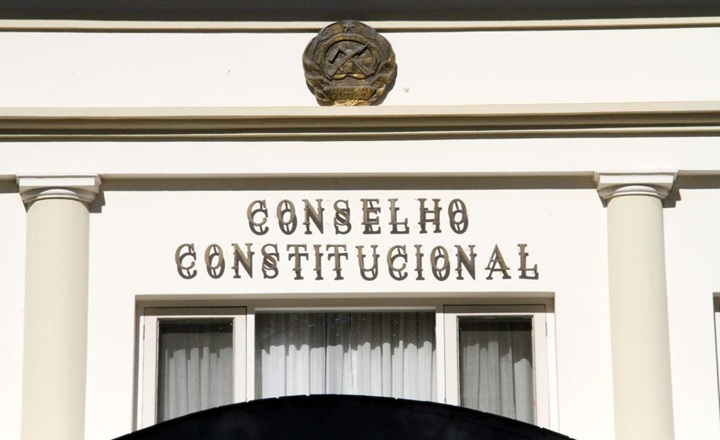
Constitutional Council Awards Purchase of Luxury Vehicles for 49.5 Million Meticais
2026-10-01

Culture
International Coffee Day: Aroma, Flavor, and History
2026-09-30
Copyright Jornal Preto e Branco All rights reserved . 2025