
Yellow Card: Chiquinho Conde and the Mozambican Football Federation – The Price of Irresponsibility in National Football
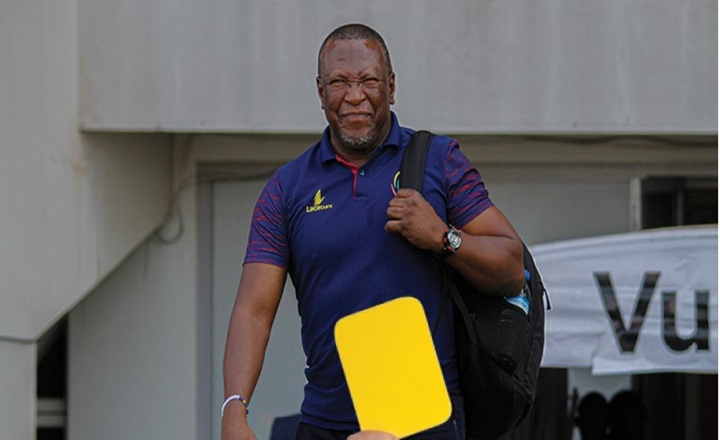
If the objective was never to qualify for the World Cup, why spend a lot of money?
Mozambican football is going through a period that is dangerously close to mediocrity, and much of the responsibility falls on those who should be the guardians of the country's competitiveness and sporting project: national coach Chiquinho Conde and the Mozambican Football Federation (FMF). A close look at recent developments reveals that the handling of the failed World Cup qualification attempt transcends the sporting sphere and enters the realm of institutional irresponsibility and disrespect for the practitioners and lovers of the beautiful game in Mozambique. It's worth remembering that until the second round of the second round, we were in a privileged position to qualify, which raised our expectations and morale.
From now on, when a team enters an international competition with a clear objective, be it simply qualifying for the group stage or breaking historical records, the ethical and professional obligation of all involved is to accept, without subterfuge, the result achieved. It is unacceptable that, after a failure, they attempt to shift the focus to known and long-ignored structural issues. Chiquinho Conde's management demonstrates exactly this: a systematic attempt to justify failure without directly acknowledging the flaws in preparation, choice of playing styles, or leadership of the squad.
The National Team has been under Conde's leadership for almost five years, a period sufficient to establish a competitive standard and create a coherent sporting project. However, even with individual talent and a considerable contingent of players playing abroad, the football played by our team remains predictable, improvised, and, above all, mediocre. What we see on the field is a team lacking identity, tactical clarity, and a defined game plan, creating room for speculation and frustration for fans who, with each match, watch improvisation replace strategy.
The simplistic and relaxed way the coach handled the World Cup failure is particularly revealing. Instead of taking responsibility, he shifted his objectives and narrative, as if the defeat were an isolated incident, unrelated to a sporting plan that, in reality, never existed. This stance highlights not only a lack of ambition but also the absence of a solid, long-term sporting project, something essential for any nation aspiring to improve on the international stage.
The Federation president's image is not far from this criticism. By creating a kind of cult around his figure, boasting about achievements that, at the very least, are part of his job, he demonstrates absolute disregard for the efforts of players and the collective dreams of football fans. It's a disrespect that undermines the expectations of an entire nation, reinforcing a culture of mediocrity that few dare question, but which everyone experiences in the daily life of Mozambican football.
This institutional irresponsibility is not limited to tactical or strategic errors. It has direct human and social consequences. Conde's historic feud with the national team's first captain, Simão Mate, is a clear example of how personal decisions and egocentrism can harm the collective. The elimination of Mate, who always served the country with dedication and professionalism, opened the way for internal rivalries to become public, affecting the team's morale and cohesion. This decision also damaged the coach's credibility and left a negative mark on the memory of fans, who saw a son of the nation abruptly and unfairly removed.
The problem didn't end there. The troubled relationship with Zeinadine Júnior and, more recently, with captain Dominguez, exposes the fragility of a system where the coach's ego overrides the group's logic. The polarizations that have emerged in recent weeks, with fans publicly demanding the departure of Conde and his coaching staff in defense of Dominguez, reveal that the public is unwilling to accept what they perceive as injustice and abuse of power. The situation has become unsustainable and demonstrates that, unlike in the past, this time there will be no political intervention capable of saving an egocentric and authoritarian coach.
It's crucial to emphasize that this attitude isn't simply a matter of individual disrespect, but reflects a structural pattern that jeopardizes the future of Mozambican football. The lack of a game plan, chronic improvisation, and the inability to harness the potential of athletes result in disorganization that is reflected in the results and the frustration of fans. This isn't simply emotional dissatisfaction; it's professional negligence, which affects the development of young talent, undermines the morale of athletes, and prevents the consolidation of a national sporting identity.
Furthermore, the arrogance displayed in public interviews, where the coach downplays the failure and attributes it to external factors or bad luck, reinforces the perception that the sporting project is not serious. The dismissal of iconic players, the cult surrounding minimal achievements, and the inability to take responsibility are symptoms of a system that prioritizes ego over talent and power over meritocracy. A scenario that any outside observer would consider incompatible with the development of high-level football.
Another factor to consider is the growing polarization generated by the coach's decisions. Dominguez's exclusion and the staunch defense of certain players over others have sparked intense public debate. The population, finally, seems to refuse to accept the emotional and institutional manipulation that characterized previous years. This popular resistance is a clear sign that football, as a cultural heritage and national passion, can no longer be an instrument of personal egos or arbitrary decisions that sacrifice the careers and dreams of promising athletes.
On a technical level, the numbers don't lie: the lack of consistent results directly reflects poor management and a lack of strategy. A coach who merely reacts to events rather than anticipating them, who improvises rather than plan, and who prioritizes ego over competence, compromises not only the present but also the future of Mozambican football. The lack of tactical clarity, development of young talent, and integration of expatriate players results in a team that resembles more a collection of talented individuals than a true national team.
It is therefore necessary to issue a formal yellow card to Chiquinho Conde and the Mozambican Football Federation. This card is not merely symbolic; it demands responsibility, professional ethics, and respect for the Mozambican people. A card that signals that mediocrity, improvisation, and egocentrism are unacceptable when it comes to the country's most beloved sport. It serves as a warning that personal decisions and personality cults cannot continue to undermine careers and frustrate collective dreams.
Finally, this yellow card also represents a call to reflect on the future of national football. A future that must be built on solid pillars: accountability, transparency, meritocracy, strategic planning, and, above all, respect for the talent and dedication of athletes. Mozambican football does not need egocentric selectors or federation presidents who boast about basic obligations. It needs leadership capable of transforming talent into results, a vision that transcends personal interests, and ethics that ensure justice and equal opportunities for all players.
Football is not just a game; it is an expression of national identity and pride. Every administrative error, every unfair decision, every improvisation not recorded in statistics is a wound to the soul of a nation that dreams of sporting glory. By issuing this yellow card, we send a clear message: tolerance is over. There is no more room for egos that sacrifice careers, improvisations that mask a lack of planning, or management that turns dreams into frustrations.
In short, Chiquinho Conde and the Mozambican Football Federation received, with this yellow card, a solemn warning. A warning that irresponsibility cannot continue to determine the fate of our National Team. That recent history clearly shows the cost of negligence, ego, and improvisation. And that, this time, the public and sports enthusiasts will not accept subterfuge, personality cults, or fallacies that mask a lack of results.
Mozambican football deserves more: it deserves responsibility, clarity, commitment, and respect. This yellow card is not just a criticism; it is a collective cry from a nation demanding justice, merit, and a future. It serves as a reminder that national teams do not belong to individuals or inflated egos, but to all Mozambicans who dream of victories, pride, and the blossoming of talents that deserve to shine, both on and off the field.
Outras noticias
Culture
Launched at BCI, a book that immortalizes memories and humor of Zambézia
2026-10-02

Society
International Coffee Day
2026-10-02
Society
Minister Mathlombe squanders his term on empty promises
2026-10-02
policy
Constitutional Council Awards Purchase of Luxury Vehicles for 49.5 Million Meticais
2026-10-01

Culture
International Coffee Day: Aroma, Flavor, and History
2026-09-30
Copyright Jornal Preto e Branco All rights reserved . 2025