
“The Ocean is a Climate Regulator,” says Dr. Manecas Baloi
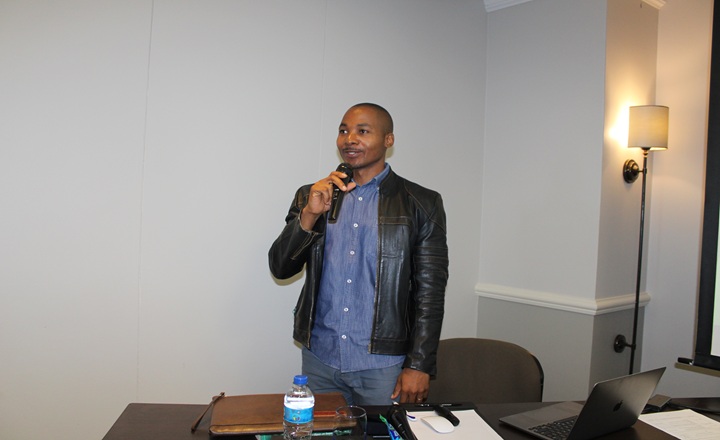
This interview is part of the *Jornal Preto e Branco* project, which seeks to promote critical reflections on the environment, sustainability and society.
Dr. Manecas Francisco Baloi is a marine biologist, consultant, and university professor. With a PhD in Aquaculture from the Federal University of Santa Catarina, Brazil, he has distinguished himself as a professor at the Faculty of Veterinary Medicine at Eduardo Mondlane University (UEM), where he teaches, researches, and provides academic guidance. His experience encompasses aquaculture, cultivation systems, and biosafety, and he has published several scientific papers in this field. He also provides national and international consulting services on aquaculture production, health, and biosafety, contributing to the sustainable development of the sector and the training of qualified human resources. Recognized for his dedication to science and the environment, Dr. Baloi is a leading voice in the debate on ocean sustainability in Mozambique.
The fish crisis in Maputo Bay has left artisanal fishermen on alert. Nets, once abundant, are increasingly returning empty, raising the question: what is happening to our seas? To better understand this situation, Jornal Preto e Branco spoke with Dr. Manecas Francisco Baloi. In this long and enlightening interview, the expert delves into the multiple factors that are putting the oceans at risk and issues a warning: "Our seas are sick, they are in the resuscitation room."
JP&B: Dr. Baloi, artisanal fishermen claim that "there are no more fish in the sea." What's happening?
In fact, this perception largely reflects reality. The sea no longer has the same fish it did a few decades ago, and this stems from a wide range of interconnected factors. The first is catching more fish than the natural replenishment rate of marine populations. In other words, we are fishing more than the oceans can replenish. Nature has its own regenerative rhythm, but when human pressure exceeds this rhythm, a deficit is created that leads to scarcity.
A second aspect is illegal, unreported, and unregulated fishing. We have recorded the presence of foreign vessels catching fish in our waters without any type of license. These vessels, often equipped with advanced technology, end up taking tons of fish that would be essential to guarantee local food security.
Added to this are extremely destructive fishing practices, such as bottom trawling, the use of fine-mesh nets, and even explosives. These practices not only catch fish indiscriminately but also destroy critical habitats such as coral reefs, mangroves, and estuaries. These areas function as natural nurseries: it is there that shrimp, mollusks, and various fish species undergo essential stages of their life cycle. If these habitats disappear, so does the possibility of fish regeneration.
Furthermore, we face water pollution, domestic sewage, industrial discharges, and tons of plastic that end up in the ocean. All of these factors, combined with a lack of oversight and the pressure of population growth, contribute to the crisis we experience today.
JP&B: You mentioned the competition between artisanal and industrial fishing. Can you elaborate on that?
The conflict between artisanal and industrial fishing is increasingly evident. Artisanal fishing tends to be more selective, using nets and methods that capture specific species and, to some extent, allow for some regeneration. Industrial fishing, particularly trawling, is highly predatory: as it skims the seabed, it drags up practically everything, without any criteria. This means that when artisanal fishermen cast their nets, they often find no fish, because the industrial fishermen have already taken everything.
There's also the impact on mangroves. Many species, such as shrimp, spend a large part of their life cycle in these areas, while others, such as juvenile fish, use mangroves as a refuge from predators and a food source. If these areas are destroyed by industrial fishing or converted into salt flats, the entire reproductive chain is compromised. Ultimately, artisanal fishermen suffer the most, because their survival depends on resources that no longer exist.
JP&B: Many environmentalists speak of plastics as a silent threat. What does this mean for us?
Plastic pollution is one of the biggest contemporary threats to the oceans. Trash dumped into the ocean accumulates in alarming quantities, and much of it is plastic. The problem is that plastics are not biodegradable. Over time, they fragment into increasingly smaller pieces, eventually becoming microplastics.
These microplastics enter the food chain. Fish ingest them, and when we consume that fish, we also end up ingesting plastic particles. Recent studies have confirmed the presence of microplastics in the human bloodstream. This means we are carrying within us materials that should never be present in the human body, with potential toxic effects and consequences that are still little known, but certainly serious.
JP&B: In terms of climate, what is the role of the oceans?
The ocean plays a central role in climate change. It acts as a natural regulator of the planet's climate. It absorbs about a quarter of the carbon dioxide produced by humans, which helps reduce the amount of greenhouse gases in the atmosphere. However, this process has a side effect: it causes acidification of the waters, which in turn harms corals, mollusks, and the entire marine food chain.
Furthermore, the oceans absorb more than 90% of the excess heat generated by the greenhouse effect. This means they act as a buffer, but they are also suffering. Warming waters alter ocean currents, trigger marine heat waves, and cause mass species mortality. We are witnessing the melting of polar ice caps, coral bleaching, and an increase in the frequency and intensity of storms and cyclones. In the case of Mozambique, cyclones that previously occurred at long intervals are now practically cyclical.
JP&B: So can we say that the oceans are in crisis?
Yes, there's no doubt about it. The oceans are in a critical situation. I'd even say they're in the resuscitation room. The Indian Ocean, in particular, is among the most affected. We have foreign vessels illegally exploiting our resources, tons of trash washing up on beaches, and clearly insufficient oversight.
There are species that were once abundant and are now rare or considered luxury. Magumba, for example, which was common on the Costa do Sol in the 1990s, has now almost disappeared. If we continue on this path, we risk losing not only biodiversity but also one of the main pillars of our economy and the food security of coastal populations.
JP&B: What final message would you like to leave?
The ocean is the basis of life. It provides food, regulates the climate, influences rainfall cycles, and ensures balance in ecosystems. We need to consider the ocean a national and global priority. This implies sustainable policies, serious oversight, combating illegal fishing, and environmental education for all.
If we take care of the ocean, we will be taking care of ourselves and our future. But if we continue to neglect it, we will pay a very high, perhaps irreversible, price.
Outras noticias
Culture
Launched at BCI, a book that immortalizes memories and humor of Zambézia
2026-10-02
Society
International Coffee Day
2026-10-02
Society
Minister Mathlombe squanders his term on empty promises
2026-10-02
policy
Constitutional Council Awards Purchase of Luxury Vehicles for 49.5 Million Meticais
2026-10-01
Culture
International Coffee Day: Aroma, Flavor, and History
2026-09-30
Copyright Jornal Preto e Branco All rights reserved . 2025