
The myth of sustainability in Mozambique: where is the government?
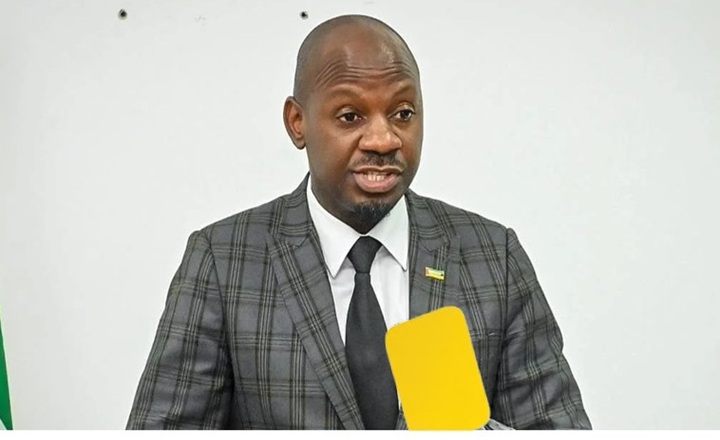
By: Nunes Daniel Manhonha
In Mozambique, the word sustainability has become almost an official mantra. It's mentioned in political speeches, shines at international conferences, pleases foreign donors, and garners headlines. However, for the average citizen, this word increasingly sounds like an empty slogan. Just walk the streets of Maputo, Beira, Nampula, or any other city in the country to see the gap between the rhetoric and the reality: garbage piled up in the streets, rivers turned into open sewers, forests cut down, and entire communities abandoned by the state.
Every year, the government announces new environmental plans, programs, and strategies. The documents are laden with sophisticated terms like "climate resilience," "environmental governance," and "green growth." On paper, everything seems perfect. But everyday reality reveals a different side. Neighborhoods continue to flood due to a lack of adequate drainage, communities lose their land to private megaprojects, and garbage continues to accumulate without any efficient collection system. There are, in fact, two Mozambiques: the official Mozambique, portrayed in speeches and reports, and the real Mozambique, where the population faces environmental degradation, lack of infrastructure, and institutional neglect on a daily basis.
Mozambican environmental legislation, although modern and inspired by international models, is weakly and selectively enforced. Small street vendors and ordinary citizens are fined for minor irregularities, while large companies pollute rivers, illegally harvest timber, and release toxic fumes into the air without any effective punishment. Where money and powerful interests are involved, the law becomes merely a decorative rubber stamp. A crucial question then arises: sustainability for whom?
When communities attempt to defend their natural resources, the state's response is not mediation, but intimidation. There are reports of community leaders experiencing pressure, threats, and attempts to silence them. The state, which should be a shield for the people, often becomes a shield for investors and private interests. It's a cruel paradox: while there's talk of green policies and environmental protection, reality shows that the government's priorities are misplaced.
Mozambican cities are growing chaotically, without any environmentally conscious urban planning. Entire neighborhoods are emerging without clean water, sewage systems, efficient drainage, or adequate public transportation. Improvisation is the rule: streets are opened without planning, houses are built without reliable access to electricity, and basic sanitation solutions are left to the population itself. In place of structured policies, improvised street signs, crowded transportation, and increasing pollution emerge. The costs of this neglect always fall on the poorest, while the elites protect themselves in gated communities with private security, running water, generators, and regular garbage collection. In Mozambique, sustainability has ceased to be a right and has become a privilege for those who can afford it.
In peripheral and expanding neighborhoods like Zimpeto, Hulene, Laulane, Magoanine, Matola-Gare, and Inhagoia, the government's absence is glaring. Families seek affordable land and build homes on their own, often without any support or urban planning. Streets are left to improvise, with no room for adequate drainage or the circulation of emergency services like ambulances and firefighters. Most homes lack reliable connections to water, sewage, or electricity. The result is vulnerability: flooding, soil erosion, disease, and constant insecurity.
The state only appears in times of catastrophe, to put out fires or in election campaigns, promising recycled solutions. In everyday life, the population organizes itself: digging wells, digging septic tanks, paying private garbage collection companies, and trying to survive by improvising. These neighborhoods are not isolated failures: they are a portrait of a country where urban growth occurs without the state, and where the costs of environmental neglect always fall on the most vulnerable.
Meanwhile, the elite live apart from the country's reality. Gated communities, private security, running water, reliable energy, and regular garbage collection form a protective bubble. Meanwhile, the majority of the population faces open sewers, rivers turned into garbage dumps, and substandard transportation. Sustainability in Mozambique is no longer a collective right: it has become an individual privilege.
What's the point, then, of talking about sustainability if there's no concrete change? The government needs to abandon rhetoric and embrace a policy of results. It takes courage to confront powerful interests, punish those who destroy the environment, and invest in public policies that benefit ordinary people. Transparency, community participation, and independent oversight cannot remain empty words: they must become daily practice.
But simply holding the state accountable isn't enough. Civil society needs to rise up, speak out, organize into associations, pressure, and demand effective solutions. Without citizen pressure, any sustainability plan will remain a dead letter. Mozambique's future cannot be mortgaged to the greed of a few. The question that echoes in every neighborhood, every community, and every conference is simple and urgent: where, after all, is the government?
Outras noticias
Culture
Launched at BCI, a book that immortalizes memories and humor of Zambézia
2026-10-02
Society
International Coffee Day
2026-10-02

Society
Minister Mathlombe squanders his term on empty promises
2026-10-02
policy
Constitutional Council Awards Purchase of Luxury Vehicles for 49.5 Million Meticais
2026-10-01
Culture
International Coffee Day: Aroma, Flavor, and History
2026-09-30
Copyright Jornal Preto e Branco All rights reserved . 2025