
Mozambique shines at the LUJU Festival
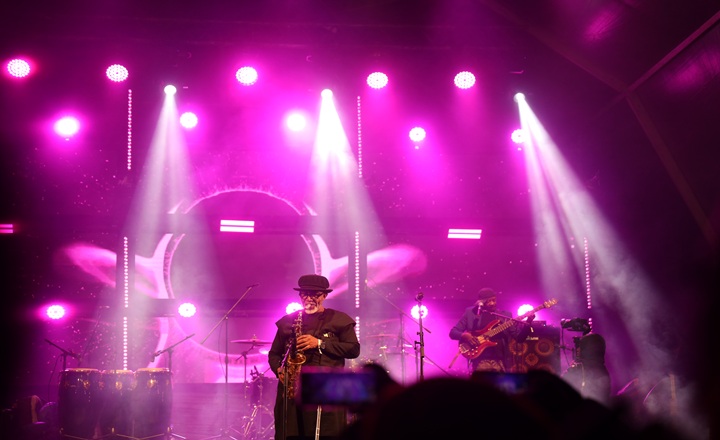
Mozambique once again made its mark with effusive and notable impact at the LUJU 2025 Festival, held at the iconic House-On-Fire venue in eSwatini last weekend, August 1st and 2nd. This is the seventh consecutive year that the country has participated in the festival, reaffirming its presence not only with artistic talent—musicians and fashion designers—but also with the robust Mozambican technical infrastructure that supports the festival's main stage.
One of the highlights of Mozambique's participation in LUJU since its inaugural edition has been the provision of the entire sound, lighting, stage, and generator system for the main stage by a Mozambican team led by Paulo Sithole, affectionately known as Lito from the Marrabenta Festival. The 100% Mozambican equipment ensured impeccable sound quality, perfectly matching the vibrant lighting and the integration of a recording system and live projection of the concerts onto screens, making the Main Stage one of the most talked-about venues of the festival.
It's important to note that the partnership between Litho Stage and the LUJU Festival began in 2017, when LUJU Director Jiggs Thorne attended the AZGO Festival in Maputo. At the time, he was intrigued by the discovery that Mozambique had a world-class festival service provider—a fact that years later would materialize into this structured technical collaboration.
In this edition, in particular, the main stage welcomed renowned names in African music such as Sipho Mabuse, Tkeez, and many others. However, what was most noticeable among the audience and professionals was the technical impact of the main stage—where a fusion of aesthetics, engineering, and innovation from Mozambique flourished. The combination of the rich programming, excellent cuisine, and a vibrant audience further highlighted the Mozambican contribution.
The Mozambican delegation is led by Khuzula, through the AZGO and XHUB Festival projects, with the strategic support of the National Tourism Institute (INATUR), in direct alignment with the Triland tourism promotion project, which connects Mozambique, Swaziland and South Africa. This institutional partnership has expanded the cultural and economic impact of Mozambican participation in the region's festivals.
In an interview, Jiggs Thorne acknowledged that "the Mozambique team has contributed significantly to the success of the LUJU Festival, through the AZGO Festival and XHUB, which have led the curation and deployment of Mozambican designers, musicians, and other cultural agents." He also emphasized that "the Mozambican delegation brings life and color to the festival, bringing extremely creative and innovative segments. Another factor is the partnership with Litho Stage, which has catapulted us to extremely high levels with all the infrastructure and quality reflected on the Main Stage."
On the MasterCard alternative stage, Mozambican singer Xixel Langa delivered one of the festival's most moving moments. Despite performing at an unplanned time, she captivated the audience with a performance deeply rooted in African ancestry. Invoking peace with her opening song, she explained that "Mozambique is a country where peace should always flow." She also sang about Maputo, praising the city as "a corner where cultural diversity flows and is promoted." Moved, Xixel congratulated the Lito team for being able to "lend quality equipment and services both internally and externally." She concluded: "I notice that Mozambique has a lot of quality, which makes me very proud of myself and the entire Mozambican technical team here."
Another highlight of the Mozambican representation was the Xigubo Collection show by designer King Levi, presented on the second day of LUJU. The collection, which recently debuted in Brazil, made its continental debut at this festival. Inspired by traditional Mozambican dance used as a symbol of resistance, it moved the audience not only with its avant-garde design but also with the artistic performance that accompanied the collection's finale, when, to the sound of Xixel Langa's song "Va Tekile," King Levi performed a choreography based on Xigubo himself.
Our reporter, King Levi, thanked the AZGO Festival for brokering the partnership that allowed him to present his collection at LUJU. He said: "This collection aims to reflect Africa and its roots." He added that "bringing Xada Baba and Ntsava is a way of demonstrating that there is always a need to join forces." He concluded by stating that "Litho's team of technicians and equipment brings a significant difference to this festival."
In turn, Filipe Mondlane, technical coordinator appointed by Litho, stated that "the continuation of the contract with the LUJU Festival is due to the TPC the team has undertaken to innovate with equipment that easily meets international standards." He added: "Even when technicians from some bands arrive to set up the set, they tend to praise us for our outstanding technical support—not just with words, but also recognizing our greatness and technical prowess."
It's worth noting that this edition of the Luju Festival, in addition to spectators from Mozambique, included a delegation of artists including Xixel Langa and his band, King Levi and his team, gastronomic segments, journalists, and a technical team who provided their artistic and technical contributions. Mozambique not only participated in LUJU 2025—it also made its presence felt, raised standards, and reaffirmed its position as a creative and cultural powerhouse in the region.
Outras noticias
Culture
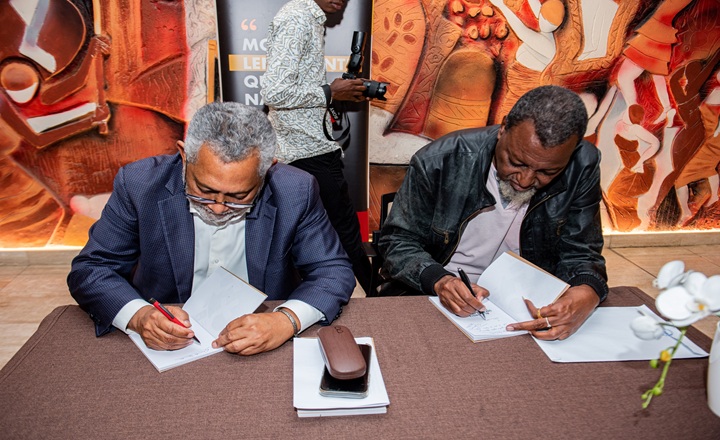
Launched at BCI, a book that immortalizes memories and humor of Zambézia
2026-10-02
Society
International Coffee Day
2026-10-02
Society
Minister Mathlombe squanders his term on empty promises
2026-10-02

policy
Constitutional Council Awards Purchase of Luxury Vehicles for 49.5 Million Meticais
2026-10-01
Culture
International Coffee Day: Aroma, Flavor, and History
2026-09-30
Copyright Jornal Preto e Branco All rights reserved . 2025