
Living Statues: When Art Becomes Survival on the Streets of Maputo
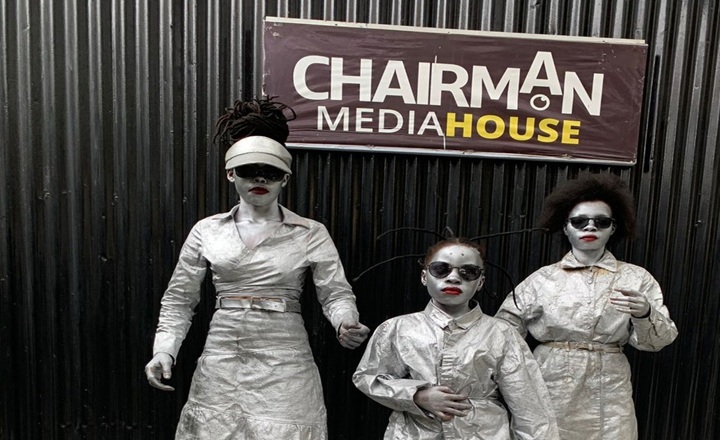
On Maputo's bustling avenues, amid honking horns, haste, and dust, motionless figures stand, covered in silver or gold paint. They are human bodies transformed into living sculptures. At first glance, they look like the work of a European street artist, but they are young Mozambicans, defying unemployment with creativity.
These are so-called human statues, an artistic manifestation gaining ground and admiration on the streets of the capital. But for those who live within this metallic paint, the shine hides a reality of effort, improvisation, and resistance.
Among them is Leila Munisse, a 20-year-old student and member of the group 100 Limites X, made up of eight young people who, for over a year, have been attracting public attention with performances at traffic lights, squares and cultural events.
"It's not easy to stay still for hours under the sun, but our passion for art is what keeps us going," says Leila, with the serenity of someone who has learned to transform her body into sculpture.
From a passion for art to an improvised street stage
Leila's love of art was born out of curiosity. "I've always loved art, always admired those who could move an audience. At the end of last year, I started seeing some human statues on the streets and decided to join Mendes, who had been doing this for some time," she says.
The duo began performing at small events, and gradually, what was an isolated experience became a collective project. "We decided to create the group 100 Limites X, with more people. Today, there are eight of us. Some are street artists, others are students. Each brings something different to the group, but they all share the same love for art," he explains.
Leila started as an assistant, helping with painting, costumes, and organizing performances. Later, she gained confidence and began acting as well. "At first, I was shaking a lot. It's difficult to control your body and breathing, to remain still while everyone is watching you. But over time, I learned to control my mind and body. The statue is more than silence; it's discipline and emotion," she says.
Between art and sacrifice
The routine of human statues is grueling. Performances almost always take place outdoors, exposed to heat, dust, and even indifference. "Exposure to the sun is our biggest challenge. The paint heats up, the body becomes heavy, and sweat smears everything. Sometimes we spend four or five hours without being able to move a muscle," Leila describes.
But the risks go beyond physical discomfort. "We're very close to the roads, surrounded by cars and motorcycles. Any distraction can be dangerous. Unfortunately, the regulatory body has done little to support us or recognize what we do. We're artists, but we still don't have our own space," he laments.
Still, she persists. "Passion speaks louder. We're aware of the risk, but if we give up, who will represent this art? It's our love for culture that keeps us here."
The art that fights for recognition
The 100 Limites X group receives no institutional support. Everything is done voluntarily: the cost of paint, clothing, and even transportation is shared among the members themselves. "We wish the Ministry of Culture would pay more attention to us. We need a space where we can express our art, plan, and evolve. We don't ask for much, just a place to work with dignity," Leila urges.
She also advocates for greater private sector involvement. "Companies should view us with some cultural social responsibility. A partnership here, an exhibition there, would be a great incentive. This would prevent us from always being exposed on the streets."
For Leila, the lack of support isn't just a lack of public policy; it's a reflection of how popular culture is still viewed in the country. "Many people think what we do is clowning around or begging. It's not. It's art. And art deserves respect."
Human statues or social mirrors?
At each performance, the group faces diverse reactions: some smile, some take photos, some ignore them. But behind each look, there's also a reflection of a society that struggles with youth unemployment and cultural exclusion.
"Not everyone agrees with our presence. Some people think we're distorting public space. But the truth is, if there were more opportunities for young people, perhaps we wouldn't need to turn our bodies into statues to survive," says Leila firmly.
Earnings aren't high on good days; each member can take home between 500 and 1,000 meticais. "It's not brilliant, but it's enough to stave off hunger and continue fighting for tomorrow," he acknowledges.
Still, the group has no intention of stopping. "We want to show that the human statue can be a legitimate form of expression, communicating without words. There's emotion in every stillness, a message in every silence. It's an art that speaks through the body," explains Leila.
Between the dream and the future
Leila finished high school in 2023 and, the following year, applied to both Eduardo Mondlane University and the Pedagogical University, but was unsuccessful. "Now I'm preparing to apply again. I want to continue studying, I want to grow. Art is my livelihood, but my dream is to be able to combine what I learn in school with what I experience on the streets."
The metallic sheen covering his body doesn't dim the sparkle in his eyes when he talks about the future. "My wish is for people to look at us with respect and understanding. Supporting the human statue isn't just about giving money, it's about giving space; it's about opening up opportunities."
Before returning to stillness, Leila leaves a simple but powerful message: "Support culture. Support us. Human statues also have souls, they have voices, even if they speak silently."
An art that resists
When the sun sets and the paint begins to fade, the human statues discreetly retreat. What for many was a street spectacle, for them is another day of work, struggle, and faith.
On the street corners of the capital, they remain living metaphors of a youth reinventing itself to exist. In every motionless body, there is social movement; in every painted face, there is a cry for recognition.
And so, while the country discusses employment and cultural policies, the human statues of Maputo remain firmly immobile, but more alive than ever.
Outras noticias
Culture
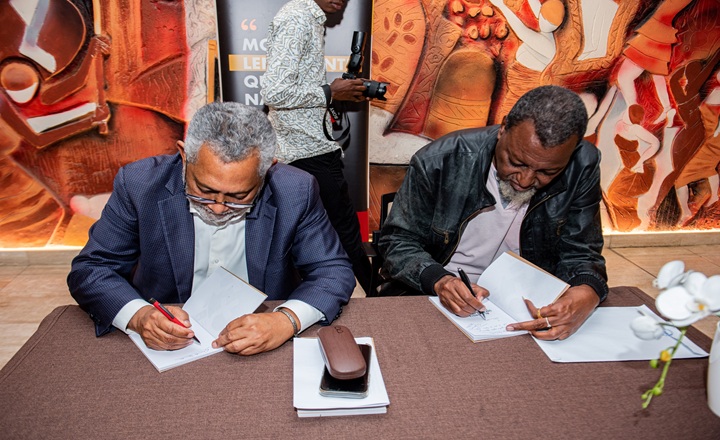
Launched at BCI, a book that immortalizes memories and humor of Zambézia
2026-10-02

Society
International Coffee Day
2026-10-02

Society
Minister Mathlombe squanders his term on empty promises
2026-10-02

policy
Constitutional Council Awards Purchase of Luxury Vehicles for 49.5 Million Meticais
2026-10-01
Culture
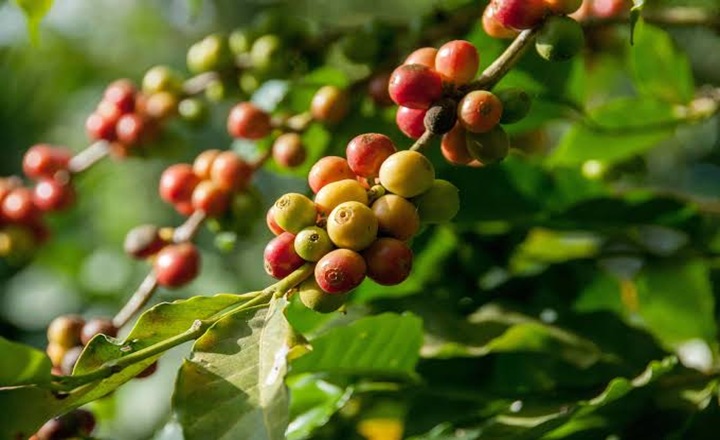
International Coffee Day: Aroma, Flavor, and History
2026-09-30
Copyright Jornal Preto e Branco All rights reserved . 2025