
Energy, Power and Economic Sovereignty: A Yellow Card for the Government of Mozambique in the Mozal–HCB Case?
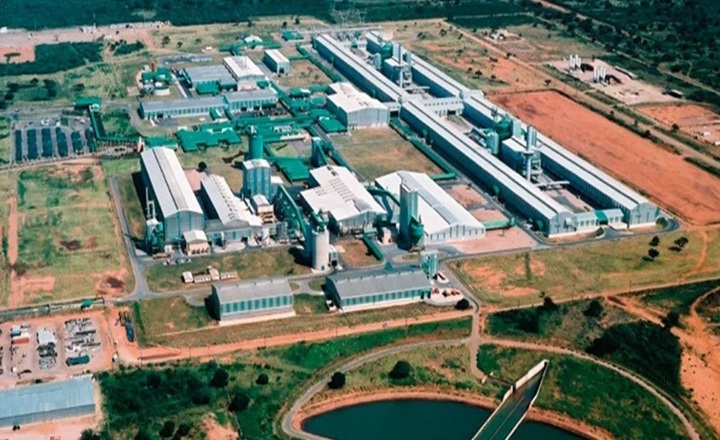
The conflict surrounding the readjustment of electricity prices supplied by HCB to Mozal has ceased to be a simple contractual dispute and has become one of the most critical moments in Mozambique's recent economic history. At stake is not only the viability of a multinational company, but also the credibility of the State as a negotiator, the stability of thousands of jobs, and the future of an industrial model that, for decades, has been presented as a showcase of national economic success. The Mozambican government deserves a yellow card not for attempting to revise terms that many consider historically unbalanced, but for the way the process was conducted, exposing the country to profound and potentially irreversible risks.
Mozal began operations in the late 1990s, in a context where Mozambique was emerging from a long armed conflict and desperately needed foreign direct investment. The project was conceived as an anchor for heavy industrialization, a symbol of stability, modernity, and the country's integration into global value chains. From the outset, however, its sustainability rested on a set of exceptional conditions: broad tax benefits, long-term contractual guarantees, and, above all, access to abundant and cheap electricity from HCB. This energy was not a detail; it was the heart of the business. Aluminum production is electricity-intensive, and any significant change in the price per megawatt-hour has a direct impact on the smelter's overall competitiveness.
Decades later, the context has changed. The Mozambican state faces increasing fiscal pressures, high levels of debt, an increasingly demanding population, and a political discourse that claims greater sovereignty over strategic resources. In this scenario, a review of the price of energy supplied to Mozal seems almost inevitable. The central question, however, is not whether prices should be reviewed or not, but how this review was conducted and how far one is willing to go without a clear strategy for mitigating the damage.
Mozal claims that the new prices proposed by HCB are excessively high and economically unsustainable, jeopardizing the continuity of operations. According to the company, the only viable alternative in the face of such costs would be the closure of the factory and the dismissal of thousands of workers, ending a relationship of almost four decades. This extreme position raises legitimate doubts. Is it plausible that a company of this size has no room for adaptation? Or are we facing a classic pressure tactic, an industrial bluff aimed at forcing last-minute concessions from the State?
The negotiation is riddled with loose ends. The public is not clearly aware of the exact values previously practiced, nor the specific amounts now being demanded. Independent studies demonstrating, in a transparent manner, the alleged economic unviability claimed by Mozal, or conversely, the real net gains for the State from the readjustment, have not been released. This opacity weakens the government's position and fuels suspicion that strategic decisions continue to be made away from public scrutiny, despite their enormous national impact.
The social consequences of a potential closure would be devastating. Mozal directly employs between 1,100 and 1,300 workers, many of them highly skilled. To these are added thousands of indirect and induced jobs. Transport, logistics, industrial maintenance, cleaning, security, catering, small workshops, and various suppliers depend totally or partially on the foundry. Conservative estimates point to 8,000 to 10,000 jobs indirectly linked to Mozal. Furthermore, between 50 and 70 medium and small-sized companies have Mozal as their main or only client. For many of them, closure would mean almost immediate bankruptcy.
The impact would not only be economic, but also territorial and social. Matola and the Maputo metropolitan area would suffer an abrupt shock, with a drop in family income, reduced consumption, increased unemployment, and greater pressure on already fragile social protection systems. The state would lose indirect tax revenue, from VAT to income tax on workers and supplier companies, at a time when every metical counts.
There is also a symbolic and structural dimension. Mozal is not just a factory; it is a landmark in the Mozambican industrial landscape. Its complex has shaped infrastructure, logistics networks, and even the economic identity of the region. Closing it would leave behind an idle industrial "monster," difficult and expensive to convert. Aluminum smelters do not easily transform into another type of industry, and the risk of the site becoming a white elephant is real.
From an environmental and climate perspective, the scenario is ambiguous. Locally, closure could reduce industrial emissions and alleviate some environmental pressure. However, on a global scale, the effect is almost neutral. Global demand for aluminum would not disappear; production would simply shift to other countries, possibly with more polluting energy matrices. Thus, any internal climate gains could be offset by global losses, weakening the environmental argument as the main justification for an abrupt closure.
It remains to be analyzed what the Government would actually gain. In theory, higher energy prices mean greater revenue for HCB and, indirectly, for the State. There is also a political and symbolic gain: the message that Mozambique is not willing to perpetuate contracts considered unfair or out of step with the current reality. One could also argue that the energy released could be redirected to other sectors or exported. However, the crucial question remains: do these gains compensate for the losses? Everything indicates that they do not, at least in the short and medium term. The economic, social, and reputational shock of a total shutdown would hardly be absorbed solely by additional energy revenues.
This is where suspicions of hidden agendas arise. Is Mozal truly prepared to close its doors, or is it using the closure scenario as a bargaining chip? Has the State, in turn, underestimated the real risk of exiting, or is it betting that the company will back down at the last minute? The possibility of broader strategic interests, linked to global shareholder decisions that go beyond the energy issue and will only become clear later, cannot be ruled out.
International economic history is replete with cases where the threat of closure was used as a negotiating tool, as well as cases where governments believed it to be a bluff and ended up facing an actual and traumatic exit. In both scenarios, the lack of transparency and clear communication with society always proved to be a serious mistake.
The yellow card given to the Mozambican government is therefore not a call for capitulation to a multinational corporation, nor an uncritical defense of Mozal. It is a warning about the need for strategic maturity. Defending the national interest requires more than rhetorical firmness; it demands rigorous calculations, public studies, high-level technical negotiation and, above all, a clear vision of the development model the country intends to follow.
If Mozal closes, Mozambique will lose much more than an industrial unit. It will lose jobs, foreign exchange, confidence, and historical time. If it stays open, but at the cost of concessions made without transparent explanation, the cost will be the erosion of the State's credibility. Between these two extremes, there is room for a negotiated, balanced, and responsible solution. The problem is that time is running out, and the country watches, anxiously, a game in which the next mistake could transform a yellow card into a definitive judgment of national economic history.
Outras noticias
Culture
Launched at BCI, a book that immortalizes memories and humor of Zambézia
2026-10-02

Society
International Coffee Day
2026-10-02
Society
Minister Mathlombe squanders his term on empty promises
2026-10-02
policy
Constitutional Council Awards Purchase of Luxury Vehicles for 49.5 Million Meticais
2026-10-01

Culture
International Coffee Day: Aroma, Flavor, and History
2026-09-30
Copyright Jornal Preto e Branco All rights reserved . 2025