
Chapo's Dilemma: The Nuances of Party Loyalty and the Fear of God Essay
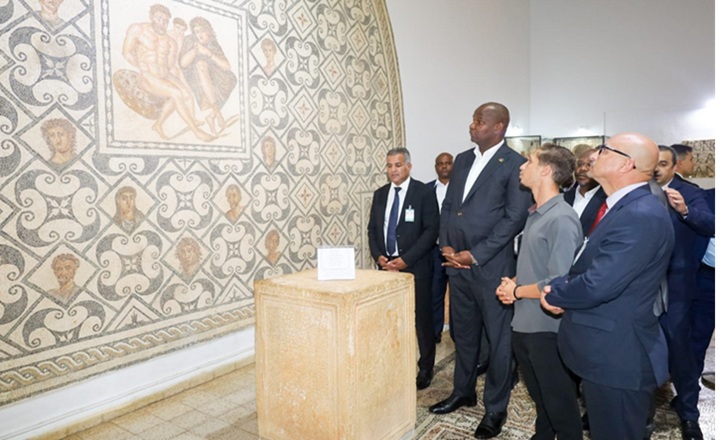
Editorial - Interview with political scientist Alípio Mauro Jeque, member of the Mozambican Association of Political Scientists (AMCP)
Amidst the choirs of a live-streamed religious service, one man stands out. With his hands raised, his face set, and his gaze contrite, President Chapo accompanies the chants and listens attentively to the fiery sermon of an international pastor who, amid biblical passages, drops politically charged phrases. "A true leader serves God before serving men," says the preacher. The cameras focus on the serene face of the Head of State, whose public faith has become an essential part of his image. But there is a dilemma, perhaps the most profound of his political career: how to reconcile divine morality with party loyalty, when the latter demands decisions that the former condemns?
The issue isn't just spiritual. It's also political, ethical, and symbolic. Mozambique is experiencing one of the most tense moments in its recent history: post-election disputes, violent repression, rising poverty, and a collective sense of civic betrayal. The country breathes fear and disbelief, while the political elite seems increasingly out of touch with the people's reality. At the center of this storm is Chapo, a president who carries the Bible in one hand and the weight of his party in the other.
To understand this paradox, the report spoke with Alípio Mauro Jeque, a political scientist and member of the AMCP, whose interpretation of Mozambican power dynamics is gaining increasing prominence. Jeque analyzes the phenomenon in light of classics of political philosophy, from Machiavelli to Webber, and places the president at a moral crossroads rarely faced by contemporary leaders: to be a lamb among wolves, or a wolf in sheep's clothing.
“Chapo is experiencing his first major test of conscience,” says Alípio Mauro Jeque
Editor: Sheikh, who is President Chapo at this moment, a man of faith or a man of the party?
Alipio Mauro Jeque:This is one of the most difficult questions to answer, because Chapo is simultaneously both, and that's precisely where his dilemma arises. He genuinely believes in his faith and has made a point of publicly demonstrating this since his first day in office; I have no doubt about that. But he's also the product of a party machine whose logic transcends individual morality. As Machiavelli would say, "a prince should not fear being hated, as long as he knows how to be feared." The problem is that Chapo wasn't born to be feared, he was born to be loved, and perhaps this weakens him politically.
The dilemma between ethics and morals
Chapo rose to power under the protection of a historically hegemonic party, whose tenure in power is intertwined with the very history of the Mozambican state. But hegemony exacts a price: the partial abdication of moral conscience in the name of political obedience.
Max Weber, in Politics as a Vocation, describes this tension between the ethics of conviction (acting according to moral principles) and the ethics of responsibility (acting according to political consequences). "Chapo," explains Jeque, "seems to try to live both ethics simultaneously. But when the state bleeds in the streets, individual morality is always the first to be sacrificed."
The images of believers praying alongside the president, while families mourn their dead in post-election demonstrations, heighten the sense of inconsistency between words and practice. For Jeque, "there is no greater contradiction than a ruler who kneels before God and, at the same time, silences the people who cry out for justice."
Editorial: Sheikh, is Chapo a victim or an accomplice of a system?
Alipio Mauro Jeque:He is both. Mozambican politics operates on a system of vertical loyalty, in which political survival depends on obedience. Chapo was placed where he is by higher powers, an elite that does not tolerate deviations. He is aware of this, and therefore operates within a tight perimeter. But the dilemma is that the more he tries to please the party, the more he loses moral legitimacy before the population.
When faith becomes politics
In recent months, videos of presidential services have gone viral on social media. In one, a foreign pastor prays that "the Lord will punish those who rise up against the anointed one." The prayer, though veiled, was interpreted as a direct message to the opposition and government critics.
"This is deeply symbolic," observes Jeque. "Religion, when instrumentalized, becomes an ethical shield to justify power. It's a dangerous phenomenon, one we've already seen in authoritarian regimes of the 20th century, although in contemporary times, it's difficult to subjugate a population based on religion, as it faces an internal crisis and an unprecedented spread that is eroding its doctrine."
He quotes Hannah Arendt, for whom "evil is not committed by monsters, but by ordinary men who blindly obey orders." "Chapo is not a tyrant in the classical sense, but the danger is that he could become a functional moralist, someone who believes he is acting according to divine will, even when he violates basic principles of justice."
Editorial: Does the current political scenario increase this dilemma?
Alipio Mauro Jeque:Without a doubt. The current government is experiencing an unprecedented crisis of legitimacy. State revenues don't cover expenses, salaries are humiliating for those who work and scandalous for those in power, and poverty is growing rapidly. Meanwhile, wars in Cabo Delgado and natural disasters are eroding collective hope. Chapo governs an exhausted country. And when a leader finds himself without the means to address the causes of national pain, he tends to seek refuge in faith or repression.
The loss of fear
The scientist also observes a new and disturbing phenomenon: the population has lost its fear. "Today, there's a civic courage that the party can't manage. From the media to academia, people are demanding answers. And Chapo is feeling the pressure. Never before in his career as a leader has he been so pressured, so exposed, so vulnerable."
Sheikh recalls that Machiavelli warned that "men forget the death of their father more easily than the loss of their fortune." "In the case of Mozambique, the population feels they have lost everything: their dignity, their food, their future. And when the people feel they have nothing left to lose, they become ungovernable."
Essay: Is there a way out of this moral dilemma?
Alipio Mauro Jeque:It exists, but it requires courage. Chapo must decide whether he wants to be remembered as the president of the party or the president of the nation. If he continues to obey the apparatus, he will end up swallowed up by it. But if he dares to break away and govern according to his conscience, perhaps he will make history. What Machiavelli teaches is that the prince can be feared, yes, but above all, he must be prudent. And prudence, today, perhaps means listening to the people and not just the party.
The final dilemma
Between faith and power, between the pulpit and the palace, Chapo seems to be living a political martyrdom. The dilemma isn't just his, but that of all leaders trying to reconcile Christian morality and real politics.
Saint Augustine wrote that “a state without justice is only a great association of thieves.” Weber would add that “the politician must make a pact with the devil, but never allow himself to be possessed by him.”
Jeque concludes the interview with a reflective look:
"Chapo's dilemma is the country's own dilemma. A Mozambique divided between faith and power, between good and pragmatism, between fear and hope. He can be a lamb or a wolf, but he must choose soon, before the flock revolts and the shepherd abandons him."
Outras noticias
Culture
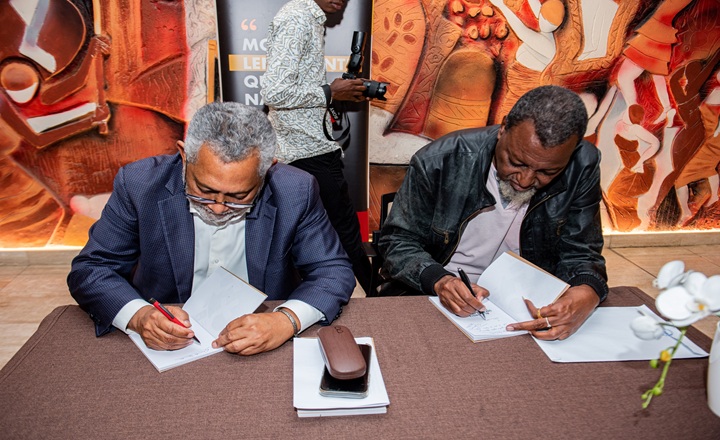
Launched at BCI, a book that immortalizes memories and humor of Zambézia
2026-10-02

Society
International Coffee Day
2026-10-02
Society
Minister Mathlombe squanders his term on empty promises
2026-10-02
policy
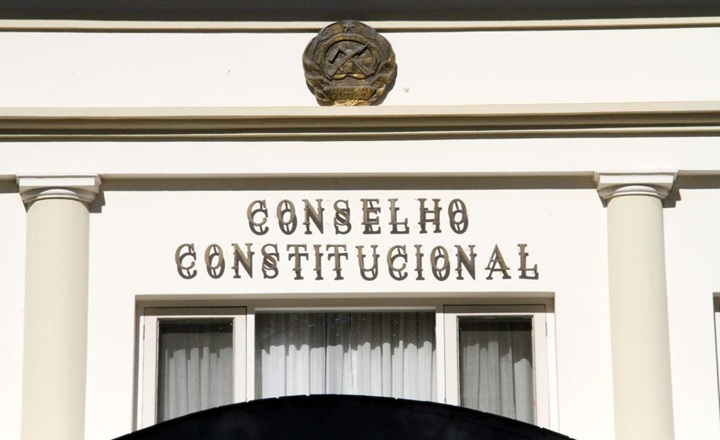
Constitutional Council Awards Purchase of Luxury Vehicles for 49.5 Million Meticais
2026-10-01
Culture
International Coffee Day: Aroma, Flavor, and History
2026-09-30
Copyright Jornal Preto e Branco All rights reserved . 2025