
Big Interview with Wilker Dias: Cabo Delgado between silence and survival
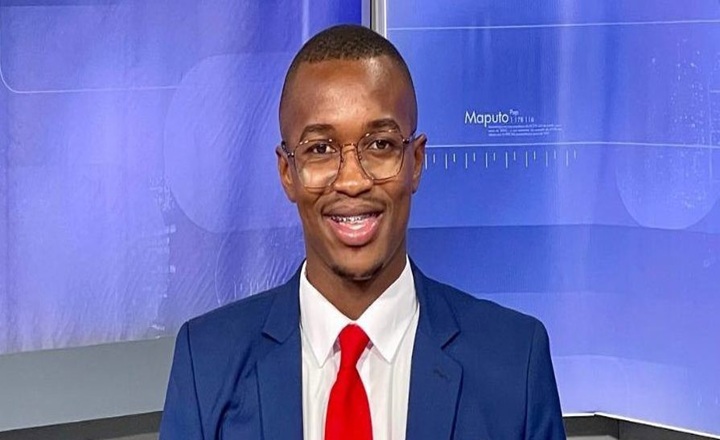
Wilker de Assis de Sousa Dias, executive director of the Mozambican organization Decide, is one of the most attentive voices on the humanitarian and political crisis in Cabo Delgado. A university professor and human rights activist, Wilker has closely followed the reality of displaced people and the slow institutional response to a conflict that has lasted more than eight years. In this interview, he discusses the worsening sociopolitical situation, the fragility of the defense forces, the role of Rwanda, and the silence surrounding the pain of thousands of Mozambicans.
Wilker was recently in Cabo Delgado to visit the accommodation camps in Mueda, Montepuez, and Chiure. What impressed you most about that visit?
Unfortunately, the situation in Cabo Delgado remains far from encouraging. The conflict remains intense, and attacks have increased, as warned by the United Nations, which predicted one of the most violent years since the insurgency began. Every day, thousands of people continue to flee their villages, especially in Mocímboa da Praia and neighboring districts, taking refuge in places like Mueda and Montepuez.
I had the opportunity to visit the center of Lyada, on the road between Mueda and Nangade, where I met entire families from Macomia, Midumbe, and Nangade. These are people who left everything behind—homes, crops, memories—in search of refuge. What struck me most was the number of women and children, many of them traumatized, living in precarious conditions with very little institutional support.
In recent months, several robberies have been reported in Pemba, including at the homes of NGO employees and religious congregations. Residents associate this wave of crimes with general insecurity. What's your take on this new trend?
The city of Pemba has always had a reputation for being peaceful, but in fact, between May and July of this year, there was a worrying increase in home burglaries. Many of the targets were employees of non-governmental organizations and members of religious orders. Most alarmingly, some of these crimes involved police officers themselves, which undermines public confidence and highlights the disintegration of security institutions.
This situation occurs at a time when terrorism is still rampant throughout the province. There is a widespread sense of fear, and the line between common crime and terrorism is becoming increasingly blurred. When state agents themselves engage in robberies, ordinary citizens lose their sense of authority and state protection.
Some people disagree with the official term "terrorism" for what's happening in Cabo Delgado, preferring terms like "insurgency" or "destabilization." How do you interpret this difference?
The term "terrorism" is widely used, but perhaps a more appropriate term would be "insurgency" or "armed destabilization." The conflict, as it stands, goes beyond the narrative of religious radicalism. There is strong evidence of sabotage and hidden economic interests. Cabo Delgado is an extremely wealthy province—it has minerals, precious stones, and one of the largest natural gas reserves in the world. When attacks occur in mining areas or near strategic projects, it's difficult to ignore the possibility that the violence also serves economic interests.
There are local groups that take advantage of the chaos to illegally exploit resources, and there are also external dynamics that benefit from Mozambican instability. Major international oil and gas producers, for example, have direct interests in the region. Therefore, so-called "destabilization" can be beneficial for both internal and external actors. This is one of the reasons the conflict has dragged on for so long—because there are those who profit from the war.
Let's talk about the presence of the Defense and Security Forces (FDS) and the Rwandan contingent. There are perceptions that the Rwandan troops are there primarily to protect TotalEnergies' interests. Is this interpretation fair?
It is undeniable that the presence of Rwandan forces has been crucial in containing some outbreaks of violence, especially in the strategic areas of the mega-gas project. Rwanda has better trained and equipped troops than Mozambican forces, giving them greater operational capacity. However, there is also a clear division of labor: Rwandan forces focus on protecting areas linked to Total, while the FDS is responsible for defending the population and rural areas, often with very limited resources.
The lack of logistics and financial support for the SDF is glaring. Many soldiers report delayed salaries and lack of allowances. Without adequate pay, dangerous loopholes open up—desperate soldiers may end up collaborating with the enemy or succumbing to corruption schemes. This weakens the country's territorial integrity and undermines troop morale.
Doesn't this precariousness among soldiers also undermine the population's trust in the armed forces?
Without a doubt. The population notices when the State fails to care for its own defenders. When soldiers are demotivated and underpaid, they become vulnerable and less effective. In some cases, they even abandon their posts or negotiate sensitive information. This is an extremely dangerous scenario that must be addressed seriously.
The war in Cabo Delgado cannot be won with weapons alone. We must guarantee dignity to those fighting and, above all, invest in the social and economic rehabilitation of the affected communities. Otherwise, we will continue to put out fires while the structural problem worsens.
You mentioned the gas megaprojects. To what extent is the economic factor central to the persistence of the conflict?
It's central. Cabo Delgado's natural gas is of extremely high quality and has global strategic value. When disputes arise over such valuable resources, war ceases to be merely an ideological issue. Conflict becomes a tool for reconfiguring power—those who control the territory also control the wealth. And this wealth attracts not only insurgent groups but also political and business networks that benefit from the chaos.
TotalEnergies, for example, is treated as a top priority. This is understandable from an economic perspective, but it also reveals the inequality in protection. While the megaproject is rigorously guarded, neighboring villages remain unprotected, and displaced people live in inhumane conditions. It's a contradiction that exposes the exclusionary development model Mozambique has followed.
In the accommodation centers you visited, did you notice any effective presence of the State or humanitarian support institutions?
Presence is very limited. The displacement camps survive largely thanks to the help of religious organizations and local volunteers. The state appears more as an observer than an active agent. There are shortages of food, medicine, sanitation, and information. Many displaced people live without knowing if they will ever be able to return to their homelands.
This absence of the State creates fertile ground for despair and even recruitment by armed groups. When a young person sees no future, they are easily manipulated. War continues because its root causes—poverty, exclusion, and inequality—remain untouched.
In your opinion, is the institutional silence about Cabo Delgado intentional?
Yes, and that's what's most worrying. There's a clear attempt to control the narrative so as not to harm the country's international image. The government tries to convey the idea that everything is under control, in order to maintain foreign investment and the trust of its partners. But in practice, this rhetoric only benefits the economic elite, while displaced populations remain forgotten.
A lack of transparency also impedes resource mobilization. When the government fails to communicate the severity of the crisis, international organizations reduce support, believing the situation is stable. It's a political strategy that comes at a high human cost.
What would need to change for Cabo Delgado to find its way back to peace and stability?
First of all, we must recognize that peace will not come through weapons alone. A sincere national dialogue involving local communities, religious leaders, civil society, and the state is necessary. War is only the surface of a much deeper problem: the lack of social justice and economic inclusion.
Furthermore, it is essential to reform the defense and security sector, ensuring decent wages, adequate training, and respect for human rights. The fight against terrorism cannot be used as a pretext for violations. People need to feel that the armed forces are on their side, not against them.
Finally, is there any message you would like to leave to Mozambicans and the international community?
I would like to urge us to view Cabo Delgado not just as a province at war, but as a living part of Mozambique. Each displaced person represents a story, a hope, and a loss. We cannot allow silence to continue to be complicit in the pain. We must speak out, show our faces, and act.
The international community must understand that humanitarian support is urgent, but that the real solution involves strengthening Mozambican institutions and demanding transparency in the management of natural resources. Cabo Delgado is a reflection of the country: if there is peace and justice there, all of Mozambique can find its way back.
Outras noticias
Culture
Launched at BCI, a book that immortalizes memories and humor of Zambézia
2026-10-02
Society
International Coffee Day
2026-10-02
Society
Minister Mathlombe squanders his term on empty promises
2026-10-02
policy
Constitutional Council Awards Purchase of Luxury Vehicles for 49.5 Million Meticais
2026-10-01

Culture
International Coffee Day: Aroma, Flavor, and History
2026-09-30
Copyright Jornal Preto e Branco All rights reserved . 2025