
Aquaculture lacks everything more needs to be done!
 Dr. Vicente Ernesto, originally from Inhambane, left the province at the age of 13. He studied abroad, where he completed secondary school in Marine Biology, followed by a degree and a master’s degree in Aquaculture. “Aquaculture is my profession. I am currently retired, although I continue to work on different projects,” he said, adding that Aquaculture was the only job he had throughout his life.
After training in Marine Biology, in 1984, he joined the now defunct Instituto de Investigação Pesqueira, now the Oceanographic Institute of Mozambique (INOM), in the Aquaculture Department, the only institution focused on this area at the time.
“I have been involved in Aquaculture since 1984 and I reached retirement age last year, 2024. In other words, I stopped after 40 years of work. I retired, but I am still connected to Aquaculture in some way.”
Although it is not a recent activity, Dr. Vicente acknowledges that Aquaculture is still not very widespread in the country: “When I joined in 1984, there were already other colleagues, such as Dr. Fernando Loforte, head of the department at the time. This activity has some history, but its development has been slow”.
According to him, the main challenge lies in the fact that Aquaculture is not a traditional practice in the country: “Unlike other rural activities, such as Agriculture, Aquaculture is something we had to learn from scratch. It is a flame that has not yet caught on.”
Another challenge, according to the expert, is the value chain, which is still underdeveloped. “From the beginning, there has been talk of a lack of fry, which are like chicks in chicken farming: the starting point. Without fry, there is no fish farming. Then, there is a lack of feed. There are few centers that produce these inputs.”
Despite this, Dr. Vicente notes advances in technical training: “Today, we have professional schools and universities that offer disciplines and specializations in Aquaculture. In 1984, almost no one knew what this profession was.”
He believes that, despite Mozambique’s long coastline and tradition of fish consumption, natural fisheries production is not keeping up with population growth: “Today, some species have become a luxury. Shrimp, red snapper, grouper, stonefish... are expensive and scarce. In the past, shrimp was a symbol of national wealth, but stocks have dwindled.”
Dr. Vicente argues that aquaculture is essential to ensure food security: “We can no longer depend solely on extractive fishing. FAO has already shown that aquaculture production has surpassed fishing in many countries. Raising fish should be like raising chicken.”
Regarding public policies, the expert is critical: “I won’t say that they are wrong policies, but they clearly haven’t had the expected effects. Discussion forums are often far removed from reality. They should be held in places where fish are raised, in tanks, in rural areas.”
Despite previous efforts, such as those of the now-defunct National Aquaculture Institute, he believes that institutional support is still not enough: “I hear that a lot has been done, that enough is enough. But it is like a child who still needs care to learn to walk. It is not time to wean Aquaculture.”
For Dr. Vicente, the greatest proof that there is still a long way to go is the reality of the market: “Just ask how many of us have already bought fish from aquaculture. If almost no one has bought any, it is a sign that there is still a lot to be done.”
At the end of the conversation, the retired specialist expressed his gratitude: “It was a pleasure to share a little of what I know. Aquaculture is an Art and a Science. There is still much to learn and develop. I do not want to seem pessimistic. I believe in the potential of the activity, but patience and consistent policies are needed until the flame really catches on.”
Dr. Vicente Ernesto, originally from Inhambane, left the province at the age of 13. He studied abroad, where he completed secondary school in Marine Biology, followed by a degree and a master’s degree in Aquaculture. “Aquaculture is my profession. I am currently retired, although I continue to work on different projects,” he said, adding that Aquaculture was the only job he had throughout his life.
After training in Marine Biology, in 1984, he joined the now defunct Instituto de Investigação Pesqueira, now the Oceanographic Institute of Mozambique (INOM), in the Aquaculture Department, the only institution focused on this area at the time.
“I have been involved in Aquaculture since 1984 and I reached retirement age last year, 2024. In other words, I stopped after 40 years of work. I retired, but I am still connected to Aquaculture in some way.”
Although it is not a recent activity, Dr. Vicente acknowledges that Aquaculture is still not very widespread in the country: “When I joined in 1984, there were already other colleagues, such as Dr. Fernando Loforte, head of the department at the time. This activity has some history, but its development has been slow”.
According to him, the main challenge lies in the fact that Aquaculture is not a traditional practice in the country: “Unlike other rural activities, such as Agriculture, Aquaculture is something we had to learn from scratch. It is a flame that has not yet caught on.”
Another challenge, according to the expert, is the value chain, which is still underdeveloped. “From the beginning, there has been talk of a lack of fry, which are like chicks in chicken farming: the starting point. Without fry, there is no fish farming. Then, there is a lack of feed. There are few centers that produce these inputs.”
Despite this, Dr. Vicente notes advances in technical training: “Today, we have professional schools and universities that offer disciplines and specializations in Aquaculture. In 1984, almost no one knew what this profession was.”
He believes that, despite Mozambique’s long coastline and tradition of fish consumption, natural fisheries production is not keeping up with population growth: “Today, some species have become a luxury. Shrimp, red snapper, grouper, stonefish... are expensive and scarce. In the past, shrimp was a symbol of national wealth, but stocks have dwindled.”
Dr. Vicente argues that aquaculture is essential to ensure food security: “We can no longer depend solely on extractive fishing. FAO has already shown that aquaculture production has surpassed fishing in many countries. Raising fish should be like raising chicken.”
Regarding public policies, the expert is critical: “I won’t say that they are wrong policies, but they clearly haven’t had the expected effects. Discussion forums are often far removed from reality. They should be held in places where fish are raised, in tanks, in rural areas.”
Despite previous efforts, such as those of the now-defunct National Aquaculture Institute, he believes that institutional support is still not enough: “I hear that a lot has been done, that enough is enough. But it is like a child who still needs care to learn to walk. It is not time to wean Aquaculture.”
For Dr. Vicente, the greatest proof that there is still a long way to go is the reality of the market: “Just ask how many of us have already bought fish from aquaculture. If almost no one has bought any, it is a sign that there is still a lot to be done.”
At the end of the conversation, the retired specialist expressed his gratitude: “It was a pleasure to share a little of what I know. Aquaculture is an Art and a Science. There is still much to learn and develop. I do not want to seem pessimistic. I believe in the potential of the activity, but patience and consistent policies are needed until the flame really catches on.”
Outras noticias
Culture
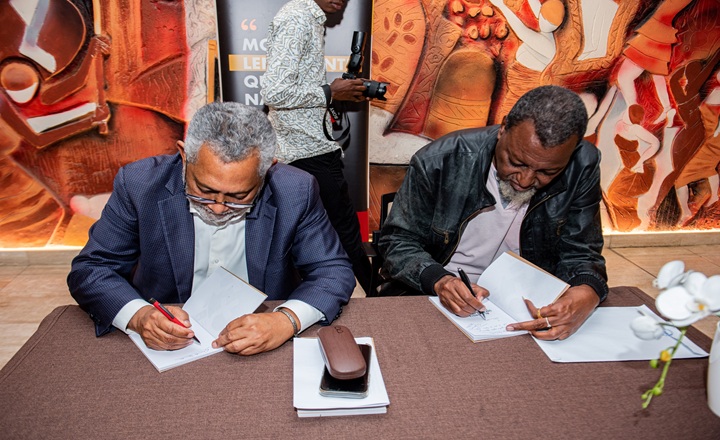
Launched at BCI, a book that immortalizes memories and humor of Zambézia
2026-10-02
Society
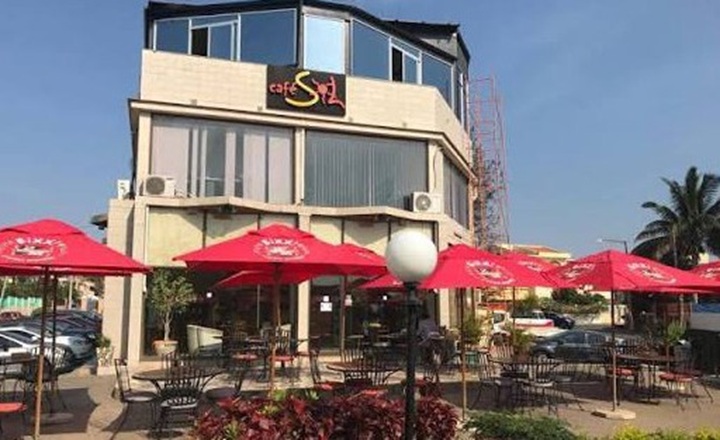
International Coffee Day
2026-10-02

Society
Minister Mathlombe squanders his term on empty promises
2026-10-02

policy
Constitutional Council Awards Purchase of Luxury Vehicles for 49.5 Million Meticais
2026-10-01

Culture
International Coffee Day: Aroma, Flavor, and History
2026-09-30
Copyright Jornal Preto e Branco All rights reserved . 2025