
ANAMOLA is born between controversies and hope: the political Caesarean section that promises to change Mozambique”

The city of Beira, the heart of central Mozambique, experienced a political moment last weekend that many consider historic. For the first time, the National Council of the National Alliance for a Free and Autonomous Mozambique (ANAMOLA) brought together more than 300 participants, including politicians, academics, and national and international observers, to witness the birth of a new political force in the country's democratic chessboard. But ANAMOLA did not emerge without a struggle; its birth was the result of a truly "difficult birth," a political cesarean section marked by months of institutional tension, complex negotiations, and strategic redefinition.
The party originally began as ANAMALALA, a name rejected by the Ministry of Justice, Constitutional and Religious Affairs due to alleged ethnic-linguistic connotations. The rejection sparked a series of disputes, legal debates, and meetings with academics and jurists, transforming the party's approval into a challenge that went beyond mere administrative formality. For Venâncio Mondlane, leader and face of the initiative, the dispute with the Ministry was not merely a bureaucratic obstacle; it was a test of political legitimacy and mobilization capacity in a society that watches every step of the emerging new forces. The name change to ANAMOLA symbolized not only a legal victory but also the adaptation of a political project to the country's institutional demands, consolidating an identity that aims to be inclusive, modern, and resilient to external pressures.
When Mondlane arrived in Beira, he was greeted with cultural demonstrations, songs, and dances that evoked the memory of decades of social and political struggle. The slogan "This country is ours" echoed through the streets, summing up the expectations of many citizens who feel marginalized from political decisions. At the former Cinema 25 de Setembro, the site of historic demonstrations and political meetings, Mondlane delivered a strong speech. He criticized FRELIMO, the party that has governed since independence, highlighting practices such as systemic corruption, nepotism, hidden debts, and widespread poverty, even amidst abundant natural resources. For him, the last fifty years have represented a cycle of theft and subjugation, and ANAMOLA emerges as the promise of a new chapter for Mozambique.
The event also marked the launch of the Elvino Dias Foundation, a tribute to the lawyer and political activist murdered in Maputo. Elvino Bernardo António Dias was born in Inhassunge, Zambézia province, on April 27, 1979. A law graduate from Eduardo Mondlane University, he distinguished himself as a lawyer in cases of national significance, serving as legal advisor to Venâncio Mondlane. Dias was known for defending civil and political rights, even during times of tension and repression, becoming a symbol of ethics, courage, and commitment to social justice. The Foundation aims to perpetuate his legacy by promoting civic education, access to justice, and the defense of human rights, reminding society that building a solid democracy requires vigilance, courage, and active participation.
The consolidation of ANAMOLA highlights the complexity of Mozambican politics and the challenges faced by new forces attempting to break historical hegemonies. The birth of the party, the fruit of institutional resistance and strategic redefinition, symbolizes a victory of persistence over bureaucracy, innovation over entrenched practices, and hope over accumulated discontent. It is a clear demonstration that politics in Mozambique is not just about elections, but also about courage, coordination, and strategic vision.
The arrival of a new political force in a country where traditional parties have held hegemony for decades is always a test of resilience and legitimacy. ANAMOLA emerges as a catalyst for debates on transparency, citizen participation, and wealth redistribution. At the same time, the launch of the Elvino Dias Foundation reinforces the intrinsic relationship between politics and social justice, reminding us that true transformation doesn't happen solely at the ballot box, but also through the strengthening of institutions and respect for the fundamental rights of every citizen.
ANAMOLA's "difficult birth," from the initial rejection of the name, through negotiations with the Ministry of Justice, to final approval, reveals the party's resilient nature and ability to face adversity with strategy and vision. This process transformed what could have been a simple party registration into a demonstration of political strength, mobilization capacity, and commitment to democratic principles.
By consolidating its presence in the country's political center, ANAMOLA projects itself as a structured alternative to FRELIMO, offering a critical discourse grounded in social responsibility, ethics, and transparency. The challenge now is to transform the symbolic legitimacy it has gained into real electoral strength, expanding its support base beyond the central provinces and becoming a political actor capable of influencing the course of Mozambican democracy.
The launch of the party and the Elvino Dias Foundation, together, symbolize a convergence of history, culture, and politics. Beira, an emblematic city in the fight for rights and social mobilization, became the birthplace of a movement that seeks to redefine the rules of democracy. This event not only celebrates the emergence of a new political voice but also reinforces the message that Mozambique is going through a period of reflection and transformation, where the active participation of civil society and the defense of human rights become imperative for the country's future.
As the coming months unfold, national and international attention will be focused on ANAMOLA: can it transform symbolic legitimacy into real political impact? Can it maintain internal cohesion, withstand pressure from established parties, and win over voters as the next electoral cycle approaches? The answer will depend not only on the party's strategy but also on Mozambican society's ability to demand accountability, justice, and concrete change.
Beira witnessed the political Caesarean section that gave birth to ANAMOLA. Now, it is up to the country to observe and participate in the growth of a political force that promises to challenge old structures, revitalize democratic debate, and consolidate a vision of a free, autonomous, and just Mozambique. Amidst controversy, expectations, and hope, the new political alliance began its journey, symbolizing that change is possible, but requires courage, perseverance, and commitment to the values that underpin democracy.
Outras noticias
Culture
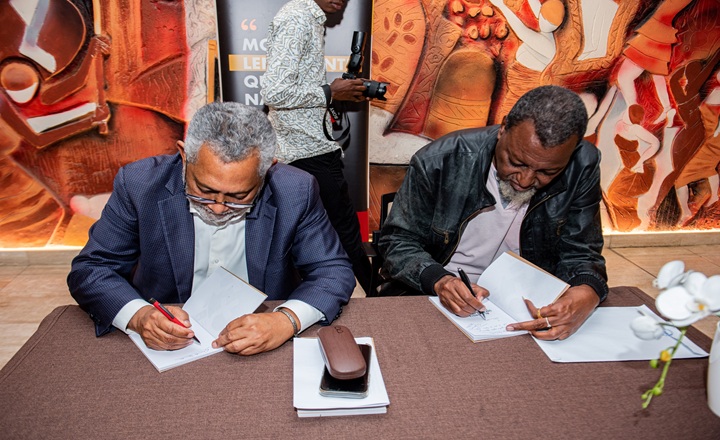
Launched at BCI, a book that immortalizes memories and humor of Zambézia
2026-10-02

Society
International Coffee Day
2026-10-02

Society
Minister Mathlombe squanders his term on empty promises
2026-10-02
policy
Constitutional Council Awards Purchase of Luxury Vehicles for 49.5 Million Meticais
2026-10-01

Culture
International Coffee Day: Aroma, Flavor, and History
2026-09-30
Copyright Jornal Preto e Branco All rights reserved . 2025