
AFRICA SURGE ET AMBULA (RISE AND WALK)
Are we experiencing a new wave of democratization in Africa?
Winds of change point towards a purification of democracies through combating the remnants of authoritarianism
In recent years, Sub-Saharan Africa has witnessed a worrying escalation of political instability, marked by waves of post-election protests, coups d'état, and governance crises that reveal deep structural weaknesses in its democracies. This phenomenon is not isolated: countries such as Madagascar, Kenya, Cameroon, Tanzania, and Mozambique exhibit distinct but convergent patterns of popular discontent, repression, and institutional challenges, demonstrating that African democracy, still in its third wave, is at clear risk of collapse. Youth, who represent the majority of the population in many of these countries, are emerging as protagonists and catalysts for change, pressuring governments to respond to their demands for transparency, social justice, and economic development. However, the reality is that these demands are hampered by political systems rooted in corruption, opacity, and the capture of power by oligarchic elites who control natural resources and state institutions.
In Madagascar, recent coups reveal a fragile political culture incapable of absorbing popular pressure. The population, fed up with widespread corruption and the government's inefficiency in providing basic services, has witnessed a series of unprecedented electoral crises, leading the military to intervene under the guise of restoring order. Between 2023 and 2025, dissatisfaction intensified, fueled by a history of poor management of agricultural resources and essential infrastructure, as well as an electoral system frequently questioned for its lack of transparency. Malagasy youth, who make up more than 65% of the population, feel systematically excluded from the political process and see the military as an alternative to contain the chaos, albeit temporarily. This pattern illustrates a domino effect: coups in one country inspire similar movements in others, creating a snowball effect that threatens regional stability. The situation is exacerbated by extreme inequality and the absence of mechanisms for effective participation, which transforms youth mobilization into a continuous force of pressure against regimes perceived as illegitimate.
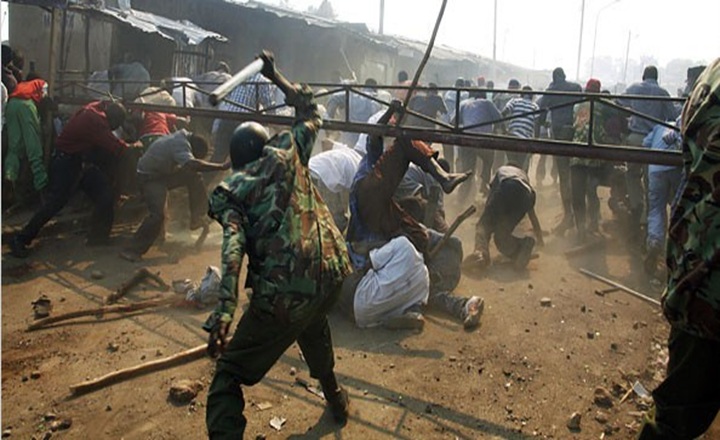
In Kenya, post-election protests have become recurrent, reflecting the tension between disputed electoral processes and suspicious electoral practices. In 2022, the country experienced significant demonstrations in Nairobi and the Rift Valley regions, motivated by allegations of electoral fraud and the marginalization of youth. These protests, often violently repressed, demonstrate the dissatisfaction of a generation that, despite being connected and informed, finds no legitimate channels to express its demands. The pattern observed in Kenya is repeated in Cameroon, but with an even more complex context. In the country, political tension is intertwined with the latent civil war in the Anglophone regions, where political exclusion, violence, and extreme poverty generate continuous discontent. This is compounded by the recent re-election of the elderly Paul Biya, president since 1982, who, even at 92 years old and in deplorable health, has governed the country from the diaspora in recent years while receiving healthcare. This has sparked outrage among young people who are increasingly aware that elections in Africa have not been sufficient to form consensus governments. Cameroonian youth, pressured by a lack of prospects, express their frustration through protests and mobilizations, frequently met with repression and violence, creating a cycle of instability that is difficult to break.
Tanzania offers a striking contrast. For decades, the country maintained periods of political stability, alternation of power, and relative democratic tolerance, allowing for the gradual strengthening of institutions and the rise of political leaders through regular and accepted processes. However, the rise of the current president marked a significant break with this tradition. The concentration of power, institutional manipulation, and the limitation of political freedom have tarnished a system previously considered reliable and predictable. Simultaneously, the increasing exploitation of mineral resources—including gold, gas, and precious stones—has fueled oligarchies and networks of cronyism, creating incentives for the perpetuation of power and the marginalization of sectors of the population, especially the youth, who find themselves excluded from the benefits of economic development. The difference with Mozambique is evident. While Tanzania possessed a consolidated and tolerant democratic culture, Mozambique has always operated under a hegemonic system, in which FRELIMO has remained in power for decades, often at the cost of repression, selective assassinations of opponents, and control over electoral institutions. The Mozambican population faces structural poverty, high unemployment, and a constantly marginalized youth, creating fertile ground for social mobilization and direct challenges to the established power.
In Mozambique, post-election protests are not merely isolated manifestations of dissatisfaction; they reflect a profound institutional crisis. The hegemonic party, maintaining control over the political and electoral system, uses a combination of force, repression, and manipulation of state resources to perpetuate its authority. The youth, increasingly aware of their marginalization and structural inequalities, question not only the election results but the legitimacy of the entire system. This discontent creates a historical dilemma: as formal democracy proves incapable of meeting social demands, there is a growing perception that only military intervention could restore constitutional order in scenarios of total chaos. The risk is that this perception will translate into practice, fueling a cycle in which instability generates the rise of authoritarian regimes as an emergency response to disorder.
The phenomenon observed throughout the region is, therefore, a snowball effect. Each crisis inspires another, and waves of protests in one country have direct repercussions in neighboring countries facing similar problems. The connected, informed, and dissatisfied African Generation Z plays a central role in this process. Their intolerance of corrupt and ineffective systems, combined with the organizational capacity provided by digital networks, creates unprecedented pressure on governments that have historically ignored popular demands. This scenario not only threatens the survival of third-wave democracies but also points to the urgent need for reform of the political system on the continent. The critical question that emerges is: is African youth willing to rewrite political history, or will we witness the return of authoritarian regimes that stifle any hope of functional democracy?
The reality of Sub-Saharan Africa suggests that the time for gradual and moderate responses is over. The combination of extreme poverty, structural unemployment, and lack of access to basic services creates a breeding ground for discontent that transforms protests into periodic explosions of violence and dissent. Endemic corruption and a lack of institutional transparency further exacerbate the problem, consolidating a perception that democratic systems are captured by elites and incapable of promoting social justice. The rise of local oligarchies, especially in resource-rich countries like Mozambique and Tanzania, transforms power into an instrument of private enrichment, while the majority of the population remains on the margins of development. This scenario creates a vicious cycle: the more the system ignores youth and civil society, the more intense the protests become, and the more likely the military or authoritarian groups are to see an opportunity to intervene as "guarantors of order."
Looking at the trajectory of African democracy in recent decades, it becomes clear that we are facing a turning point. The third wave of democracy, which began in the 1990s, allowed for significant progress, including multi-party elections, alternation of power, and the growth of relatively independent institutions. However, this progress has often been limited by disguised authoritarian practices, systemic corruption, and electoral manipulation. The result is a continent where formal democracy exists but lacks social depth and effective legitimacy. As Generation Z matures and organizes, the tension between the expectation of political participation and the reality of exclusion intensifies, creating a real risk of institutional breakdown.
The domino effect is visible: instability in one country quickly influences others, either through the direct inspiration of popular movements, or through the collapse of norms and the demonstration that authoritarian regimes can resist international pressure. Madagascar exemplifies this trend, but it is not an isolated case. In Kenya, Cameroon, and Mozambique, protests and post-election crises reveal similar patterns: youth dissatisfaction, state repression, and institutional fragility. Tanzania, although it has a history of stability, shows that not even relatively consolidated systems are immune to the concentration of power and the capture of institutions, especially when the exploitation of mineral resources creates economic incentives for perpetuating power.
This context leads us to reflect on the future of African democracies. Two possibilities stand out: either there will be a significant reformulation, with increased popular participation, institutional strengthening, and a real fight against corruption; or instability will persist, opening space for authoritarian regimes, military centralization, and regression to one-party systems. The difference between Mozambique and Tanzania clearly illustrates the dilemma: while the former remains hostage to party hegemonies and mineral resources concentrated in few hands, the latter, despite a more solid democratic history, has shown that institutional rupture is possible when economic and political interests converge to perpetuate power.
Generation Z, as the dominant social force, faces the historic task of deciding whether it will be able to transform African democracy into a legitimate instrument of participation, justice, and development, or whether the response will be violence and military intervention. The challenge is complex, as it involves not only confronting authoritarian or corrupt regimes, but also dealing with economic structures that encourage power grabs and social exclusion. Ultimately, the central question is not only political but structural: how to create societies capable of integrating youth, distributing resources fairly, and fostering trustworthy institutions that can withstand internal and external pressures?
While protests multiply and coups d'état punctuate the continent, it becomes evident that African democracy is ailing. The marginalization of youth, structural unemployment, endemic corruption, and the concentration of wealth in the hands of oligarchies create a dangerous equation where instability feeds on itself. The third wave of democracy, which brought hope for alternation of power and popular participation, now faces an existential crisis. The snowball effect of political instability threatens to create a new pattern: increasingly authoritarian governments, militarization of politics, and democratic backsliding. The question echoing throughout Sub-Saharan Africa is urgent: will the youth rise to the challenge of rewriting history, or will we passively witness the return of authoritarian regimes that consolidate exclusion, perpetuate corruption, and stifle democracy?
The future of African democracies will therefore depend on the ability of youth and civil society to transform protests into concrete institutional changes, to create mechanisms for transparency and participation, and to build systems capable of resisting the temptation of authoritarianism. Until then, the continent will continue to oscillate between apparent stability and explosive crises, with the shadow of militarism looming as a “necessary” alternative in the face of chaos. Sub-Saharan Africa is, at this historical moment, at a turning point: either a new era of robust democracy will emerge, or we will see the continent succumb to cycles of instability and authoritarianism that threaten to compromise decades of political and social progress.
Outras noticias
Culture
Launched at BCI, a book that immortalizes memories and humor of Zambézia
2026-10-02

Society
International Coffee Day
2026-10-02
Society
Minister Mathlombe squanders his term on empty promises
2026-10-02
policy
Constitutional Council Awards Purchase of Luxury Vehicles for 49.5 Million Meticais
2026-10-01

Culture
International Coffee Day: Aroma, Flavor, and History
2026-09-30
Copyright Jornal Preto e Branco All rights reserved . 2025