
Accidents on N4: Between Profit and Mourning
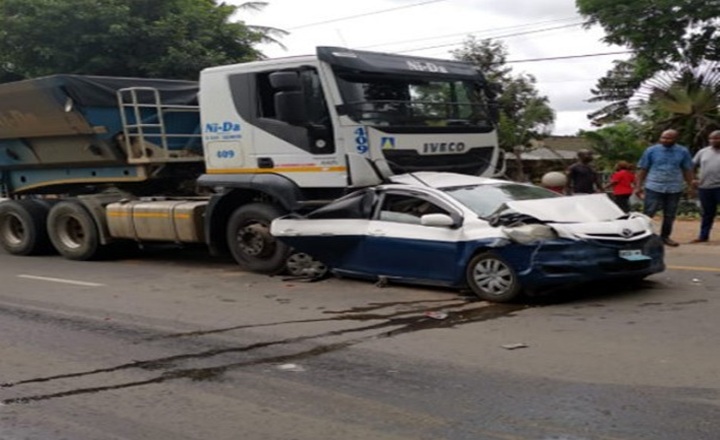
National Road 4 (EN4), which connects Maputo to the Ressano Garcia border crossing, has seen a worrying increase in serious accidents in recent years, particularly involving large-tonnage trucks transporting minerals from South Africa to the Port of Maputo. Among the most critical sections is the 3 de Fevereiro area in Manhiça, where accidents not only claim lives but also disrupt families and affect entire communities.
Preliminary data from the Maputo Traffic Police indicate an increase of approximately 18% in serious accidents on the EN4 highway compared to the same period last year. The peak time of the year coincides with heavy vehicle traffic, between 4:00 PM and midnight, highlighting a critical overlap between long-distance freight transport and light vehicle traffic, which share the same road.
To understand the factors behind this reality, we interviewed a long-haul truck driver with 14 years of experience. The professional details the routine, risks, and working conditions that contribute to the increasing accident rate on the road.
Can you tell us about your experience as a long-haul driver?
I have 14 years of professional experience. I've driven in several countries and consider myself to have a solid understanding of roads and road safety. I started working in 2011 for a private company, driving smaller trucks. In 2012, I was recruited by the transport company Lalgy, where I continue to work today. During this time, I've traveled both the central provinces and the Maputo region, and I have considerable experience in long-distance freight transport.
What are you currently seeing on the EN4 in terms of accidents involving trucks?
Along the EN4, especially in the Maputo area, there have been several accidents involving large-tonnage trucks. Many transport ore from South Africa to Porto, but other types of cargo are also involved. Accidents are primarily due to fatigue, pressure to meet deadlines, and road conditions.
Many trucks travel long distances, sometimes without sufficient rest. Upon reaching Maputo, they must share the road with light vehicles, increasing the risk of serious collisions. Exhausted drivers lose their reflexes, and accidents tend to occur at busy traffic points, such as stop-and-go areas, or during risky overtaking maneuvers.
Can you explain what leads drivers to take such risks?
Freight transportation is very lucrative for employers. For example, a company with a fleet of 50 trucks needs to move thousands of tons, often under strict contracts. For the driver, the base salary is low, but there are bonuses for each completed trip. This leads the driver to travel long distances without rest to increase earnings.
In practice, this means someone could leave Maputo at 4:00 PM and, without any room to rest, continue their journey to South Africa. During the journey, the driver resorts to energy drinks to stay awake, but this only delays fatigue, which ultimately manifests itself dangerously on the road.
What about bureaucracy at borders and ports?
The situation at the borders and at the port is also complicated. When crossing the border, trucks face queues of at least 10 km and an additional 7 km to process documentation. Then, at the Port of Maputo, there are traffic jams and delays that force drivers to stay awake until 10:00 or 11:00 PM to unload. This worsens fatigue and increases the risk of accidents.
Furthermore, when there are no parking lots or suitable rest areas, drivers are forced to sleep on the road or at the border, further compromising safety.
Does the use of modern technologies in trucks contribute to accident rates?
Yes. Modern trucks have automatic systems that allow them to maintain a constant speed and partially control steering. While this reduces driver effort, it can also lead to distraction. Some drivers fall asleep while the vehicle is automatically driving, which directly contributes to serious accidents.
Furthermore, when drivers need to intervene in heavy traffic, the vehicle's weight and speed make it difficult to maneuver, increasing the impact in the event of a collision. Accidents often occur without any braking signals because drivers are unable to react in time.
What are other risky practices adopted by drivers?
A common practice is to disengage gears on downhill slopes to save fuel. The boss sets strict fuel consumption limits, and the driver must keep the truck rolling without wasting fuel. This increases the difficulty of controlling the vehicle, especially when encountering unexpected obstacles. Unfortunately, this practice has already caused the deaths of three Mozambican drivers in South Africa this year alone.
The core of this problem lies with truck owners, who impose strict targets and grueling schedules. Drivers end up sacrificing their own lives to meet these targets, due to economic pressure and labor exploitation.
What recommendations would you give to reduce accidents on the EN4?
First, limiting consecutive driving hours to a maximum of 10 hours per day. This would significantly reduce fatigue. Second, improving road infrastructure, including adequate signage and widening critical sections. Third, clear driver compensation and management policies, preventing exploitation and allowing regular breaks.
If these measures were implemented, many accidents could be avoided. It's important to understand that the risk lies not only with the driver, but also with the economic structure and requirements of transportation companies.
How do you describe the impact of these accidents on families and communities?
Accidents on the EN4 directly affect lives. Each serious collision results in death or serious injuries, leaving families devastated. The community feels the impact, as many drivers are parents and support entire families. Furthermore, frequent accidents create an unsafe environment for all road users, including cars and public transport.
The pressure for money and the desire to supplement wages put drivers at constant risk. Unfortunately, many accidents could be avoided with stricter regulations and worker protection policies.
What is the current situation on the EN4 in terms of truck flow?
Truck traffic on the EN4 is higher than in the past. The road, inherited from the TRAC era, was not widened to accommodate the current number of heavy vehicles. Overtaking has become difficult, especially when several trucks follow one another. Furthermore, road conditions, poor signage, and ongoing construction make safe driving difficult.
The risk is high for any driver encountering a convoy of trucks, especially if they are exhausted or distracted.
The accident rate on the EN4 highway is a consequence of multiple factors: labor exploitation, fatigue, border bureaucracy, poor road conditions, risky driving practices, and misused technologies. The challenge is both structural and human, requiring solutions that integrate regulation, oversight, infrastructure improvements, and worker protection policies.
Until these measures are implemented, the EN4 will continue to pose a significant risk, and serious accidents will remain a sad reality that destroys lives and disrupts families in Maputo and the surrounding area.
Outras noticias

Culture
Launched at BCI, a book that immortalizes memories and humor of Zambézia
2026-10-02

Society
International Coffee Day
2026-10-02

Society
Minister Mathlombe squanders his term on empty promises
2026-10-02

policy
Constitutional Council Awards Purchase of Luxury Vehicles for 49.5 Million Meticais
2026-10-01

Culture
International Coffee Day: Aroma, Flavor, and History
2026-09-30
Copyright Jornal Preto e Branco All rights reserved . 2025