
Abandoned at the Border: The Lost Dignity of the Returnees in Ressano Garcia
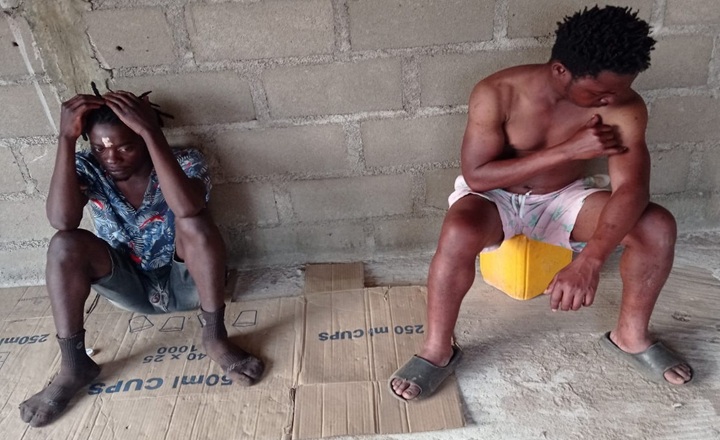
Before being abandoned at the Ressano Garcia border crossing, dozens of Mozambicans endure the bitter experience of serving prison sentences in neighboring South Africa. These aren't violent crimes, as some might imagine, but a crueler reality: imprisonment for lack of documents. Many are detained simply because they lack passports or because their short-term visas, which are unlikely to cover the difficult search for job opportunities, expire quickly. Young people who cross the border with the dream of supporting their families or saving money to improve their lives end up paying dearly for a migration system that turns them into offenders.
The sentence is almost always the same: two months behind bars. Two months of humiliation, living alongside real criminals, treated like outcasts when their greatest "failure" was trying to survive. Freedom, when it arrives, isn't accompanied by redemption. On the contrary, it paves the way for a second stage of suffering, this time in their own country. After serving their sentences, the Mozambicans are transported by bus to the border and dumped in Ressano Garcia, without warning, without reception, without even a word of guidance.
Last week, fifty-two citizens were abandoned in this way. Men, women, and even children. All of them endured the degrading experience of being left in the no-man's-land between the South African and Mozambican borders, as if they were disposable burdens. On the South African side, the escort ends at the border. On the Mozambican side, there is no protocol, no official reception, not even a hint of institutional compassion. The result is that each of them must fend for themselves as best they can.
The scene has been repeated for months and no longer shocks as it should. The community has grown accustomed to seeing tired faces, torn clothes, children clinging to their mothers' arms, all searching for a piece of bread or a place to sleep. But while the state's indifference is glaring, popular solidarity has been the ray of hope. It's the mamanas, women who sell meals at the market, who share their leftovers with the newcomers. It's the neighbors who buy used clothes from the dead white man to prevent the returnees from walking around nearly naked. It's the small contractors who, even when suspicious, offer odd jobs on construction sites so these men can save some money and return to their provinces.
The contrast with the past is shocking. Older residents remember how reception worked in earlier times. The neighborhood secretary, Paulo Jamisse, who closely follows the situation, recalls with nostalgia: “There was a center here where repatriates received meals and had a place to sleep while waiting for the train to Maputo. There was a large pavilion and even a kitchen. Transportation was organized and free, with a specific carriage just for them. Later, the Maguaza Center in Boane was established, serving as a reception center. It was small, but it was dignified.”
This past, though distant, shows that this is not an impossibility, but rather a political choice. Today, instead of reception centers, there is only oblivion. Instead of organized trains, there are men and women begging for rides back to Gaza, Inhambane, or Manica. Instead of basic meals, there is only the gesture of solidarity from market vendors.
The experience of Juvêncio Nelson, 27, reflects the collective drama. A native of Gaza, Juvêncio studied until the ninth grade before trying his luck in South Africa. Six months after crossing the border, he was caught in a raid for lack of identification. He spent two months in prison. When he returned on August 14th, he found only the cold of cardboard in the open air. "I only don't go hungry thanks to the ladies who give us food when there's left over," he says with a bitter smile. His goal now is to save enough money from odd jobs to return to his hometown, Macia.
Another case is that of Paulo Uamba, 29, from Inhambane. He had been in South Africa for almost two years when he was deported, also after serving two months in prison. "Now I work on construction sites when I get work. I hope to get paid next week to pay for transportation and return home," he says. Despite the adversity, he makes a point of being grateful: "Without the mamanas, I would have been very ill. They're the ones who give us food and even used clothes."
These testimonies show that the struggle for survival doesn't end with deportation. On the contrary, it begins there. Many returnees become targets of robberies as soon as they arrive. The few personal belongings they carry are easily stolen. Others, lacking adequate clothing, are forced to rely on the generosity of their neighbors. Children roam the market, hungry and vulnerable, without any official assistance.
Local police acknowledge the growing presence of these groups, but emphasize that they haven't caused any disturbances. They simply look for odd jobs or accept food. The real concern, according to residents themselves, is the future. "Today they live on the streets, tomorrow they could fall into crime. It's a situation that requires attention," comments an officer.
Despite everything, what we see in Ressano Garcia is also a lesson in humanity. Popular solidarity shows that, even in contexts of poverty, people still find space to care for one another. It is this invisible network of sharing that has prevented a greater tragedy. The people, who already have little, share what little they have left. Meanwhile, the State, which should have more resources, offers only silence.
For outsiders, Ressano Garcia has become a symbol of the failure of Mozambican migration policy. Repatriated people are left as dead weight in a land that should be their home. Official indifference contrasts with the generosity of the poorest. The past shows that there were times when the state cared minimally, but the present screams abandonment.
And yet, even in this scenario of oblivion, the border continues to reveal a profound truth: if dignity has been lost, humanity still endures. It lies in the hands of the mamanas who share their food, the neighbors who offer used clothing, the contractors who provide odd jobs. It is a silent but powerful humanity that resists official abandonment and proves that the bonds of solidarity among Mozambicans still survive.
Ressano Garcia is today an open wound. A land of passage that has become a temporary destination for those returning with nothing. A place where the state failed, but where the people continue to show that, despite poverty, they have not lost their capacity to share. A land where the dignity of the repatriated was sacrificed, but where popular solidarity insists on keeping the flame of hope alive.
Outras noticias
Culture
Launched at BCI, a book that immortalizes memories and humor of Zambézia
2026-10-02
Society
International Coffee Day
2026-10-02

Society
Minister Mathlombe squanders his term on empty promises
2026-10-02

policy
Constitutional Council Awards Purchase of Luxury Vehicles for 49.5 Million Meticais
2026-10-01

Culture
International Coffee Day: Aroma, Flavor, and History
2026-09-30
Copyright Jornal Preto e Branco All rights reserved . 2025