
3rd Edition of the M-PESA FINTALKS Conference
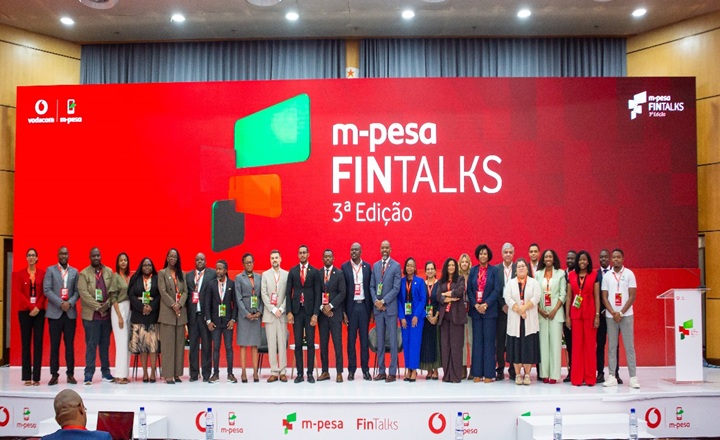
Vodafone M-Pesa Mozambique held the 3rd edition of the M-Pesa Fintalks Conference today in Maputo, under the theme: “Financial Inclusion as a Pillar for Generational Transition and Sustainable Self-Employment”. The event is organized in partnership with Financial Sector Deeping Mozambique (FSDMoç), the Mozambican Fintech Association (FinTech.MZ), the GSM Association (GSMA),M-Pesa Africa,German Agency for International Cooperation (GIZ), Vodacom Foundation and New Faces, New Voices(NFNV).
This year's Fintalks conference was attended by leaders from various sectors of the economy, including government representatives at the regulatory level, the Bank of Mozambique, the Mozambican Association of Banks, Financial Institutions, NGOs, the Academic Community and the Vodacom Group's management body at national and continental level.
During his opening speech, Vodafone M-Pesa Chairman Salimo Abdula stated that the motto of this 3rd edition is relevant in the current context of Mozambique, which faces challenges related to high unemployment rates, a lack of economic opportunities and growing financial vulnerability.
Salimo Abdula also noted that most young people in Mozambique face difficulties in transitioning to stable employment, as well as entrepreneurship, due to limited access to financial capital, insufficient financial literacy, and the scarcity of digital solutions adapted to their needs.
In light of this, the director assumes that it is in this scenario that digital financial inclusion becomes an opportunity and a catalyst for social and economic transformation, serving as a bridge for developing the potential of young people and women in creating sustainable businesses, achieving autonomy, and ensuring a more harmonious generational transition in the economy.
In turn, and in the same vein, the general director of Vodafone M-Pesa, Sérgio Gomes, explained that financial inclusion can be explored to open pathways for more young people to actively participate in the economy, drive innovation and find in sustainable self-employment a real opportunity to transform their lives and their communities.
"By choosing Financial Inclusion as a Pillar for Generational Transition and the Creation of Sustainable Self-Employment as the central theme of this 3rd edition of FinTalks, we reaffirm the need to empower youth to play a central role in Mozambique's economic growth," explained Sérgio Gomes.
In the final moments of the event, FSD Moç Executive Director Esselina Macome said that the future of financial inclusion depends on intersectoral collaboration, emphasizing that financial inclusion must also be understood as a human right, as it restores dignity to millions of Mozambicans who, for years, lived with economic limitations and without access to formal financial services.
New digital solutions revolutionize the use and access to financial services
The highlights of this edition of the Fintalks Conference were the presentation of real stories of financial inclusion as a tool to drive generational change and self-employment, as was the case in the presentation by Gabriela Rosales, team leader and responsible for the Access to Financial Services component of the GIZ-VAMOZ Competir Program.
Next, solutions from various financial segments were presented that are already generating a concrete impact, such as M-Pesa, which presented the "Txova" service, an automatic microcredit solution that addresses one of the biggest limitations faced by customers: the lack of small amounts of money to complete essential day-to-day transactions.
FIRST DEBATE PANEL:
From Access to Impact: How Financial Inclusion Can Reshape Labor Market Dynamics in Mozambique.
The first Panel Discussion at the 3rd edition of the M-Pesa FinTalks Conference was under the theme From Access to Impact: How Financial Inclusion Can Reshape Labor Market Dynamics in Mozambique.
Moderated by Vânia Nhaúle, the panel consisted of Jaime Comisse, representative of the United Nations Industrial Development Agency (UNIDO), Dário Camal, academic, diplomat and social activist, and Carlos Mondle, vice president of FintechMZ.
During the debate, Dário Camal noted that the challenges of financial inclusion in Mozambique go beyond the use and access to financial services, highlighting the need for multisectoral collaboration to invest in technological and financial literacy, including a financial literacy agenda in school curricula. Furthermore, Camal argues that financial inclusion requires the creation of accessible financial products that are adaptable to the country's socioeconomic reality.
Carlos Mondle, in turn, addressed the challenges related to the creation, licensing, and investment in digital financial solutions in Mozambique, highlighting the slowness of the incubation process for services with the regulator, policies that are not adaptable to the scale of the investment, and a shortage of qualified or specialized labor, among others.
Drawing on his extensive experience at UNIDO, Jaime Comiche spoke of the importance of multisectoral collaboration and resilience in consolidating digital solutions, taking as an example the One-Stop Shop (Baú) and its impact on the rationalization, modernization, and simplification of administrative processes.
SECOND DEBATE PANEL:
How Communities, Banks, Fintechs, Regulators and Government Can Connect to Drive Change
Since 2015, the number of mobile accounts in Mozambique has seen significant growth, rising from 28% to 109% in just a few years. This increase reflects the massive adoption of digital financial systems by thousands of people. However, as financial inclusion advances, the need also arises to create complementarities between different sectors.
It was based on this reflection that the final panel discussion of the 3rd edition of the M-Pesa FinTalks Conference highlighted the urgency of ensuring a more integrated ecosystem, where communities, banks, fintechs, regulators, and the government work hand in hand to promote change. The central message was clear: the future of financial inclusion depends not only on technology, but on the ability to build bridges of trust, collaboration, and innovation among all stakeholders.
The participants also emphasized that consolidating this path requires robust policies, innovative solutions that respond to local realities, and greater financial literacy so that citizens not only have access to the platforms, but can use them consciously and inclusively.
This panel was moderated by economist Egas Daniel and comprised Elda Monteiro, director of the Financial Inclusion office at the Bank of Mozambique, Casimiro Chicuava, representative of the Mozambican Banking Association, Felix Kamenga, Commercial Director of M-Pesa Africa.
University students present financial inclusion solutions
To illustrate the FINCKATHON moment, innovative solutions to address the challenges of financial inclusion were highlighted at the 3rd edition of M-Pesa FinTalks, held at the Joaquim Chissano International Conference Center in Maputo. The panel highlighted the four winning solutions from the M-Pesa FINCKATHON 2025 edition, which demonstrate how creativity and technology can drive digital transformation.
It was in this vein that the conference held a session of solutions presented by university students and which are in the incubation phase to be integrated into M-Pesa. The first is called “M-Guia,” a solution presented by ISUTC students, which makes M-Pesa more accessible through the inclusion of local languages and the use of voice, ensuring greater digital inclusion.
The other proposal is “Procura Já,” designed by the UEM student group, which allows identifying M-Pesa agents with available balance, preventing customers from traveling long distances in search of service.
Uni Zambeze introduced “M-Loda”, a system that promotes cooperation between agents to avoid lack of financial resources, enabling quick transfers and ensuring greater fluidity in the use of M-Pesa.
Finally, ISCTEM introduced “M-Djo,” an inclusive solution that, through a voice system, enables people who cannot read or write to carry out financial transactions independently.
These solutions demonstrate M-Pesa's commitment to continuing to promote financial and digital inclusion by creating tools that bring communities together, strengthen small businesses, and expand access to financial services in Mozambique.
Outras noticias
Culture
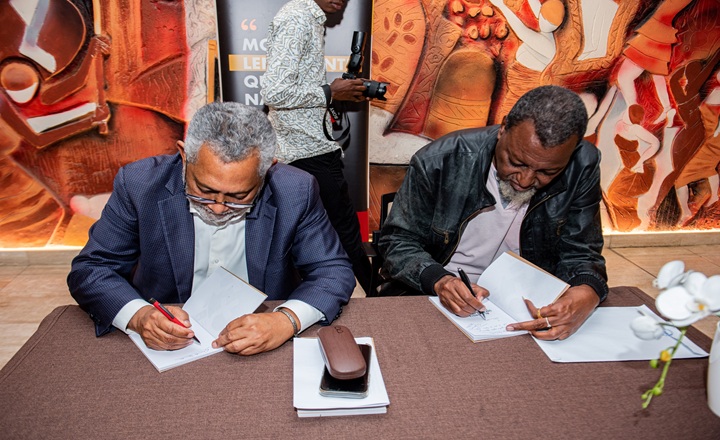
Launched at BCI, a book that immortalizes memories and humor of Zambézia
2026-10-02
Society
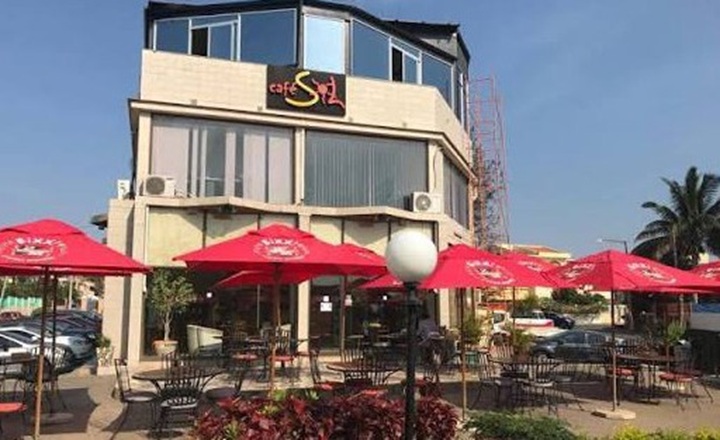
International Coffee Day
2026-10-02
Society
Minister Mathlombe squanders his term on empty promises
2026-10-02
policy
Constitutional Council Awards Purchase of Luxury Vehicles for 49.5 Million Meticais
2026-10-01

Culture
International Coffee Day: Aroma, Flavor, and History
2026-09-30
Copyright Jornal Preto e Branco All rights reserved . 2025