





“Air Mozambique”, a outra face da LAM
Paulo Vilanculo"
Linhas Aéreas de Moçambique (LAM) originated from the Directorate of Air Transport Exploration (DETA) and was created in 1936 as a division of CFM.LAMafter Mozambique's independence,under Decree No. 8/80 of November 19, and assumed all rights and obligations resulting from acts or contracts performed or entered into by its predecessor, DETA.In 1998, the company was restructured into a public limited company by Decree No. 69/98 of December 23. In late 1999, theLAM was transformed into aCompany incorporated by statute ofLimited Company. The State held 91% of the shares in the new company, while LAM's managers, technicians, and employees held the remaining 9%.The shareholder structure of LAM changed profoundly after the Mozambican government moved forward with the partial privatization and restructuring process of LAM; the State decided to sell 91% of the share capital it held in the airline.The largest current shareholders of LAM are three large state-owned enterprises that have acquired a stake in the company. The transactions already formalized by these three public entities represent, combined, 56% of LAM's current shareholder structure. The largest individual institutional shareholder is Hidroeléctrica de Cahora Bassa (HCB), holding 25.2% of the shares. CFM holds a 15.4% stake. Similarly, Empresa Moçambicana de Seguros (EMOSE) also holds 15.4% of the capital. The remaining share capital is divided between the quota not yet fully sold by the State (via IGEPE) and the historical percentage reserved for LAM's managers, technicians, and employees (...).
Financial support made possible through a recapitalization plan (which includes contributions from HCB/Fly Moz, EMOSE, and CFM) has provided the company with the liquidity to emerge from a model of operational asphyxiation. The strategy focuses on replacing disadvantageous financial lease agreements and ensuring the integration of new aircraft to expand domestic and regional routes.The project is integrated into the $36 million (approximately €30.8 million) financial package approved by HCB. This amount was divided between the purchase of 25.2% of the flag carrier's shares and the operationalization of Fly Moz. The Fly Moz project is a strategic initiative structured by Hidroeléctrica de Cahora Bassa (HCB) as part of the overall recapitalization and restructuring plan for Linhas Aéreas de Moçambique (LAM), designed in coordination with the Mozambican government. Its creation was detailed in official state reports as a financial pillar to enable the modernization of the airline. Fly Moz was conceived as a specific financial entity or vehicle with the direct objective of guaranteeing stable and structured financing for LAM. The creation of entities with specific purposes (such as the Fly Moz model) emerged to circumvent temporary legal obstacles and allow new institutional shareholders to inject money focused strictly on fleet management, modernization, and recovery.
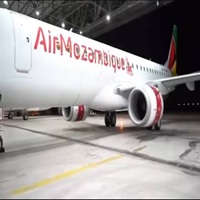
According to a news article published by the newspaper Evidências, LAM is carrying out a discreet transition of its commercial name.LAM has begun transitioning its identity to "Air Mozambique." This name change may be a strategic attempt to clean up the airline's image and distance itself from the stigma of inefficiency associated with the LAM acronym.LAM's 46-year-old brand has been severely damaged by persistent operational challenges and appears to be giving way to a new name: Air Mozambique. The company has been the target of audits that have revealed embezzlement schemes and mismanagement, leading the Mozambican government to promise a complete restructuring of the company.Internally, industry sources indicate a brand image change strategy aimed at disassociating the airline's operations from the successive past scandals involving mismanagement, debt, and operational failures that have tarnished the "LAM" brand over the years. This change is being implemented in a phased, trial-and-error, and progressive manner. According to Evidências, even before painting the aircraft, the commercial name "Air Moçambique" had already begun to be experimentally introduced on the badges and uniforms of the company's employees. The most visible sign of this institutional metamorphosis is found in the employees' own uniforms.
This change comes in the context of an unprecedented reputational crisis.Reviewing LAM's success stories, between 1983 and 1993, LAM operated a McDonnell Douglas DC-10-30.the company's main long-haul aircraft,which marked the peak of Mozambican commercial aviation in intercontinental connections,Connecting Maputo to destinations such as Lisbon, Paris, Copenhagen, and East Berlin (Schönefeld), as well as some regional connections in Africa, and during certain periods, the aircraft was also leased to TACV (Cabo Verde Airlines) on weekends to make its use more profitable. LAM has also used the Ilyushin Il-62M, but in a very limited way. under a rental (leasing or charter) agreement, and not as an aircraft permanently integrated into LAM's operational fleet.butespecially when the DC-10 was out of service for maintenance or when there was a seasonal increase in demand.Follow meThe era of Boeing 767s and 737s (modernization of the 1990s) later saw the emergence of the Embraer 190 and Q400 era for regionalization and fleet renewal starting in 2008. Between 2011 and 2013, LAM doubled its flight offerings, exceeding, for the first time, the mark of 60,000 passengers transported in a single month, and reduced the average fare from approximately 5,800 meticais to 4,900 meticais, thanks to the increased capacity and partial fleet renewal.
LAM is initiating a visual and commercial transition of its brand in a commercial rebranding test.The "Air Mozambique" operation subtly appears to be attempting to disassociate itself from recent management and corruption scandals, although some say it's inspired by Ethiopian Airlines. But...Unlike previous aircraft operated under a lease agreement, these two Embraer 190 aircraft are owned by LAM, purchased directly by LAM for approximately $25 million, with financial support from the new shareholders (led by CFM).For behind-the-scenes information on civil and commercial aviation, theThe name "Air Mozambique" emerges as a more universal, modern designation in international markets.The new nomenclature also aims for greater alignment with international aviation standards, marking the beginning of a new cycle focused on transparency and profitability. However, theChanging the name of the national airline from LAM to Air Mozambique may represent a strategy for commercial repositioning and rebuilding its institutional image, but it is unlikely to produce structural improvements on its own. Simply changing a company's name does not eliminate problems such as corruption, mismanagement, political interference, operational inefficiency, or a lack of transparency in the administration of public resources. For the average citizen, the real transformation will be measured by lower airfares, flight punctuality, safety, route expansion, and quality of service. If the change is limited to the logo and name, without profound reforms in corporate governance, accountability, and financial management, there is a risk of merely masking an old crisis with a new identity, while the factors that degrade service quality and prevent air transport from being accessible to most Mozambicans remain unchanged.
2025/12/3
Copyright Jornal Preto e Branco Todos Direitos Resevados . 2025
Website Feito Por Déleo Cambula