
Winning electionstheIt's not about owning the country
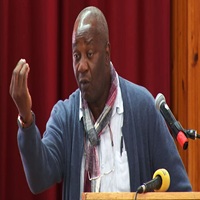
Severino Ngoenha"
Peace is the result, not the foundation.̧to the
Who does a member of parliament look at when they stand up in Parliament: their party leadership or the people who elected them?
I returned to this question in connection with a conversation that began in Beira, in a philosophical workshop where the group discussed, almost without disagreement, what many continue to call Maputo-centrism.
That's when I started looking at architecture. I've learned recently that a tall building requires deeper and more solid foundations. The larger the building, the more well-founded it needs to be. I also learned that the columns supporting the old cathedrals, placed in the middle of the room, prevented people from seeing each other. Maputo Cathedral is like that: someone on one side can't see the whole thing. The Polana church moved the supports outwards, and from anywhere you can see the entire space. I also learned that modern architecture has made room for natural light, so that decisions aren't made in the dark.
Consensus is not unanimity, nor does it mean giving each group veto power. It means sitting at the same table and participating in the creation of decisions, not just their execution. When a budget, a contract, or a policy necessarily goes through public debate, none of us can say that we didn't know, that we weren't heard, that we weren't involved.
This is where politics ceases to be a win-win situation. Winning elections brings the responsibility to govern. It doesn't authorize the closure of public spaces. Parties remain necessary. What's missing is an obligation enshrined in the institutions: that elected officials be accountable to those who elected them, and not just to the party they belong to.
I think about what the representative from Cabo Delgado would say if he had to explain to his voters the war that has been going on for years in that province. I think about what the representative from Tete would say about the mess that companies have left behind. Each of us lives with decisions made by others, often without a word of explanation.
Perhaps we are discussing what is secondary. The number of terms, the overlapping of elections, who can announce results. I already wrote about this in my text on the architecture of peace, and I continue to think the same: the essential thing is to remove arbitrariness from the hands of those who govern and place it in the architecture of the country.
What institutions do we need to build so that no one confuses a political victory with taking over the country?
2025/12/3
Copyright Jornal Preto e Branco All rights reserved . 2025
Copyright Jornal Preto e Branco Todos Direitos Resevados . 2025
Website Feito Por Déleo Cambula