
When fighting turns into loving Mozambique
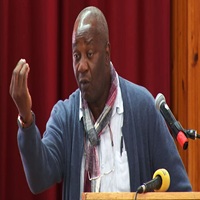
severino Ngoenha"
Think MoçAmbique from the Island: Philosophy as a Workshop of the Common
The Philosophical Workshops were born more than a decade ago from a very simple conviction: philosophy cannot remain confined to universities. Its original vocation was not the classroom, but the public square; not specialized discourse, but shared questioning; not the vertical transmission of knowledge, but the collective construction of the word.
The very word "atelier," which we use to designate these meetings, refers to the idea of a workshop. A workshop is a place where materials are worked on, objects are repaired, and new possibilities are constructed. Perhaps that is precisely the function of philosophy in our time: to become a workshop of thought, a space where citizens can diagnose the problems of society and seek, together, the paths capable of overcoming them.
After dedicating an entire year to democracy and another to national reconciliation, in 2026 we chose a theme that seemed inevitable: Fighting for Mozambique Today.
The inspiration came, naturally, from Eduardo Mondlane's book. But the question we ask ourselves today is no longer the same as that of the independence generation. Back then, the adversary was clearly identifiable. Colonialism had a concrete political, economic, and military expression. Today, the challenges are more complex. Poverty, inequality, unemployment, the fragility of institutions, the crisis in education, the centralization of power, and the fragmentation of the social fabric cannot be reduced to a single cause nor combated through the same categories of the past.
It was with this concern that the Atelier arrived on Mozambique Island.
And the choice of the island was no accident.
The Island is one of the founding places of our history. For centuries it was a space of circulation between Africa, the Arab world, India and Europe. Its streets, its buildings, its mosques, its churches and its memories bear witness to the existence of a territory built through the encounter between different traditions.
Thinking about Mozambique from the perspective of the Island meant recognizing an obvious fact that we often forget: a country is not built solely from its administrative centers. It is built from the plurality of its experiences, its peripheries, its margins, and its different ways of being in the world.
The meeting included artist and researcher Yara Pereira, university professor Wilson Nicaquela, and political scientist Arsénio Cuco. Three different interventions, three distinct sensibilities, and a shared concern: how to rebuild the foundations of a political community capable of re-evaluating itself as a collective project?
The voices of the Island: listening, educating, and decentralizing
It was Yara Pereira who introduced the most original reflection of the meeting.
"My work doesn't seek answers. It seeks questions. And these questions should lead us to other questions."
Based on his experience in documentary filmmaking and artistic research, he explained that art does not seek to close off thought, but to open it up. Its role is not to offer immediate solutions, but to reveal dimensions of reality that remain invisible to dominant discourses.
She was also the one who formulated what was perhaps the most important phrase of the entire meeting:
"We suffer from a syndrome of not listening to ourselves."
We don't listen to each other across generations.
We don't listen to each other across regions.
We don't listen to each other between the countryside and the city.
We don't listen to each other, those who govern and those who are governed.
We don't even listen to each other as a society.
But the artist went even further.
Recalling a question asked by her daughter, she called into question the very language we use to think about the country:
"Doesn't fighting mean hurting someone?"
Perhaps a child's question has managed to do what political speeches rarely achieve: force us to rethink the very concepts through which we interpret reality.
Wilson Nicaquela directed the reflection towards the field of education.
"Why do we go to university?"
The question was simple, but the criticism was profound.
We have never had so many universities. We have never had so many students. We have never had so many graduates. And yet, we continue to question the quality of education and the capacity of educational institutions to respond to the country's concrete problems.
"Do we go to university to get a degree or to transform our communities?"
The issue wasn't just educational. It was political.
What kind of citizen are we creating?
What kind of knowledge are we producing?
What responsibility do universities have towards the society that funds and legitimizes them?
Arsénio Cuco resumed the discussion from the perspective of democracy and decentralization.
"We need to decentralize power, opportunities, and decisions."
But his proposal went beyond simple administrative redistribution.
Decentralization is not just a governance technique.
It's a political philosophy.
It means recognizing that no community can build its future if power remains concentrated in the hands of a few.
Loving Mozambique: building the country that is yet to be born.
At the end of the meeting, I understood that the three interventions converged in the same direction.
Mozambique's biggest problem may not be just economic.
Perhaps it is, first and foremost, a problem of listening.
For too long, we have become accustomed to believing that solutions would come from outside. We have placed too many expectations on international aid, adjustment programs, financial institutions, donors, and imported revenues.
But no country is built by proxy.
Not even the IMF.
Not even the World Bank.
Not even the international partners.
Not even the State.
The responsibility for building the future cannot be delegated.
It belongs, first and foremost, to the citizens themselves.
It was precisely this idea that Yara Pereira sought to convey when she spoke of the need to think about models that are more rooted in our own reality, more attentive to our experiences, and closer to our communities.
The central question, therefore, is whether we will be able to create institutions for listening.
Not merely a formal listening session intended to legitimize decisions already made, but a true architecture of dialogue.
Jean-Godefroy Bidima recalled, in La Palabre (1997), that in African traditions, the word is not merely an instrument of communication. It is a space for mediation, recognition, and the construction of consensus.
Kwasi Wiredu insisted on the need to recover African forms of deliberation capable of transcending the logic of simple majority rule.
Perhaps that is precisely the challenge we face: transforming democracy into a permanent practice of consensus-building.
José Craveirinha claimed to belong to a country that did not yet exist.
Today, fifty years after independence, perhaps we can say that the country exists, but it is still in the early stages of its development.
The nation is not a finished product.
It's a task.
Ernst Bloch reminded us that hope is not a form of passive waiting. Hope is a category of action. It does not consist of waiting for the future to happen. It consists of participating in its construction.
That is why the proposal that emerged on the Island of Mozambique seems so powerful to me.
Perhaps the time has come to replace the language of struggle with the language of love.
Not because the conflicts have disappeared.
Not because the problems have been solved.
But because love, understood as collective responsibility, allows us to imagine a community where no one is excluded from building the future.
To love Mozambique means to reject indifference.
It means claiming the right to be heard.
It means accepting the responsibility of participating.
It means understanding that the country does not belong to the government, to political parties, to economic elites, or to international organizations.
The country belongs to its citizens.
And perhaps the true meaning of loving Mozambique is this: to participate, with others and not against others, in building a country that continues, every day, to seek its definitive form.
2025/12/3
Copyright Jornal Preto e Branco All rights reserved . 2025
Copyright Jornal Preto e Branco Todos Direitos Resevados . 2025
Website Feito Por Déleo Cambula