
The risk of speaking, the danger of remaining silent
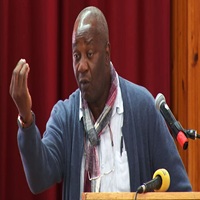
severino Ngoenha"
There are times when speaking exposes the speaker, and remaining silent compromises the one who remains silent.
Whenever night falls upon our perplexities and the ground beneath our feet seems to crumble, the temptation to withdraw assail me. It is a human desire to escape to the comfort of silence, to close myself off in my own corner and retreat from the harshness of the world.public squareContemporary thought. Some philosophers, like Søren Kierkegaard, have focused on "anguish" as that abyss that opens up before our freedom. Today, I understand and feel this anguish in my own flesh. It is the dilemma of speaking without being heard, of seeing each word interpreted through alien and opposing lenses—sometimes reduced to a harmless utopia, sometimes to poetry without substance or futile inertia—or remaining silent. But remaining silent, I know this more clearly today than yesterday, is an ethical abdication. Silence, when the common ground fractures, is not prudence; it is the tacit acceptance of ruin.
In this wasteland of noise and misunderstanding, where words seem to have lost their weight and the privilege of dialogue has been replaced by the trenches of absolute opinions, the classic question posed by the Beninese philosopher Paulin Hountondji becomes imperative: “Que peut la philosophie?” (What can philosophy do?).
Hountondji's response is devoid of messianism or institutional arrogance: philosophy cannot replace the peasants who till the savannah, it cannot replace the doctors who heal the sick, it cannot replace the teachers in the classrooms or the rulers in their positions of power. It does not have the material power to decree laws or to stem misery with a stroke of the pen. Within my physical limitations, I do not possess magical solutions. Philosophy possesses only the word. However, this word is not inertia; it is, in its consequences, action. The philosophical word is the result of pain, of shared suffering, and of a reflection that refuses to accept that present reality is the definitive end of our history. It is, in its essence, a form of struggle.
The vocation of philosophy—and the vocation to which I cling within my limitations—is the arduous task of re-establishing connections, of forcing reason where despair and greed seek to reign chaos. Sitting down together on common ground, solid enough to accommodate our profound differences without tearing us apart, has become our greatest historical urgency.
My appeal does not stem from comfort or a desire to impart moral lessons; it stems from the anguish of observing Mozambique sliding towards resignation. It is the resignation of those who, faced with the fragility of the country, are beginning to doubt the viability of our national project. This capitulation today takes on three dangerous forms: the mirage of fleeing Mozambique in search of individual opportunities outside our land, the embrace of...divisive tribalismand the temptation to accept territorial fragmentation as an inevitable fate.
It must be said with extreme clarity and without aggression: fragmentation is not a viable historical alternative. The more we divide ourselves, the smaller and weaker we will be in the face of the clutches of large international monopolies and foreign financial interests that covet our subsoil.The divisionIt will not save the south, nor the center, nor the north; it will only transform us into digestible and inert pieces before the empire of money. Our true struggle is not between Mozambicans. Our true struggle is against exclusion, against the poverty that dehumanizes us, and against the futility of our own fragmentation.
This appeal for reason and a return to logic is addressed, with all the urgency of the moment, to those who govern, to those who hold the power of decision and who seem to have forgotten the reasons why Mozambique was dreamed of, conceived and built in Machava. It is addressed to those who protected private interests, who signed contracts without the consent of their populations and who, ultimately, fueled their own tribalism to perpetuate themselves in power.
The history of contemporary Africa is a graveyard of blind elites who amassed enormous wealth in private coffers, believing themselves safe behind their walls. When the moment of truth arrived, the money owners kept the money, dictatorships fell, fortunes were confiscated, and the hoarders ended up in the deepest misery and historical irrelevance. The heroism of a people and the preservation of elites are not achieved through the savage accumulation of resources. They are achieved through the capacity to build a unified and viable community. No personal satisfaction, no status, no palace vanity can stand in the face of the ethical scandal of millions of Mozambicans dying of hunger.
The greatness of a civilization does not reside in the battles it has won or the fortunes it has amassed, but rather in its capacity to find reason in the darkest moments. Other peoples have endured far more profound tragedies in world history and have managed to rise again because their members knew and had the courage to sacrifice their immediate differences in favor of a greater status and a shared project for the future.
I will continue to speak and question, not to garner applause or to claim merit, but because thought is my only weapon available in this territory that is our common home.
The word we throw into the public square is not lost in the void.
She is a seed sown in the cold, dark earth; a seed that, even under the harshness of storms, needs to be watered so that the fruits of justice and dignity may grow.
To continue thinking is to refuse resignation.
Raising this word, with all the anguish of someone suffering for their country, continues to be my way of fighting for Mozambique.
2025/12/3
Copyright Jornal Preto e Branco All rights reserved . 2025
Copyright Jornal Preto e Branco Todos Direitos Resevados . 2025
Website Feito Por Déleo Cambula